A mother fought a 150-km trip with a toddler for court-ordered visits. The Supreme Court just flipped the venue.
The father wanted his daughter every Sunday in his city. The mother said the drive was harming the child. The top court agreed—and changed the rules.
150
km.
The father wanted his daughter every Sunday in his city. The mother said the drive was harming the child. The top court agreed—and changed the rules.
A 1-year-old was being driven 150 km each way for court-ordered visits with her father. The Supreme Court just said: not anymore.
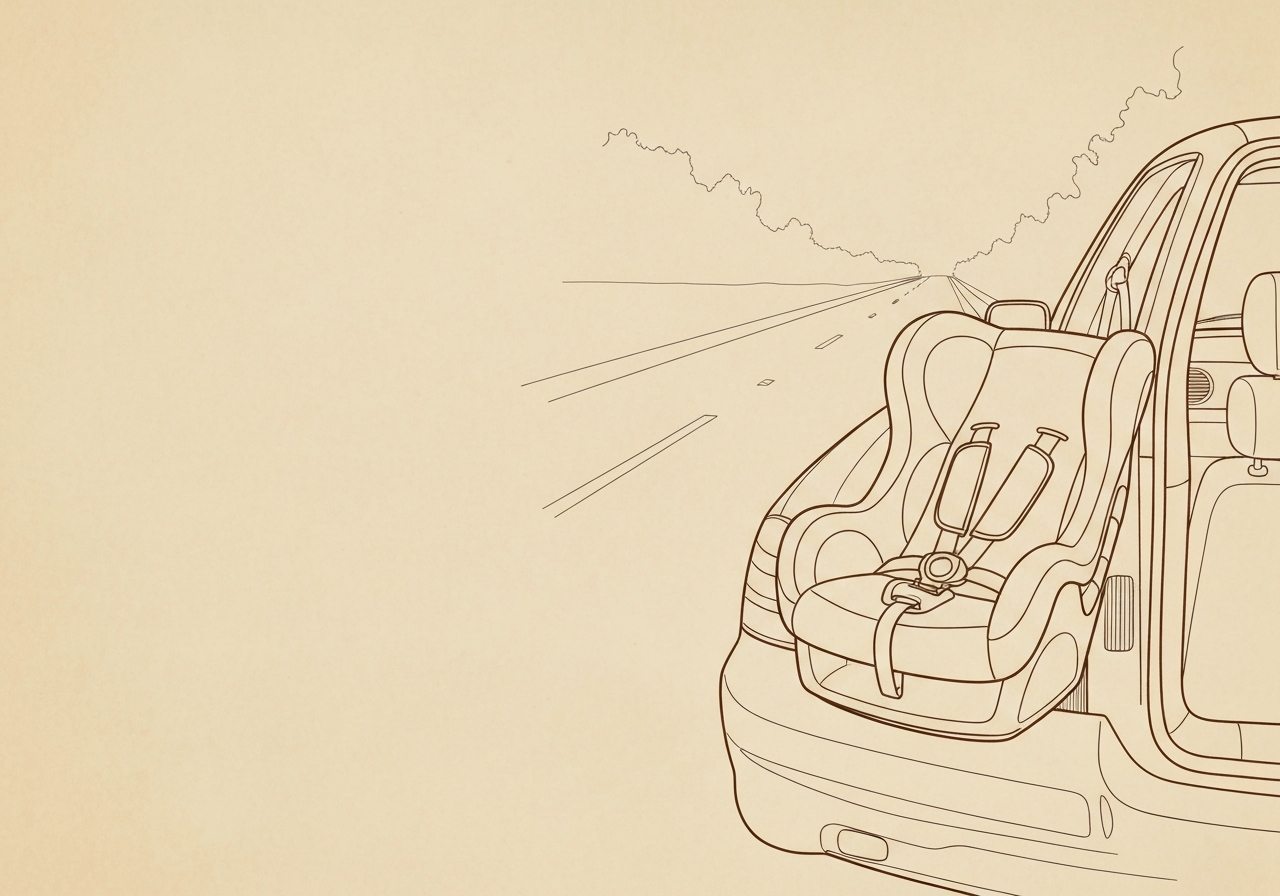
Every Sunday, the mother strapped her toddler into a car seat in Madurai and drove three hours to Karur. The father waited there. After four hours of supervised contact, the mother drove back—another three hours, the child exhausted, the routine repeating week after week. The Family Court in Karur, Tamil Nadu, had ordered this on November 10, 2023. The Madras High Court, Madurai Bench, had kept it on March 21, 2024, only extending the visit hours. Then, on December 20, 2024, the Supreme Court of India stopped it cold.
The question that hung over the case was simple and brutal: Can a court force a one-year-old to endure a 300-km round trip every week so a father can exercise visitation rights—even when the mother says the journey is harming the child?
The marriage that lasted two months
The couple were both doctors. They married, and a daughter was born in June 2022. Within two months, the wife alleged domestic violence—she said the husband beat the child and even attempted to kill them. She filed for divorce under Section 13(1)(ia) of the Hindu Marriage Act, 1955 (the provision that allows divorce on grounds of cruelty). The husband, while the divorce was pending, filed an application under Section 26 of the same Act (the provision that allows courts to decide custody and visitation rights during ongoing divorce cases).
The Family Court in Karur granted the husband visitation rights. Every Sunday, the wife had to bring the child to Karur—150 km from Madurai, where she lived. The Madras High Court, when the wife appealed, extended the visit hours but kept the venue in Karur. The wife then approached the Supreme Court, filing a Special Leave Petition—Civil Appeal arising out of SLP (C) No. 18240 of 2024.
"This journey is harming my child"
The wife's counsel told the Supreme Court that the travel was not merely inconvenient—it was actively harmful. A one-year-old child, they argued, cannot be expected to sit in a car for six hours every week. The journey disrupted feeding schedules, sleep patterns, and the child's basic sense of stability. The mother also pointed out that she had alleged domestic violence, including against the child, and that forcing her to travel to the husband's city every week placed her in a vulnerable position. The long drive left the toddler irritable, crying, and exhausted—the child's health, the counsel submitted, was being sacrificed for the father's convenience.
The husband's counsel countered that a father has a natural right to visit his child. The Family Court and the High Court had both considered the matter and found the arrangement reasonable. The father lived in Karur. The mother had chosen to move to Madurai. Why should the father bear the burden of travel? The husband argued that his parental rights as a natural guardian entitled him to visitation on his own terms, and that the lower courts had already balanced the interests correctly.
The bench that refused to look away
Justice Vikram Nath and Justice Prasanna B. Varale did not mince words. They held that while a father, as a natural guardian, has the right to visit and enjoy the company of his child, visitation arrangements cannot come at the cost of the child's health and wellbeing. The best interest of the child, they said, is paramount. It overrides the interests of both parents in determining the terms and venue of visitation.
The court noted that neither the Family Court nor the High Court had given cogent reasons (clear, well-thought-out justification) for fixing the venue at Karur. No one had asked: Is this 150-km journey good for a toddler? The answer, the Supreme Court said, was obvious. It was not. The bench observed that the lower courts had simply assumed the father's convenience justified the venue, without pausing to consider the impact on a one-year-old child who could not speak for herself.
The court also observed that directions regarding the place of visitation must be supported by reasons that demonstrate the child's best interest has been kept paramount. Where no such reasons are given and the venue causes hardship to the child, courts must modify it. The bench applied the paramountcy of child welfare principle—a well-established doctrine in Indian family law that places the child's physical, emotional, and psychological wellbeing above all competing claims. The court held that parental access rights, however legitimate, cannot override the best interest and health of the minor child.
The judgment in Sugirtha v. Gowtham (2024 INSC 1036) made clear that the burden of proof lies on the parent seeking a distant venue. The Family Court and High Court had failed to discharge that burden. They had not asked the father to show why Karur was necessary, nor had they considered alternatives in Madurai. The Supreme Court found this omission fatal.
The new order: Sunday in Madurai
The Supreme Court partly allowed the appeal—meaning it agreed with the mother on the venue question but did not cancel the father's visitation rights entirely. The operative order was precise:
- The father shall visit the minor daughter every Sunday from 10:00 AM to 2:00 PM.
- The visits shall take place in Madurai, in a public park or temple premises.
- The mother shall be present at a distance of approximately 10 feet—close enough to supervise, far enough to give the father space.
- The child shall be handed over at the venue at 10:00 AM and returned by 2:00 PM.
The court preserved the father's interim visitation rights but relocated them to the child's city. The mother no longer has to drive 150 km. The child no longer has to spend six hours in a car. The Sunday visits remain—the father still gets four hours with his daughter each week—but the venue has shifted to a neutral, child-friendly location in Madurai. The mother's presence at a distance provides a safeguard, given the allegations of domestic violence that remain pending in the divorce proceedings.
The court left the divorce petition under Section 13(1)(ia) undisturbed—meaning the cruelty allegations will still be adjudicated separately. The visitation order is interim, pending the final outcome of the divorce case. But the principle it establishes is permanent.
What this means for every parent in a custody battle
This judgment is a clear signal to Family Courts and High Courts across India. When deciding where visitation should happen, the child's welfare—not the parents' convenience—is the only factor that matters. A court cannot simply rubber-stamp a venue because the father lives there. It must ask: Is this arrangement good for the child? If the answer is no, the arrangement must change.
The procedural journey of this case—from the Family Court in Karur on November 10, 2023, to the Madras High Court on March 21, 2024, and finally to the Supreme Court on December 20, 2024—shows how long it can take for a child's interests to prevail. The toddler was already over a year old by the time the Supreme Court intervened. For eleven months, she had been making that 150-km trip every Sunday.
The Supreme Court's ratio decidendi is twofold. First, visitation arrangements cannot be at the cost of the child's health and wellbeing—the best interest of the child is paramount and overrides the interests of both parents. Second, directions regarding the place of visitation must be supported by cogent reasons that demonstrate the child's best interest has been kept paramount. Where no such reasons are given and the venue causes hardship to the child, courts must modify it.
The judgment also clarifies that Section 26 of the Hindu Marriage Act, which governs custody and visitation during proceedings, must be read in light of the child welfare principle. It is not a mechanical provision for enforcing parental rights. It is a tool for protecting children.
THE PLAY: If you are a parent opposing a visitation venue that requires long travel with a young child, cite Sugirtha v. Gowtham (2024 INSC 1036) and argue that the court must give cogent reasons for fixing the venue—reasons that demonstrate the child's best interest has been kept paramount.
The Supreme Court ended where it began: with a toddler, a car seat, and a journey that should never have been ordered. The child will now spend her Sundays in a Madurai park, not on a highway. The father will still see her. But the burden of travel has shifted from the child to the adults—where it always belonged.