A purdahnashin lady signed a mortgage. The witnesses weren't categorical. The court still upheld it.
The judge looked beyond direct testimony to the 'totality of evidence'—including that the signing, registration, and payment all happened at the same time in her home.
3
facts.
The judge looked beyond direct testimony to the 'totality of evidence'—including that the signing, registration, and payment all happened at the same time in her home.
The bank's witnesses couldn't say for sure they saw her sign. But the court said: look at the circumstances. A purdahnashin lady—a woman who observes strict seclusion, rarely seen by men outside her family—had allegedly signed a mortgage deed for a significant loan. The bank that lent the money needed to prove she actually signed it. But the two witnesses who claimed to have seen the deed executed were anything but categorical. One said he couldn't remember if he saw her sign. The other gave an answer that was, at best, ambiguous.
The question before the court was simple: Could a mortgage deed be enforced when the witnesses who were supposed to confirm its execution couldn't say for sure what they saw?
When the witnesses wavered
Mahalaxmi Bank Limited had lent money against a mortgage deed. The deed was allegedly executed by a purdahnashin lady, along with other respondents including Kamkhyalal Goenka. When the bank sought to recover its money, the respondents—including Kamkhyalal Goenka—disputed the execution of the deed. They said the lady had never signed it, or at least not in the presence of witnesses as the law required.
The bank produced two attesting witnesses—people who had signed the deed to confirm they saw the executants sign it. But their testimony was shaky. One witness did not categorically state that he and the other attesting witnesses had put their signatures after seeing the document executed. The other witness's account was similarly uncertain. The respondents seized on this. They argued that without clear, categorical testimony that the witnesses saw the lady sign, the mortgage deed could not be proved. The law, they said, required strict proof of attestation.
The law's demand: attestation in plain sight
Under the law governing mortgages, a deed must be attested—that is, signed by witnesses who have actually seen the person execute the document (sign it) or who have received a personal acknowledgment from that person that they signed it. The witnesses must also sign in the presence of the executant. This is not a technical formality. It is the evidentiary backbone of any mortgage. Without proper attestation, a mortgage deed is legally unenforceable.
The respondents argued that the bank's witnesses had failed to prove this. They had not said, in so many words, "I saw her sign, and then I signed in her presence." The bank appealed from the earlier findings, arguing that the lower courts—inferring from the appeal context—had incorrectly agreed with the respondents. The mortgage deed, they held, had not been duly proved. The bank appealed.
What the Division Bench saw differently
The Division Bench took a different view. It did not disregard the witnesses' lack of categorical statements. But it refused to stop there. The court said that the question of whether a document has been properly attested cannot be decided by looking at the witnesses' testimony in isolation. Instead, the court must consider the "totality of the evidence on record"—the entire body of evidence, including the circumstances surrounding the transaction.
The bench observed that although the witnesses did not state in so many words that they had signed after seeing the executants sign, this fact could be "easily gathered from the circumstances disclosed in the evidence."
The circumstances that sealed the case
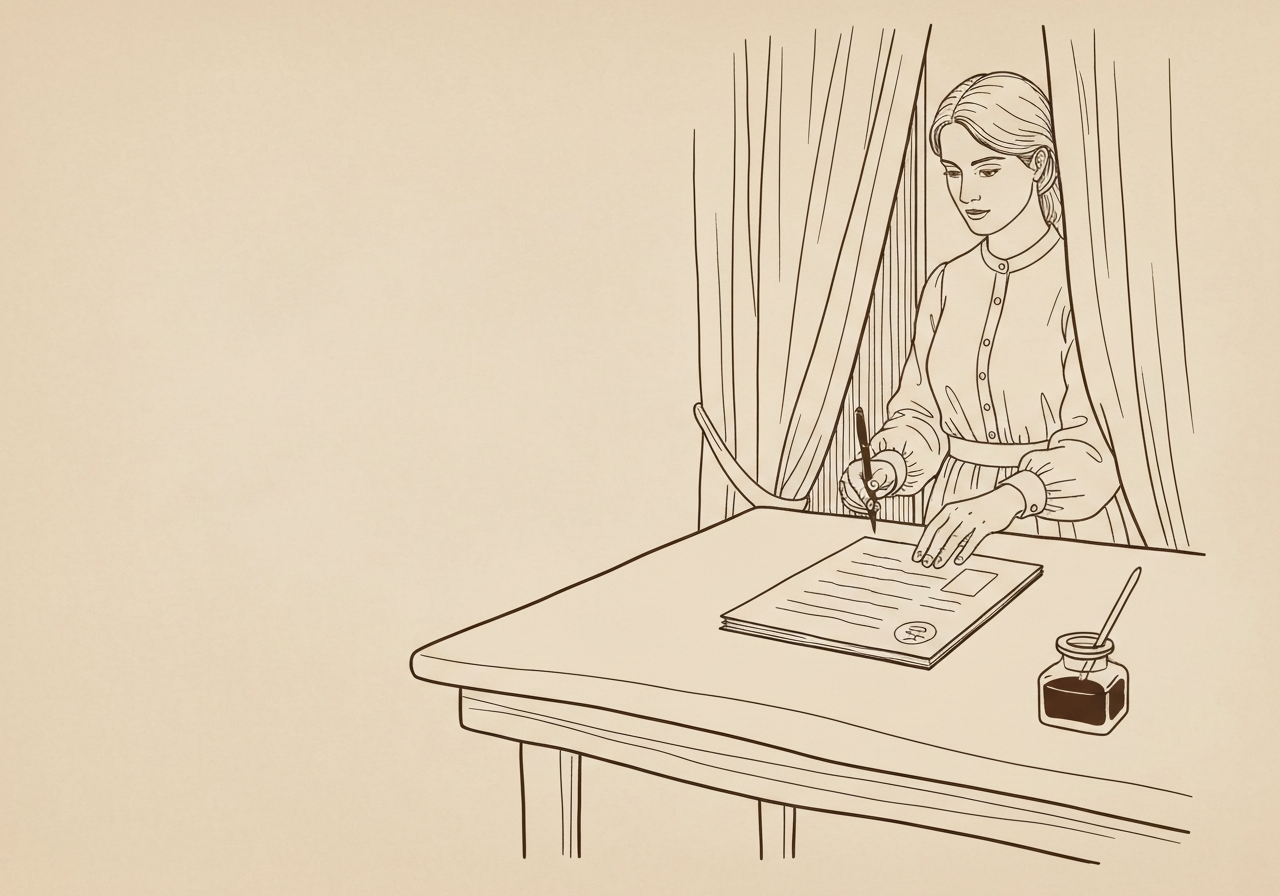
Three facts stood out. First, the execution and registration of the mortgage deed all took place at about the same time, in the house of the defendants. This was not a transaction conducted in a lawyer's office or a bank branch. It happened in the lady's own home, where she would have been most comfortable and where the purdahnashin tradition could be observed. The room itself would have been arranged to shield her from view—perhaps a curtain or a screen behind which she sat, her voice the only sign of her presence as the document was read aloud.
Second, the witnesses not only saw the executants sign, but also saw the document being explained to the lady by her husband and the registering officer. This was critical. A purdahnashin lady would not be expected to sign a document she did not understand. The fact that the document was explained to her—by her husband, no less, and by the government officer responsible for registration—meant that she was fully aware of what she was signing. One can imagine the registering officer's voice, steady and deliberate, reading the terms of the deed while the room fell silent. The lady, hidden behind the purdah, would have listened, and then, with her husband's guidance, placed her signature on the paper.
Third, the executants admitted receipt of the loan amount—the consideration—in the presence of the witnesses. The money changed hands at the same time and place as the signing. All events happened simultaneously. The physical deed itself, a thick document with its seals and signatures, would have been laid out on a low table, the ink still fresh as the witnesses leaned in to add their own marks.
Why the inference was legitimate
From these circumstances, the court drew a logical inference: the witnesses must have put their signatures in the presence of the executants, after having seen them sign the instrument. Why else would they be present at the same time, in the same house, watching the document being explained, and seeing the money being handed over? The only missing piece was a verbal confirmation from the witnesses themselves. But the court held that the law does not require that missing piece to be supplied by direct testimony alone. Circumstantial evidence—the attendant facts and surrounding events—can fill the gap.
The court held that the execution of the mortgage had been duly proved, arriving at that inference from the attendant circumstances. The bank's appeal succeeded.
What this means for practitioners
This case is a reminder that evidence is not limited to what a witness says on the stand. The circumstances surrounding a transaction—where it happened, who was present, what was said, what was done—are themselves evidence. A court cannot disregard them simply because the direct testimony is less than categorical.
THE PLAY: When proving attestation, do not rely solely on a witness's verbal confirmation. Build a record of the surrounding circumstances—time, place, presence of family members, explanation of the document, and contemporaneous payment—so that even if the witness wavers, the inference remains solid.
The lady signed. The money was paid. The witnesses were there. The court simply connected the dots.