A secret wedding, no guests, no vows — and the Supreme Court just called it valid
The Madras High Court said a self-respect marriage needs a public ceremony. The Supreme Court disagreed, saying that would put couples in danger.
Overruled.
Private garlands.
Valid marriage.
The Madras High Court said a self-respect marriage needs a public ceremony. The Supreme Court disagreed, saying that would put couples in danger.
They exchanged garlands with no one watching. The High Court said it wasn't a real marriage. The Supreme Court just overruled that.
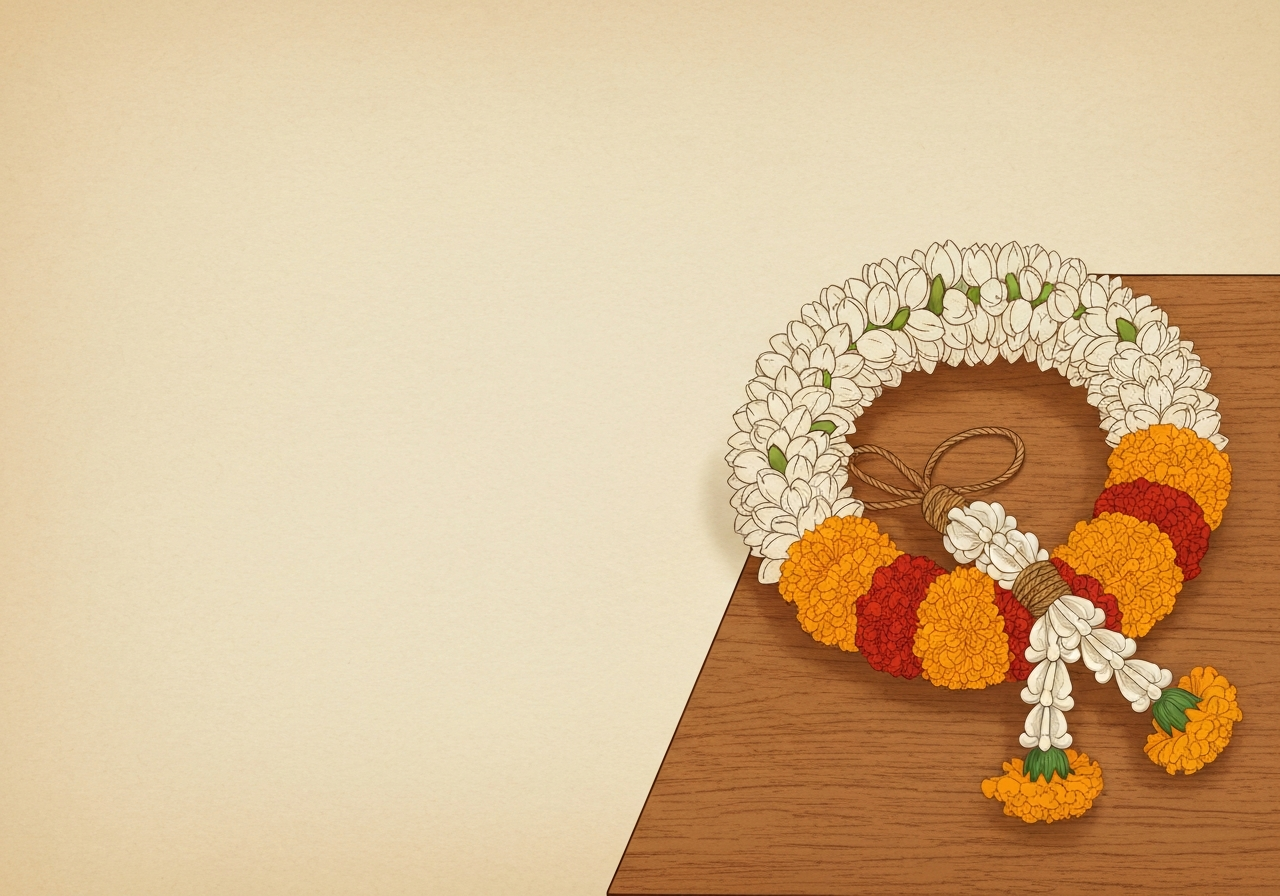
The garlands were jasmine and marigold, tied with rough thread. No priest chanted. No fire burned. A young woman named Mathithra stood before a magistrate in August 2023 and said something that would unravel a High Court judgment. She told the court she had married Ilavarasan of her own free will. Her earlier marriage — to her maternal uncle — had been forced upon her when she was just sixteen. The statement, recorded under Section 164 of the CrPC (a legal procedure where a magistrate records a person's statement to ensure it is voluntary and free from pressure), confirmed what Ilavarasan had been saying all along. But by then, the Madras High Court had already dismissed his case, calling his marriage invalid because it happened without a public ceremony.
The question that hung over the entire case was deceptively simple: Can a marriage be valid if no one saw it happen?
When the garlands were exchanged in private
Ilavarasan and Mathithra married under a provision unique to Tamil Nadu — Section 7A of the Hindu Marriage Act, 1955 (a state amendment that recognises "self-respect marriages" or suyamariyathai marriages, where couples exchange garlands and declare their union without a priest or elaborate rituals). The ceremony was quiet. No guests. No public declaration. Just two people choosing each other.
Soon after, Mathithra's family took her away. Ilavarasan alleged they forced her into marrying her maternal uncle — a marriage that had already happened once before, when she was a minor. He approached the Madras High Court with a habeas corpus petition (a legal request asking the court to order the production of a person who is allegedly being illegally detained). He wanted Mathithra released from her family's custody so she could live with him as his wife.
The High Court did not ask whether Mathithra was being held against her will. Instead, it examined the marriage itself — and found it wanting.
Why the High Court said the marriage was invalid
The judge's order ran 15 pages. The word 'invalid' appeared in the first paragraph. In May 2023, a single judge of the Madras High Court at Madurai dismissed Ilavarasan's petition. The court relied on its own earlier decision in S. Balakrishnan Pandiyan v. Inspector of Police (2014), which held that a self-respect marriage under Section 7A must be publicly solemnised. A quiet exchange of garlands, the court said, was not enough. The judge also criticised the advocates who had participated in solemnising the marriage, suggesting they had overstepped their professional role.
The High Court's reasoning created a troubling paradox: the very privacy that couples from conservative families often need to marry safely was being used to invalidate their marriages. Ilavarasan appealed to the Supreme Court.
The Supreme Court's interim order: a different path
On August 4, 2023, even before the final hearing, the Supreme Court issued an interim order that signalled a shift in approach. Instead of speculating about the marriage's validity from a distance, the bench — Justice S. Ravindra Bhat and Justice Aravind Kumar — directed the District Legal Services Authority to record Mathithra's statement directly. The court invoked Section 164 of the CrPC for this purpose, ensuring that whatever Mathithra said would be recorded by a magistrate, free from coercion or influence.
Justice Bhat leaned forward. The courtroom was silent as the magistrate's report was read aloud. When Mathithra finally spoke, her words were unambiguous: she had married Ilavarasan willingly. Her earlier marriage to her uncle had been forced on her as a child. The statement, recorded under judicial supervision, cut through the legal abstractions that had dominated the High Court's reasoning.
What the Supreme Court saw that the High Court missed
The court then turned to the legal question at the heart of the case: Did Section 7A require a public ceremony?
The answer, the Supreme Court said, was no. The provision was deliberately broad. It recognised self-respect marriages as valid without prescribing any particular form of solemnisation. To read a requirement of "public declaration" into the section, the court held, would narrow its wide import and violate Article 21 of the Constitution (the fundamental right to life and personal liberty, which includes the right to choose one's life partner).
The court overruled S. Balakrishnan Pandiyan explicitly. The earlier decision, the bench said, was erroneous. Imposing a public solemnisation requirement would put couples at risk — especially those facing familial or community opposition. "Requiring public declaration for validity of self-respect marriages would imperil the lives and bodily integrity of couples," the court observed.
The precedents that shaped the judgment
The Supreme Court's decision in Ilavarasan v. The Superintendent of Police & Ors. (2023 INSC 813) did not emerge in a vacuum. The court drew on a line of its own precedents that progressively expanded the right to choose one's life partner. In S. Nagalingam v. Shivgami (2001), the court had examined the validity of marriages under customary law. In Lata Singh v. State of UP (2006), the court held that no one can force adults to marry against their will, and that the state must protect couples facing family violence. In Shafin Jahan v. Asokan KM (2018), the court protected the right of a woman to choose her partner, even when her family objected, and emphasised that the court must listen to the woman's own voice. In Laxmibai Chandaragi B. v. The State of Karnataka (2021), the court reaffirmed that the right to marry a person of one's choice is part of Article 21.
Ilavarasan extends that logic to the form of the marriage itself: if two adults choose each other, the state cannot invalidate their union simply because they chose to marry in private. The court also distinguished Section 7A from Section 7 of the Hindu Marriage Act (which governs ceremonies for a Hindu marriage), noting that the Tamil Nadu Amendment was specifically designed to accommodate non-ritualistic marriages.
The right to choose, privately
The Supreme Court's judgment is a clean, sharp correction of a High Court that had strayed beyond its role. The court did not create new law. It simply read Section 7A as it was written — without adding conditions that the legislature never intended. The ratio decidendi (the binding principle of the judgment) is clear: Section 7A does not require public solemnisation or declaration. Superimposing such a condition narrows the wide import of the statute and violates Article 21. The right of individuals to exercise free choice in marriage is an intrinsic part of the right to life, and requiring public declaration would imperil the lives and bodily integrity of couples facing familial or community opposition.
The case also highlights the importance of procedural fairness. The High Court had dismissed the habeas corpus petition without recording Mathithra's statement, relying instead on its own assumptions about the marriage's validity. The Supreme Court corrected this by ordering the Section 164 recording — a procedural step that ensured the court heard from the person whose liberty was at stake.
THE PLAY: A self-respect marriage under Section 7A of the Hindu Marriage Act (Tamil Nadu Amendment) does not require a public ceremony — any exchange of garlands or declaration by the couple, even in private, is valid, and courts cannot add extra conditions that would endanger couples facing family opposition.
The court directed the respondents to ensure that Mathithra joins Ilavarasan. The appeal was allowed. The High Court's restrictive reading was set aside. Pending applications were disposed of.
Two people exchanged garlands with no one watching. The garlands were jasmine and marigold, tied with rough thread. No priest chanted. No fire burned. The Supreme Court said that was enough.