A ship sank. The insurer refused to pay because of a hidden engine secret.
The owner got a safety certificate without telling the inspector about unrepaired damage. The Supreme Court said that voids the insurance.
8.27
crores.
The owner got a safety certificate without telling the inspector about unrepaired damage. The Supreme Court said that voids the insurance.
The vessel's engine was broken. The owner got a safety certificate anyway. Then the ship sank. The insurer said: not paying.
The Supreme Court of India answered one question in 2023: what happens when a shipowner hides a known engine defect from the certifying agency, gets a safety certificate, and the ship later sinks? The answer, from a bench of Justice A.S. Bopanna and Justice M.M. Sundresh, was blunt — the insurance policy is void. The insurer walks away. The bench of Justice A.S. Bopanna and Justice M.M. Sundresh dismissed the appeal with no order as to costs.
When the engine broke and the advance was paid
Hind Offshore Pvt. Ltd. chartered a sea vessel called M.V. Sea Panther. IFFCO-Tokio General Insurance Co. Ltd. insured it under a marine hull insurance policy.
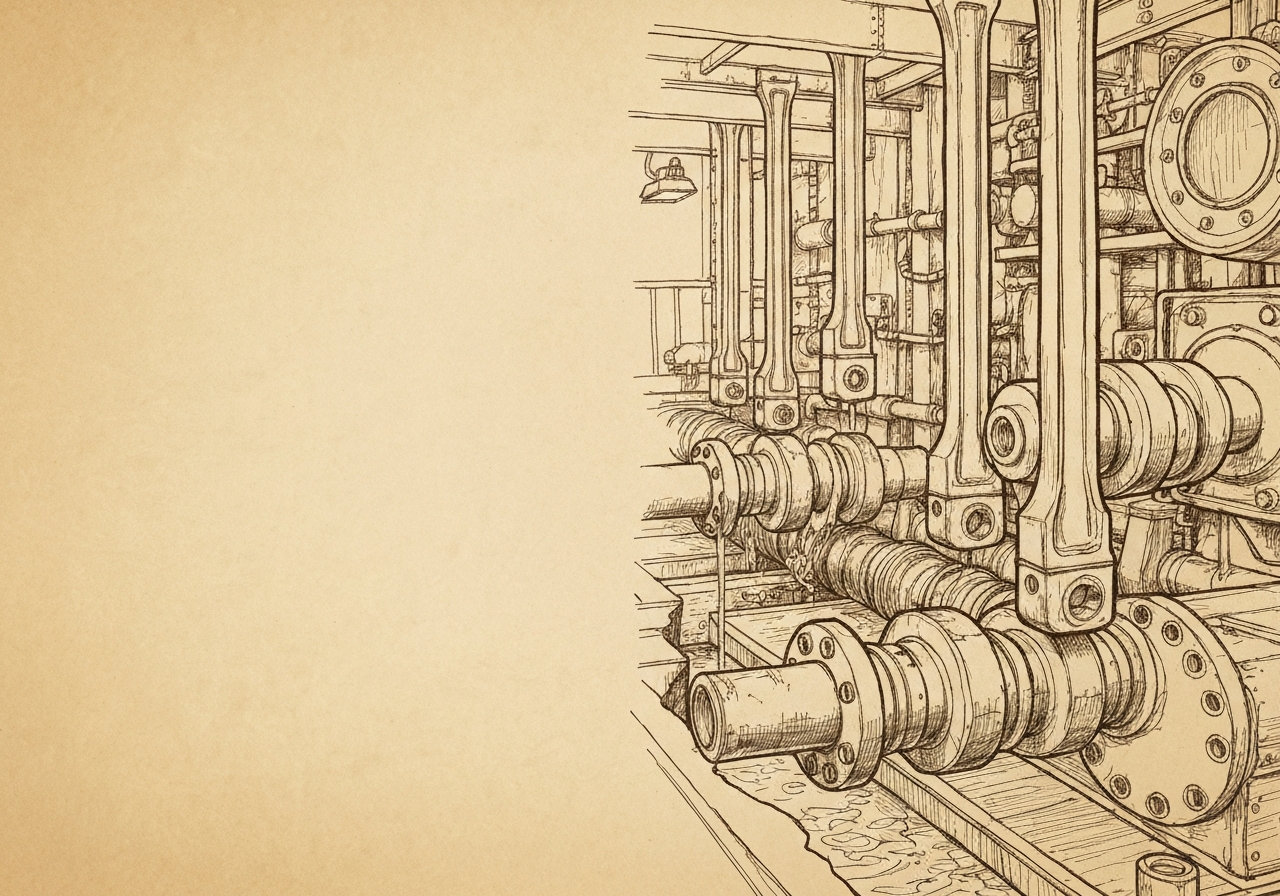
During the first policy period, the vessel's port main engine suffered major damage. The crankshaft and connecting rods — the parts that convert piston motion into rotation — needed replacement. IFFCO-Tokio paid Rs. 1 crore as an advance for the replacement. The post-mortem report noted the unreplaced crankshaft and connecting rods still in the engine.
Hind Offshore never replaced the parts. Only temporary repairs were done. The broken components stayed in the engine.
The certificate that hid the truth
When the first policy period ended, Hind Offshore applied for a fresh policy. It obtained a Classification Certificate from the American Bureau of Shipping (ABS) — a document that certifies a vessel is built and maintained according to safety and seaworthiness standards. Insurers rely on these certificates to decide whether to insure a vessel and at what premium. The paperwork sat on the desk, clean and official, hiding a critical omission.
Hind Offshore did not tell ABS about the unrepaired engine damage. The certificate was issued as if the vessel was sound. Based on that certificate, IFFCO-Tokio issued a new marine hull policy for the second period.
The collision and the claim
A tugboat struck M.V. Sea Panther during the second policy period. The vessel sank. Hind Offshore filed a claim for Rs. 8.27 crores — total loss. The tugboat collision caused the vessel to sink; the claim for Rs. 8.27 crores was for total loss.
IFFCO-Tokio rejected the claim. The reasoning: the Classification Certificate was obtained by concealing the engine damage from ABS. That concealment, the insurer said, was a breach of warranty under the policy and under the Marine Insurance Act, 1963.
What the law says about warranties in marine insurance
Section 35 of the Marine Insurance Act, 1963 deals with warranties. A warranty is a promise by the insured that certain facts are true. Unlike a normal condition, a warranty must be exactly complied with — even if the breach has nothing to do with the loss. Section 35(3) says: if the insured breaches a warranty, the insurer is discharged from liability from the date of the breach. The insurer does not have to prove the breach caused the loss.
Hind Offshore argued that the breach — the concealment from ABS — was irrelevant because the ship sank due to a collision, not the engine damage. The court disagreed, citing Section 35(3): the breach itself, regardless of causation, discharged the insurer.
Section 37 deals with express warranties — promises written into the policy. The policy contained Clause 4.1 — the insurance terminates if the vessel's classification is not maintained or if any condition of the classification society is not complied with. The court applied this clause strictly: by obtaining a false certificate, Hind Offshore had failed to maintain classification.
Section 41(5) deals with the warranty of seaworthiness in a time policy (a policy covering a vessel for a fixed period). Section 19 states the fundamental principle: insurance is uberrimae fidei — "utmost good faith" — requiring the insured to disclose every material fact. The court reasoned that the concealment from ABS violated this principle, making the entire cover void.
What the NCDRC decided
Hind Offshore first approached the National Consumer Disputes Redressal Commission (NCDRC), the consumer court for large-value insurance disputes. The NCDRC dismissed the complaint. The Classification Certificate was invalid, it held, because Hind Offshore had concealed the unrepaired engine damage from ABS. The certificate was obtained by fraud. The insurer was entitled to repudiate the claim.
Hind Offshore appealed to the Supreme Court.
The Supreme Court's reasoning
The bench upheld the NCDRC's decision. Three key principles emerged.
First, the onus is entirely on the insured. It is not the insurer's job to check whether the insured disclosed defects to the classification society. The insured must bring every known defect to the society's notice before the certificate is issued. If the insured fails to do so, the certificate is invalid from the start. The court stated: "the onus is entirely on the insured to bring defects and shortcomings to the notice of the Classification Society before the issue of the Class Certificate; it is not the insurer's burden to investigate whether the insured has made such disclosures."
Second, the insurer's knowledge of a breach does not equal waiver. Hind Offshore argued that IFFCO-Tokio knew about the engine damage from the first policy period, and by issuing a second policy, the insurer had waived the breach. The court rejected this. Mere knowledge is not enough. Waiver requires an express representation — a clear statement or action showing the insurer intended to give up its right to enforce the warranty. Issuing a policy based on a Class Certificate does not amount to waiver. The court observed: "mere knowledge on the part of the insurer that there was a breach of warranty does not amount to waiver in the absence of an express representation to that effect."
Third, the breach of warranty discharges the insurer completely. Under Section 35(3), once a warranty is breached, the insurer is discharged from liability from the date of the breach. It does not matter whether the breach caused the loss. The ship sank because of a collision, not because of the broken engine. That did not matter. The breach — obtaining a false certificate — was enough.
Why this matters for every marine insurance policy
For shipowners and charterers, this judgment is a stark reminder. A Classification Certificate is not a formality. It is a document the insurer relies on to assess risk. If the certificate is obtained by concealing known defects, the entire insurance cover can be voided — even if the defect had nothing to do with the eventual loss.
The court cited several precedents, including Rajankumar & Brothers (IMPEX) v. Oriental Insurance Company Ltd. and Sea Lark Fisheries v. United India Insurance Company & Anr., both dealing with the strictness of warranty compliance in marine policies. In Rajankumar, the Supreme Court had held that a breach of warranty under the Marine Insurance Act discharges the insurer regardless of causation — a principle the bench applied directly to Hind Offshore's case.
The court also referred to Contship Container Lines Ltd. v. D.K. Lall & Ors. and New India Assurance Company Ltd. v. Pradeep Kumar, which reinforced the principle that insurance contracts require utmost good faith. In New India Assurance Ltd. v. Protection Manufacturers Pvt. Ltd., the court had similarly emphasised that non-disclosure of material facts vitiates the insurance contract. The bench in Hind Offshore applied this line of reasoning to the concealment of the engine damage from ABS.
Additionally, the court drew on Marine Offshore Pvt. Ltd. v. China Insurance Company (Singapore) Pvt. Ltd. & Anr., a Singapore case that held that a breach of class warranty discharges the insurer even if the loss is unrelated to the breach. The Supreme Court found this persuasive, noting that the principle is consistent with Indian law under Section 35(3). The court also cited Ceyaki Shipping Pvt. Ltd. v. New India Assurance Pvt. Co. Ltd., a NCDRC decision that dealt with similar facts — a vessel sank after a classification certificate was obtained without disclosing known defects — and held the insurer not liable.
The procedural journey of this case is instructive. The consumer complaint was filed before the NCDRC on 1 January 2008 and dismissed. Hind Offshore then appealed to the Supreme Court in Civil Appeal No. 7228 of 2015. The appeal was heard over several years before the bench delivered its judgment on 9 August 2023. The case was cited as 2023 LiveLaw (SC) 640 and 2023 INSC 697. Throughout this period, the vessel remained at the bottom of the water, and the claim for Rs. 8.27 crores remained unpaid.
The court also examined the ABS Rules — Section 2, Suspension and Cancellation of Classification — which require the owner to report any damage or defect that affects the vessel's classification. Hind Offshore's failure to report the unreplaced crankshaft and connecting rods was a direct violation of these rules. The court held that this violation, combined with the concealment from ABS, rendered the Classification Certificate invalid from the moment it was issued.
The insurer had invoked Clause 4.1 of the Marine Hull Insurance Policy, which terminates the insurance if the vessel's classification is not maintained. The court found that by obtaining a certificate through concealment, Hind Offshore had failed to maintain classification. The policy was therefore void from the start of the second policy period.
The court also addressed the argument that the insurer had waived the breach by issuing the second policy. Hind Offshore pointed out that IFFCO-Tokio had paid Rs. 1 crore for the engine repairs during the first policy period and was therefore aware of the damage. The court rejected this argument, holding that mere knowledge does not constitute waiver. For waiver to apply, the insurer must have made an express representation that it would not enforce the warranty. Issuing a policy based on a Class Certificate — even one obtained by concealment — does not amount to such a representation.
THE PLAY: Before applying for a Classification Certificate, disclose every known defect to the classification society in writing — even if the defect is unrelated to seaworthiness — or risk losing the entire insurance cover.
The appeal was dismissed with no order as to costs.