A Swiss bank sued a ship for missing fuel cargo. The court added a surprise party.
The notify party on the bill of lading gave delivery instructions without the original document. Now they must defend the suit alongside the vessel owner.
Set aside.
No original bill.
Added as party.
The notify party on the bill of lading gave delivery instructions without the original document. Now they must defend the suit alongside the vessel owner.
Gulf Petroleum told the ship to hand over $10 million in fuel to Chevron. They never produced the original bill of lading. The bank that financed the deal sued the vessel. But the court said Gulf Petroleum has to be in the case too.
It began with a single piece of paper. A Swiss bank, Banque Cantonale De Geneve, financed a massive purchase of marine fuel oil by Gulf Petroleum FZC from Indian Oil Corporation. The bank was named as the consignee — the person legally entitled to receive the cargo — on the Bill of Lading, the document that acts as both a receipt and a key to the goods. Without that original document, no one should have been able to take delivery. But that is exactly what happened. In the bank's hands, the paper felt thin, almost weightless — yet it represented millions of dollars in fuel that had already vanished.
When the cargo vanished without the paperwork
The vessel M.V. Polaris Galaxy carried the fuel to Singapore. There, on instructions from Gulf Petroleum, the ship discharged the entire cargo to a third party — Chevron. Gulf Petroleum provided a Letter of Indemnity, a promise to cover any losses if things went wrong. But they never produced the original Bill of Lading. The bank, which had financed the deal and held that document, never authorised the release.
Then Gulf Petroleum collapsed. A massive fraud came to light. The company defaulted on its payments. The bank was left holding a worthless piece of paper — the Bill of Lading — while the fuel had already been burned or sold by Chevron.
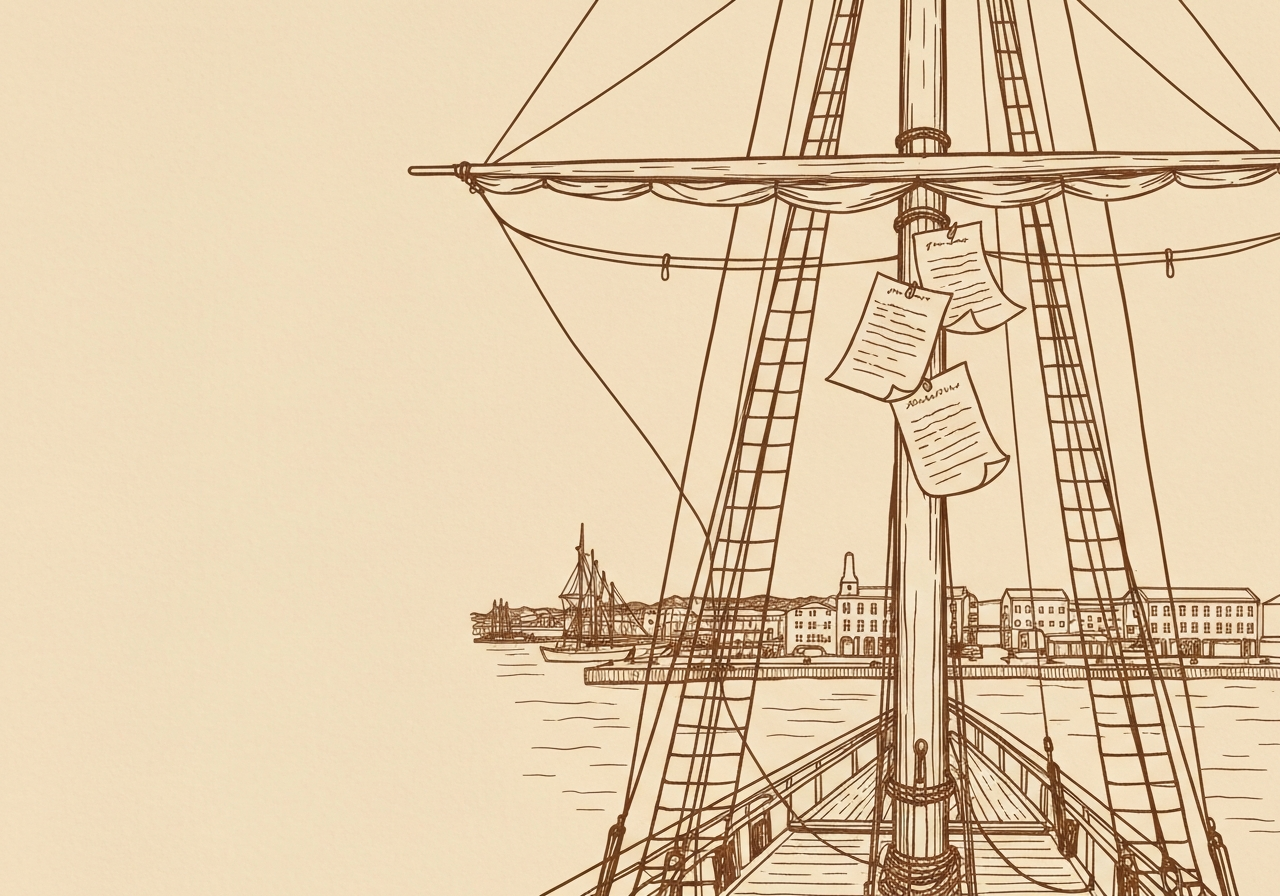
The bank did what any lender would do. It filed an admiralty suit in rem (a legal action against the ship itself rather than its owner) in the Madras High Court, arguing that the vessel had committed the tort of conversion — the civil wrong of taking someone else's property without permission — by delivering the cargo without the original Bill of Lading. The court ordered the arrest of the vessel on March 9, 2021. The harbour fell silent as the arrest order was served; the ship sat motionless at berth, its crew watching as the legal papers were pinned to the mast.
The judge added a surprise defendant
But the Single Judge of the Commercial Division did something unexpected. On September 24, 2021, the court directed the bank to add Gulf Petroleum as a party to the suit under Order 1 Rule 10(2) of the Code of Civil Procedure, 1908 (a provision that allows a court to add any person whose presence is necessary for a complete and effective resolution of the dispute). In the courtroom, the judge's words hung in the air: Gulf Petroleum would be brought in. The bank's counsel exchanged glances — they had not sought this.
The bank had not asked for this. They had sued the vessel. The vessel owner had asked for Gulf Petroleum to be brought in. The judge agreed. The reasoning was simple: Gulf Petroleum had given the delivery instructions, had issued the Letter of Indemnity, and was the bank's own customer. If anyone knew what had really happened to the fuel, it was them.
Gulf Petroleum objected. They argued they had no connection to the dispute. But the court said they were a "proper party" — someone whose involvement would help the court decide the case fairly and completely.
The appeal that shouldn't have been allowed
Gulf Petroleum appealed to the Commercial Appellate Division of the Madras High Court. The Division Bench reversed the Single Judge's order on October 28, 2021, holding that Gulf Petroleum was not a necessary party and should not have been added. They even imposed costs of Rs. 1,50,000 on the bank.
But there was a problem. The Division Bench had heard the appeal under Section 13(1A) of the Commercial Courts Act, 2015 (which allows appeals from orders of a Commercial Division). The question was: was this order even appealable?
The Supreme Court would have to answer that. And the answer would change how every admiralty case in India handles parties who disappear after giving delivery instructions.
Why the Supreme Court said the appeal was dead on arrival
The Supreme Court bench — Justice Indira Banerjee and Justice A.S. Bopanna — delivered its judgment on September 23, 2022. They started with the procedural question: could the Division Bench have heard the appeal at all?
The Admiralty (Jurisdiction and Settlement of Maritime Claims) Act, 2017, governs appeals in admiralty cases. Section 14 of that Act says appeals lie from "interim orders" to the same extent as under the Code of Civil Procedure. But the Code of Civil Procedure, through Order XLIII Rule 1, lists exactly which interim orders can be appealed. An order adding a party under Order 1 Rule 10(2) is not on that list.
The court held that the phrase "interim order" in Section 14 must be read harmoniously with Order XLIII Rule 1. Not every interim order is appealable — only those specifically listed. Since the addition of a party is not listed, no appeal lay against it. The Division Bench had no jurisdiction to hear the appeal at all. The Supreme Court observed that when two enactments operating in the same field contain non-obstante clauses, "the conflict must be resolved by considering the purpose and policy underlying each enactment, not merely by the rule that the later statute prevails."
The court also rejected the argument that Section 13(1A) of the Commercial Courts Act created a separate right of appeal. Section 13(2) of that Act says no appeal lies except as provided in the Act itself. And Section 21 of the Commercial Courts Act gives it overriding effect over other laws. But the Supreme Court said that when two laws with non-obstante clauses (clauses that say "this law overrides all others") operate in the same field, the conflict must be resolved by looking at the purpose and policy of each law — not by mechanically applying the rule that the later statute prevails.
The purpose of the Admiralty Act was to create a specialised, efficient regime for maritime claims. Allowing appeals against every procedural order would defeat that purpose.
Why Gulf Petroleum had to stay in the case
On the merits, the Supreme Court held that Gulf Petroleum was a proper party whose presence was necessary for effective adjudication. The bank's claim was for mis-delivery of cargo. Gulf Petroleum had given the delivery instructions. They had issued the Letter of Indemnity. They were the bank's customer. The entire chain of events — from the financing to the fraud to the default — ran through Gulf Petroleum.
The court cited the English case of Cho Yang Shipping Co. Ltd. v. Coral (UK) Ltd., where the court held that a notify party (the person named on the Bill of Lading to be notified when cargo arrives) who gives delivery instructions without producing the original document can be liable. The same logic applied here. Gulf Petroleum was not a bystander. They were the person who set the entire mis-delivery in motion.
The Supreme Court restored the Single Judge's order adding Gulf Petroleum as a defendant. The Division Bench's order was set aside. The file on the judge's desk felt heavier now — another party to answer for the missing fuel.
What this means for every admiralty case
Two lessons emerge from this judgment. First, procedural shortcuts will not save you. If you are a party who gave delivery instructions without the original Bill of Lading, you cannot escape the suit by arguing you are not a necessary party. The court will bring you in. Second, if you want to appeal an interim order in an admiralty case, check the list in Order XLIII Rule 1 first. If your order is not there, no appeal lies — no matter what the Commercial Courts Act says.
THE PLAY: If you give delivery instructions without the original Bill of Lading, expect to be added as a defendant in the ensuing admiralty suit — and do not expect to appeal that addition.
The vessel was arrested. The bank got its day in court. And Gulf Petroleum — the company that had already vanished in a cloud of fraud — was pulled back into the fight. The smell of salt and diesel clung to the courtroom as the order was read; the case was far from over.