A will cut off natural heirs. The court said that's normal.
Four suspicious circumstances were used to deny probate. The Supreme Court said three of them were not suspicious at all.
Probate granted.
Will upheld.
Family excluded.
Four suspicious circumstances were used to deny probate. The Supreme Court said three of them were not suspicious at all.
The old lady's will left everything to outsiders. The lower courts said that was suspicious. The Supreme Court said — that's the whole point of a will.
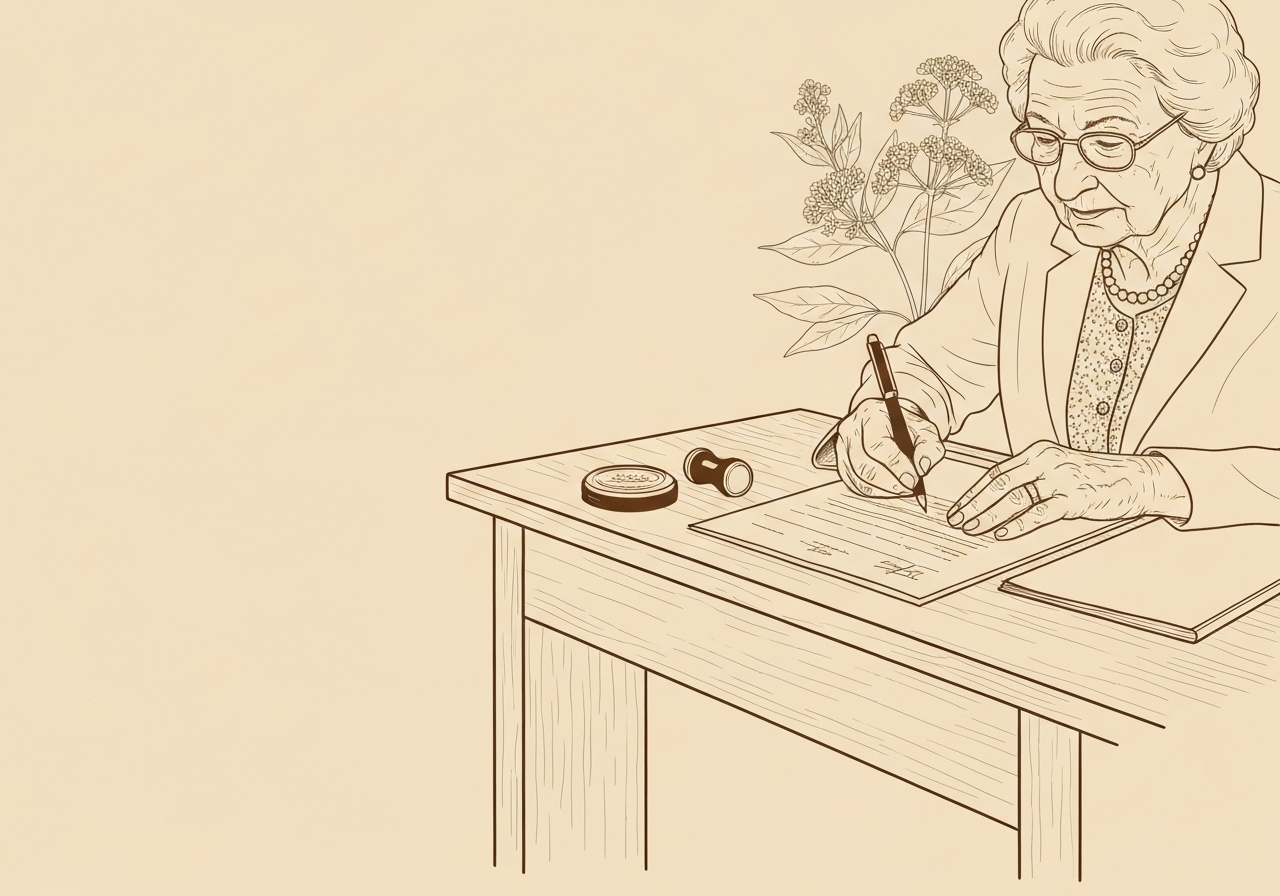
An elderly woman, alone in her final years, walked into a Sub-registrar's office. The air was thick with the smell of old paper and ink. She sat at a heavy wooden desk, the stamp pad lying open, the registrar's seal glinting under the dim light. She signed a document that would, after her death, transfer everything she owned to people who were not her family. The natural heirs — those who would have inherited by law if she had died without a will — got nothing.
When the executors (the people named in the will to carry out its instructions) approached the Calcutta High Court seeking probate (a court order confirming the will is valid), the lower courts refused. They found four circumstances suspicious. The Supreme Court would later dismantle three of them.
When the will left the family out
The case, Rabindra Nath Mukherjee and Anr. v. Panchanan Banerjee (dead) by Lrs. and Ors., began in a trial court. The petitioners — the executors named in the will — asked the court to grant probate. The trial judge looked at the document, turned the pages slowly, and said no.
The judge had identified four circumstances that, taken together, made the will suspect:
- The testatrix (the woman who made the will) had cut off her natural heirs entirely.
- A lawyer connected to one of the executors had identified the old lady before the Sub-registrar.
- The witnesses to the will were interested in the beneficiaries (the people who stood to gain).
- A man named Subodh, a close relative of one executor, had played an active role in getting the will executed.
The Calcutta High Court agreed with the trial judge. The will, they said, was surrounded by suspicious circumstances. The executors appealed to the Supreme Court.
The one circumstance that was never suspicious
The Supreme Court began with the first circumstance: the deprivation of natural heirs. The lower courts had treated this as a red flag — why would a woman leave her family out of her will unless something was wrong?
The Court's answer was blunt. The whole idea behind a will, they said, is to interfere with the normal line of succession. If a person wants their property to go exactly as the law would have sent it, they do not need a will. The will exists precisely to change that outcome.
"Natural heirs are debarred in every case of a Will, wholly or partly," the Court observed. This fact alone, they held, could not be treated as a suspicious circumstance. If it were, every will that disinherited a relative would be suspect — which would defeat the very purpose of testamentary freedom.
The courtroom fell silent as the bench delivered this reasoning. The judges' voices carried a quiet finality: the exclusion of family was not a mark of fraud, but the very signature of a will's purpose.
Why the lawyer's identification did not matter
The second circumstance involved the identification of the testatrix before the Sub-registrar. A lawyer connected to one of the executors had identified her. The lower courts found this troubling — it suggested the executors were too involved in the process.
The Supreme Court disagreed. The key question was not who identified her, but whether the identification was correct. The Court found no evidence that a wrong person had been identified. The old lady who appeared before the Sub-registrar, who placed her thumbprint on the register, was indeed the testatrix. The involvement of a lawyer known to one executor did not, by itself, make the will suspicious.
There was no whisper of impersonation, no claim that a stranger had sat in her place. The ink on the identification slip matched the woman who came. That was enough.
When the witnesses are interested
The third circumstance was perhaps the most technical. The witnesses to the will were interested in the beneficiaries — meaning they stood to gain something if the will was upheld. The lower courts saw this as a sign of foul play.
But the Supreme Court noted a crucial detail: the will was registered. The Sub-registrar had certified that the contents of the will were read over to the old lady, and that she admitted the contents were correct. When a will is registered and the registering officer confirms that the testator understood the document, the fact that witnesses are interested loses much of its significance.
The registration process, the Court suggested, provides a layer of verification that reduces the risk of fraud. The Sub-registrar is a public official. If he certifies that the testator knew what she was signing, that certification carries weight — even if the witnesses are not neutral. The stamp on the document, the official seal pressed into the paper, spoke louder than any witness's bias.
What the lower courts missed
Having dismantled three of the four suspicious circumstances, the Supreme Court turned to what the lower courts had overlooked. The lower courts, the Court said, had "over played some circumstances they regarded as suspicious and somehow missed some circumstances which bolstered the case of the propounders."
Two facts stood out.
First, the testatrix had made two codicils (amendments to a will) three years after executing the original will. This was significant. A person who does not know what a will is, or who was pressured into signing one, does not later make changes to it. The codicils — thin sheets of paper, carefully worded, bearing her signature — demonstrated that the old lady understood the document and knew why it needed modification. She had held those pages in her hands, read them, and chosen to alter her wishes.
Second, shortly before her death, the testatrix executed a Fixed Deposit Receipt of Rs. 15,000 and sold some property. These actions showed she was not the immobile, senile woman the respondents had described. She was conscious, capable, and actively managing her affairs. The FDR document, crisp from the bank, and the sale deed, signed with a steady hand, told a story of a woman in control of her life.
The Court's logic was clear: when evaluating whether a will is genuine, a court must take a total view of all circumstances — not focus excessively on a few isolated features that appear suspicious when viewed alone.
The deeper lesson: a total view, not isolated suspicion
The judgment is a reminder that the law of wills is built on a fundamental premise: a person's last wishes deserve respect, even when those wishes disappoint the family. The lower courts in this case had zoomed in on four facts and let those facts colour everything else. The Supreme Court zoomed out.
Consider the approach. The lower courts saw the exclusion of natural heirs and thought: this is odd. The Supreme Court saw the same fact and thought: this is normal for a will. The lower courts saw a lawyer identifying the testatrix and thought: this is suspicious. The Supreme Court asked: was the identification wrong? The lower courts saw interested witnesses and thought: this is unreliable. The Supreme Court noted the registration and thought: this is verified.
The difference is not in the facts — it is in the framework. The Supreme Court applied a framework that begins with the presumption that a will, especially a registered will, is valid. Suspicious circumstances must be weighed, but they must also be tested against the evidence that supports the will.
For practitioners, the takeaway is straightforward. When a will is challenged, the court must weigh every circumstance — both those that raise suspicion and those that confirm genuineness. A single suspicious fact, especially one like the exclusion of natural heirs, cannot carry the entire case.
The judgment also reinforces the value of registration. A registered will, certified by a Sub-registrar who confirms the testator's understanding, carries a presumption of validity that is not easily displaced by the identity of witnesses.
THE PLAY: When defending a will, do not let the court fixate on the exclusion of natural heirs — that is not a suspicious circumstance, it is the very purpose of testamentary succession.
The old lady's will stood. The natural heirs got nothing. That, the Supreme Court said, was exactly what a will is supposed to do.