Accused tried to escape murder trial 3 times. Supreme Court says: enough.
A man charged with murder kept filing applications to get out of trial. The High Court let him go. The Supreme Court reversed it—and fined him ₹50,000.
15
years.
A man charged with murder kept filing applications to get out of trial. The High Court let him go. The Supreme Court reversed it—and fined him ₹50,000.
He was charged with murder. He tried to get discharged—failed. He tried to change the charge—failed. Then the High Court set him free. The Supreme Court just reversed that.
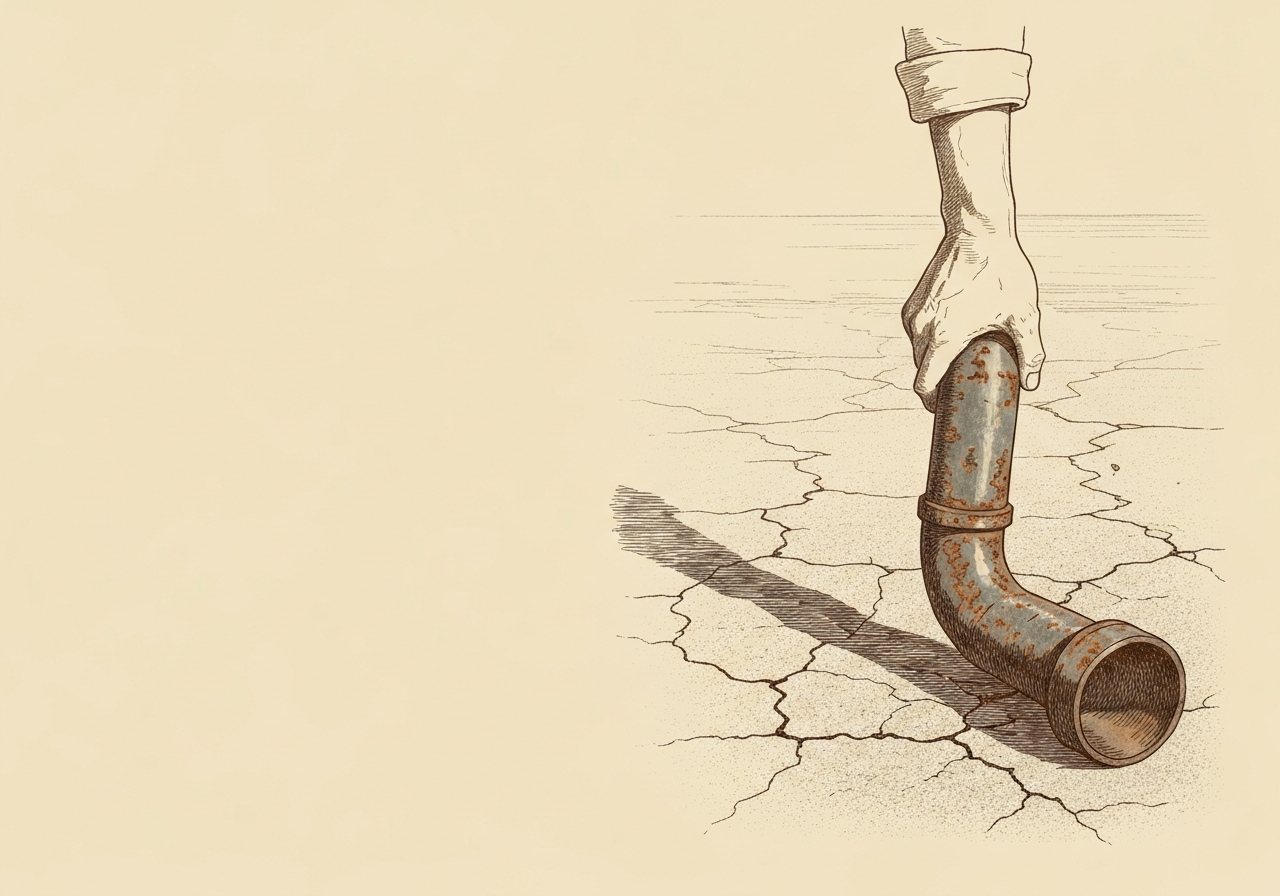
On a November afternoon in 2009, a party dispute in Dharmapuri turned bloody. A man named Veeramani was stabbed in the chest and beaten with iron pipes. He died on a government hospital bed. Thirty-one people were charged. One of them—Accused No.2—spent the next fifteen years trying to slip out of the trial. He filed application after application. Twice, the courts said no. Then the Madras High Court, in a move the Supreme Court would later call "ex facie illegal," let him walk. The Supreme Court didn't just reverse that order. It fined him ₹50,000 for wasting the system's time.
When a party dispute turned into a murder weapon
The facts are brutal and simple. On 24 November 2009, during an internal AIADMK dispute over filing nominations in Dharmapuri, Accused No.1—Vetrivel, the Town Secretary—led his group to attack K. Ravi and his brother Veeramani. Vetrivel ordered weapons brought from a vehicle. Accused No.2—Baskar, the man at the centre of this appeal—brought iron pipes and knives from his Tata Safari. Vetrivel stabbed Veeramani in the chest. Baskar hit him repeatedly on the head with an iron pipe. He also beat the complainant, K. Ravi. Veeramani died during treatment.
The police registered FIR No. 2074/2009. After investigation, a chargesheet was filed against 31 accused. Baskar was charged under multiple sections of the Indian Penal Code, 1860—including Section 302 (murder), Section 149 (unlawful assembly with a common object), Section 147 (rioting), Section 148 (rioting armed with a deadly weapon), and Section 324 (voluntarily causing hurt by dangerous weapons). The case was committed to the Sessions Court in Dharmapuri for trial.
The first escape attempt: discharge
Before the trial could begin, Baskar filed an application under Section 227 of the CrPC (the provision that allows an accused to seek discharge if there is no sufficient ground to proceed against them). He argued that the evidence did not justify framing charges against him. The Sessions Court disagreed and dismissed the application on 1 July 2016. Baskar went to the Madras High Court in revision. The High Court confirmed the dismissal on 5 August 2016. Charges were framed. The trial was ready to start.
But Baskar wasn't done.
The second escape attempt: changing the charge
On 18 October 2016, Baskar filed another application—this time under Section 216 of the CrPC (the provision that allows a court to alter or add charges before judgment). He wanted the charges modified. The Sessions Court dismissed this too. The court noted that Section 216 is an enabling provision for the court, not a right for the accused to file a fresh discharge application after charges have already been framed—especially when an earlier discharge application under Section 227 had already been rejected.
Baskar went back to the High Court in revision. This time, something strange happened.
What the High Court did—and why the Supreme Court called it illegal
On 27 July 2017, the Madras High Court allowed Baskar's revision petition. It set aside the charges against him. It also directed further investigation under Section 173(8) of the CrPC (the provision that allows police to conduct additional investigation after a chargesheet has been filed). The High Court gave no detailed reasoning for why a man who had already failed twice to get discharged should now be set free.
The complainant, K. Ravi, appealed to the Supreme Court.
The Supreme Court's reasoning: three fatal errors
The bench—Justice Bela M. Trivedi and Justice Satish Chandra Sharma—delivered its judgment on 29 August 2024. It found three clear errors in the High Court's order.
First, the revision itself was not maintainable. The Supreme Court held that an order dismissing an application under Section 216 CrPC is an interlocutory order—a procedural step in the trial, not a final decision. Section 397(2) of the CrPC expressly bars revision against interlocutory orders. The High Court had no jurisdiction to hear the revision at all.
Second, Section 216 does not give the accused a second chance at discharge. The Supreme Court clarified that Section 216 is an enabling provision for the court, not a weapon for the accused. Once charges have been framed and a discharge application under Section 227 has been dismissed, the accused cannot use Section 216 to file a fresh discharge application. The court said: "Section 216 CrPC does not confer any right on the accused to file a fresh application seeking discharge after charges have been framed."
Third, the High Court's revisional power was used arbitrarily. Citing the precedent in Amit Kapoor v. Ramesh Chander and Another (2012) 9 SCC 460, the Supreme Court held that revisional jurisdiction under Section 397 CrPC is extremely limited. It should be exercised only when the decision under challenge is grossly erroneous, based on no evidence, or when judicial discretion has been exercised arbitrarily or perversely. None of those conditions were met here. The Sessions Court had correctly applied the law. The High Court had no reason to interfere.
The order: restored, with costs
The Supreme Court set aside the High Court's order dated 27 July 2017. It restored the Sessions Court's order framing charges against Baskar. It directed the Sessions Court to proceed with the trial expeditiously. And it imposed costs of ₹50,000 on Baskar, payable to the complainant within two weeks. The court also warned that any non-cooperation by any accused in the trial would lead to cancellation of bail.
THE PLAY: Once charges are framed and a discharge application under Section 227 CrPC is dismissed, an accused cannot use Section 216 CrPC to file a fresh discharge application—and the High Court cannot entertain a revision against an interlocutory order under Section 397(2) CrPC.
The trial will now proceed. Fifteen years after a man was stabbed to death in Dharmapuri, his brother will finally get his day in court.