Borrower can't buy back property by paying just the reserve price: SC
Supreme Court says paying the auction reserve or highest bid doesn't wipe out the full loan. The bank can still recover the balance.
1.85
crores.
Supreme Court says paying the auction reserve or highest bid doesn't wipe out the full loan. The bank can still recover the balance.
A borrower owed ₹1.85 crore. The bank put one house up for auction. The borrower paid ₹65 lakh and asked for the house back. The Supreme Court said: not enough.
It was a simple arithmetic problem that took five years and four courts to solve. A company called Karwa Trading owed Bank of Baroda over ₹1.85 crore. The bank had two pieces of security — an industrial plot and a residential house. When the borrower stopped paying, the bank classified the account as a Non-Performing Asset and moved to auction the residential house. The reserve price was set at ₹48.65 lakh. The highest bid came in at ₹71 lakh. The borrower, seeing the house slip away, walked into court and argued: we'll pay the reserve price, or even the highest bid, and keep the property. The bank said: that's not how debt works.
When the borrower defaulted
Bank of Baroda had extended two facilities to Karwa Trading Company — a term loan of ₹1 crore and a cash credit limit of ₹95 lakh. Both were secured by two properties: an industrial plot and a residential house. When the borrower defaulted, the bank invoked Section 13(2) of the SARFAESI Act, 2002 (the law that lets banks seize and sell assets of defaulting borrowers without going to court) and demanded ₹1,85,37,218.80. The borrower did not pay. The bank took possession of the residential house under Sections 13(4) and 14 of the same Act (the provisions that allow the bank to take symbolic and then physical control of the property), and prepared to auction it.
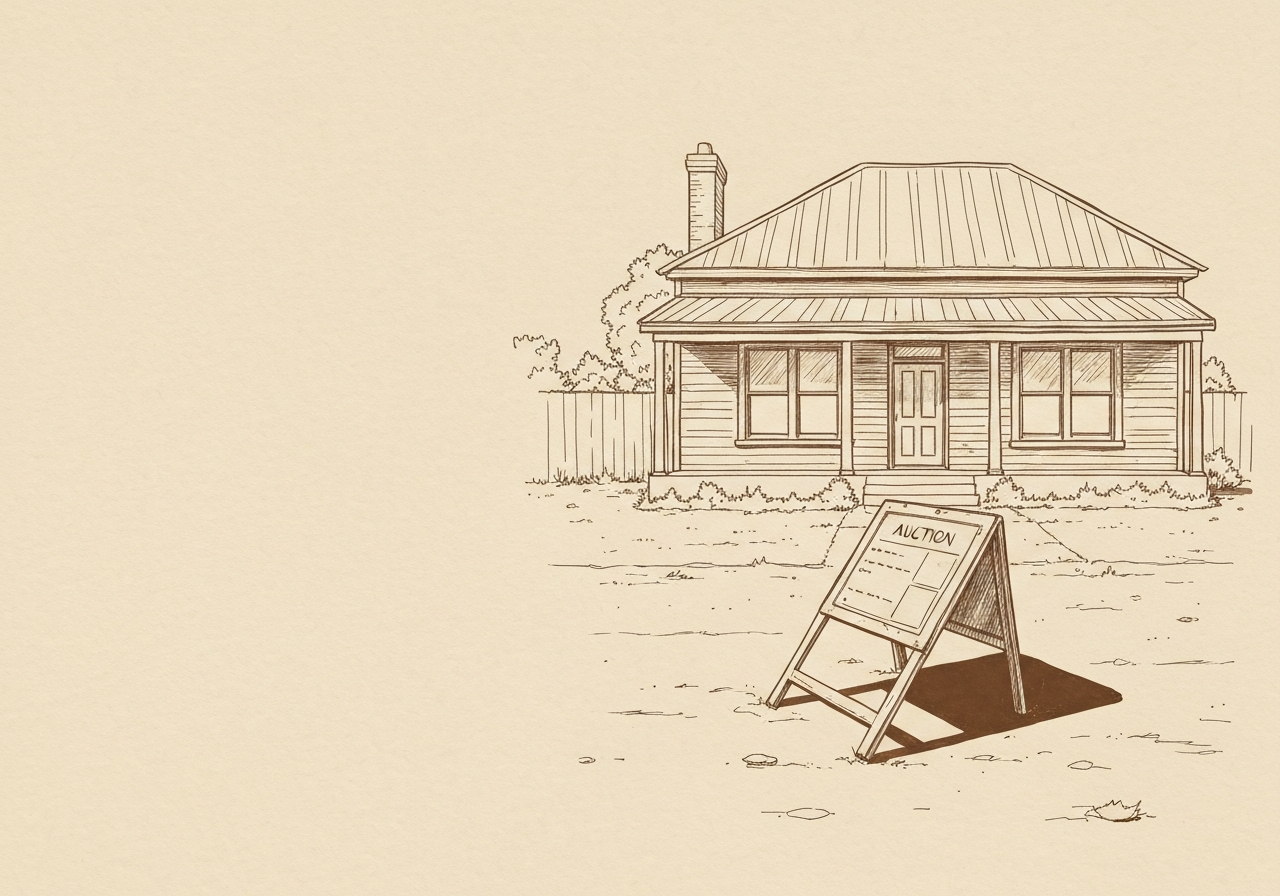
The auction notice, pinned to the wall of the house, set a reserve price of ₹48.65 lakh — the minimum amount the bank would accept. Bidders showed up. The highest bid touched ₹71 lakh. But before the auction could be completed, the borrower rushed to the Debt Recovery Tribunal (DRT — a specialised court that hears disputes between banks and borrowers).
The DRT's interim order
The borrower filed a Securitisation Application under Section 17 of the SARFAESI Act (the legal route for a borrower to challenge a bank's action). The DRT, sitting in Jaipur, passed an interim order that surprised the bank: the borrower could keep the property by simply depositing the reserve price of ₹48.65 lakh. The bank appealed to the Debt Recovery Appellate Tribunal (DRAT — the appeal court above the DRT). The DRAT dismissed the appeal. The borrower deposited the money and stayed in the house.
In the DRT courtroom, the silence was thick as the borrower's lawyer argued that the reserve price was enough. The bank's counsel, holding the thick file of outstanding dues, pointed to the figure of ₹1.85 crore. The presiding officer listened, then passed the interim order — a brief nod, a signature, and the house was temporarily saved. The borrower handed over the cheque for ₹48.65 lakh, the paper feeling thin against the weight of the debt.
The bank was not willing to let this go. The outstanding dues were ₹1.85 crore. The borrower had paid ₹48.65 lakh. The bank argued that this was not redemption — it was a discount on default.
The High Court's back-and-forth
The bank approached the High Court of Judicature for Rajasthan, Bench at Jaipur. A Single Judge agreed with the bank. The judge held that the DRT and DRAT orders violated Section 13(8) of the SARFAESI Act (the provision that tells a borrower exactly what they must pay to stop the sale of their asset). The Single Judge set aside the orders and directed the borrower to pay the full outstanding amount.
The borrower appealed to a Division Bench of the same High Court. The Division Bench reversed the Single Judge. It directed the bank to release the property on payment of ₹65.65 lakh — the average of the two highest bids received at the auction. The borrower paid ₹17 lakh more, bringing the total to ₹65.65 lakh, and asked for the house back.
The bank had had enough. It appealed to the Supreme Court.
What Section 13(8) actually says
The Supreme Court bench — Justice M.R. Shah and Justice Sanjiv Khanna — looked at the core question: what must a borrower pay to stop the sale of a secured asset under the SARFAESI Act?
Section 13(8) of the Act states that the secured asset shall not be sold only where the borrower tenders the entire amount due to the secured creditor, together with all costs, charges and expenses incurred by the bank, at any time before the date of publication of the notice for public auction. The key phrase is "the entire amount due."
The borrower argued that paying the reserve price or the highest bid amount should be enough. After all, if the bank could sell the house to a third party for ₹71 lakh, why couldn't the borrower buy it back for the same price?
The Supreme Court rejected this argument. The court held that the sale of a secured asset in auction for a particular amount does not extinguish the borrower's liability for the balance outstanding dues. By paying the highest bid amount or the reserve price, the borrower cannot be discharged of its liability of the outstanding dues payable to the bank. The borrower still owes the difference between what was paid and what was owed.
Why the borrower's logic failed
The court's reasoning was straightforward. When a bank auctions a secured asset, it is not selling the property in isolation. It is recovering part of a debt. The auction price reflects the market value of the collateral, not the size of the loan. If the borrower could buy back the property by matching the highest bid, every defaulting borrower would simply wait for the auction, bid up the price slightly, and walk away with the property while the bank was left chasing the remaining debt with no security.
The court also noted that the borrower had already deposited some money — ₹48.65 lakh under the DRT order and another ₹17 lakh under the Division Bench order. The Supreme Court directed that these amounts be adjusted against the total liability. But the borrower could not keep the property without paying the full outstanding dues.
The procedural journey: five courts in five years
The case travelled through every tier of the legal system. It began with the bank's notice under Section 13(2) on 7 January 2013, demanding ₹1,85,37,218.80. The borrower did not pay. The bank took physical possession of the residential house on 25 November 2013, with police assistance under Section 14 of the SARFAESI Act. The borrower then filed a Securitisation Application before the DRT, Jaipur, on 17 January 2014, and obtained an interim order allowing retention of the property on deposit of the reserve price.
The bank appealed to the DRAT, which dismissed the appeal. The bank then moved the High Court of Judicature for Rajasthan, Bench at Jaipur. A Single Judge, on 12 January 2017, set aside the DRT and DRAT orders. The borrower appealed to a Division Bench of the same High Court, which on 20 September 2017 reversed the Single Judge and directed release of the property on deposit of ₹65.65 lakh. The bank then appealed to the Supreme Court under Article 136 of the Constitution of India (the provision that allows the Supreme Court to grant special leave to appeal against any judgment of any court or tribunal in the country).
On 10 February 2022, the Supreme Court bench — Justice M.R. Shah and Justice Sanjiv Khanna — delivered the final verdict. The bench's expression was firm as the judgment was read out: the borrower could not keep the property without paying the full outstanding dues.
The Supreme Court's order
The Supreme Court allowed the bank's appeal. The Division Bench order dated 20.09.2017 was quashed and set aside. The Single Judge order — which had set aside the DRT and DRAT orders — was restored. The bank was permitted to proceed with a fresh auction of the residential house.
The court added specific directions to balance the interests of both sides. The borrower's possession of the property would not be disturbed until the fresh auction was finalised. However, the borrower had to hand over possession after the sale was completed. The borrower was also barred from alienating the property (selling or transferring it to anyone else) in the meantime. The bank would retain the original title deeds. The DRT was directed to decide the borrower's Securitisation Application on its merits, without being influenced by the Supreme Court's observations.
THE PLAY: A borrower cannot stop the sale of a secured asset by paying the reserve price or the highest auction bid — Section 13(8) of the SARFAESI Act requires the entire outstanding dues to be paid before the auction notice is published.
The arithmetic never changed. The borrower owed ₹1.85 crore. The house was worth ₹71 lakh at auction. Paying the value of the house did not pay the debt. The Supreme Court's judgment, delivered in a courtroom that fell silent as the bench rose, made clear that the law does not allow a borrower to pick and choose which part of the debt to repay. The entire amount due must be tendered, or the secured asset will be sold. The borrower's cheque for ₹65.65 lakh, handed over in the hope of keeping the house, was not enough — and the law said so, from the DRT in Jaipur all the way to the Supreme Court in New Delhi.