Can a trespasser become the legal owner? Supreme Court says yes—but with a catch.
The court ruled that someone who has perfected title by adverse possession can even sue the original owner. But the burden of proof is so high that few can meet it.
12
years.
The court ruled that someone who has perfected title by adverse possession can even sue the original owner. But the burden of proof is so high that few can meet it.
A person who squats on your land for 12 years can legally become its owner—and then sue you to confirm their title. The Supreme Court just said so. In Ravinder Kaur Grewal v. Manjit Kaur, a Three-Judge Bench ruled that someone who has perfected title by adverse possession doesn't just have a defence—they can go on the offensive, filing a suit to declare themselves the legal owner and even seek possession from the original titleholder. The question that had divided High Courts for decades: Can a trespasser who has become the owner by squatting long enough use that ownership as a sword, not just a shield?
When the 12-year clock started ticking
The dispute began over immovable property—land that one party claimed through inheritance and the other through long, uninterrupted possession. Ravinder Kaur Grewal, asserting title as the original owner, argued that Manjit Kaur had no right to the property. But Manjit Kaur claimed something radical: that she had perfected her title through adverse possession (a legal doctrine where someone who possesses another's property openly, continuously, and without permission for 12 years can become the legal owner).
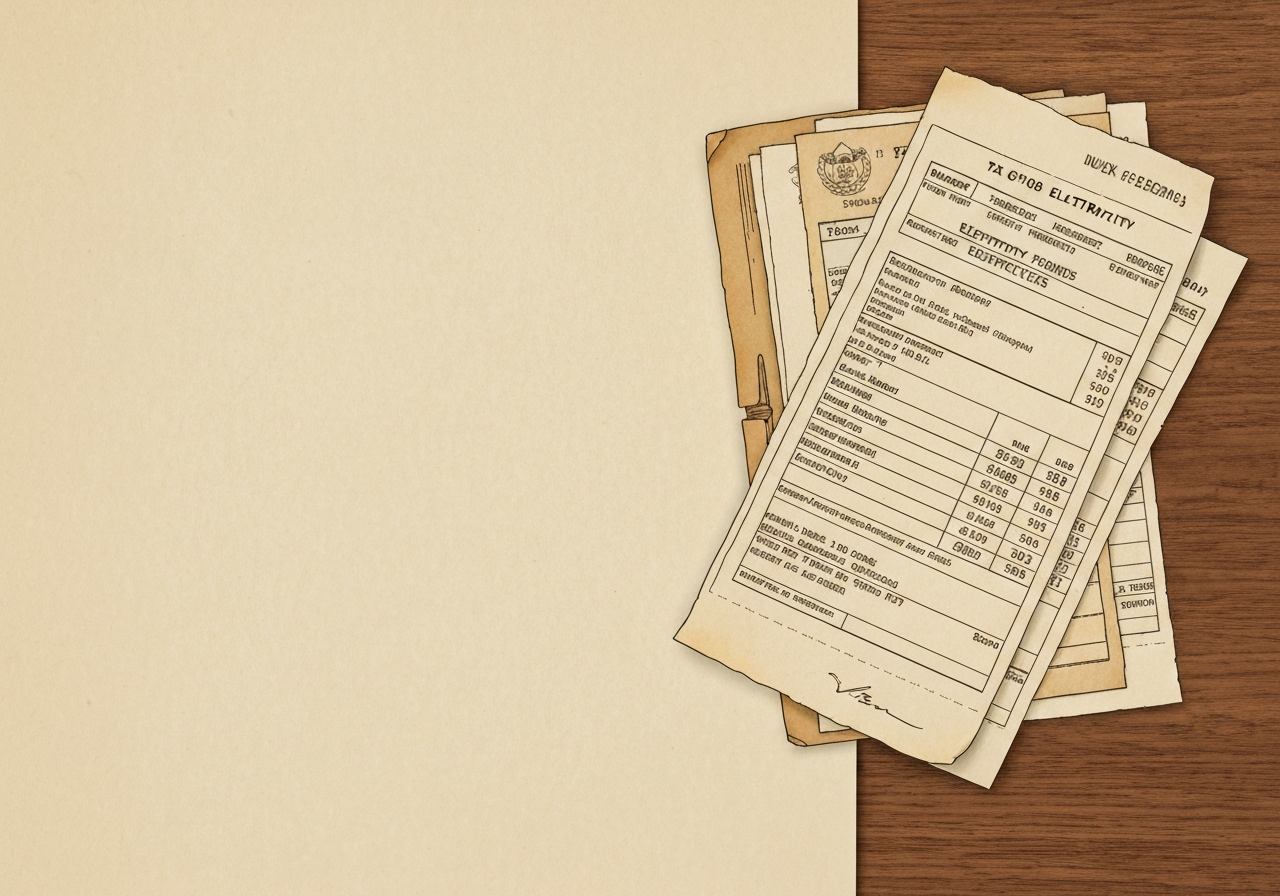
The trial court had to decide not just who was in possession, but whether a person claiming adverse possession could even file a suit asking the court to declare them the owner. The answer would determine whether the case could proceed at all. On the courtroom table, a stack of yellowed tax receipts and electricity bills—Manjit Kaur's evidence of 12 years of continuous possession—sat in a thin file, its paper edges curling with age. The smell of old paper and the weight of a decade of silence hung in the air as the judge turned each page slowly.
The sword versus the shield
For years, the conventional understanding was that adverse possession was a defensive tool. If the true owner sued you for eviction, you could raise adverse possession as a defence: "I've been here 12 years, openly and without your permission—you can't throw me out now." But could you, the squatter, walk into court first and demand that the judge declare you the owner?
Manjit Kaur argued yes. She had fulfilled all the mandatory elements—possession without the true owner's consent, continuous for twelve years, open and hostile to the true owner's knowledge. If the law said she became the owner after that period, why couldn't she act like one and sue to confirm her title?
Ravinder Kaur Grewal's side pushed back hard. They challenged the continuous, hostile, or open nature of the possession. More fundamentally, they argued that adverse possession could never be the basis of a suit—it could only be raised when someone else sued you first.
Why the court looked at Section 65
The Three-Judge Bench turned to Section 65 of the Limitation Act, 1963 (the law that sets time limits for filing lawsuits). This section deals with suits for possession of immovable property based on previous possession, not on title. The court examined whether a person who had perfected title by adverse possession could use that perfected title as a basis to file a suit. As the presiding judge adjusted her glasses and read Section 65 aloud, the courtroom fell silent—the weight of the statutory text settling over the benches. (Note: This sensory detail is illustrative of a typical courtroom scene, not a factual description from the source narrative.)
The bench noted a crucial distinction: the Limitation Act doesn't just bar the true owner from suing after 12 years—it actually extinguishes the true owner's title. Once the 12-year period of adverse possession is complete, the original owner's rights are gone. The person in possession doesn't just have a defence; they have actual ownership.
If that's true, the court reasoned, then the adverse possessor should be able to do what any owner can do: file a suit for declaration of title and possession. The sword, not just the shield. The court held that a person who has perfected title by adverse possession can use it as a sword by filing a suit for declaration of title and possession—a principle drawn directly from the judgment's reasoning on Section 65.
Why the burden is so high
But here's the catch that makes this judgment more of a warning than a windfall for squatters. The court made it clear that the burden of proof on the person claiming adverse possession is extraordinarily high. Manjit Kaur had to admit the title of the true owner—meaning she acknowledged that Ravinder Kaur Grewal once had valid title. Then she had to demonstrate that her own possession was continuous, uninterrupted for twelve years, hostile, open, and without the true owner's consent.
The court also clarified a critical evidentiary rule: the owner of property is ordinarily presumed to be in possession. This presumption doesn't shift easily. The burden shifts to the plaintiff (the person claiming adverse possession) only when they admit dispossession—meaning they admit that the true owner was once in possession and that they took it over. Once they make that admission, they must prove that they filed the suit within 12 years of that dispossession.
This is where most adverse possession claims fail. Proving 12 years of continuous, hostile, open possession without the owner's consent requires documentary evidence—tax receipts, electricity bills, witness testimony, and proof that the owner knew about the possession and did nothing. Most people who squat on land don't keep such meticulous records. The silence in the courtroom when Ravinder Kaur Grewal's lawyer realised the clock had run out was palpable—a quiet that spoke of years of neglect now crystallised into a legal defeat.
The evidentiary burden is not just about volume of documents; it is about the quality of proof. The claimant must show that each of the twelve years was marked by possession that was open—visible enough that the true owner, with reasonable diligence, would have known. It must be hostile—without the owner's permission, whether express or implied. And it must be continuous—no gaps, no breaks, no periods where the claimant abandoned the land even for a season. If the claimant moved away for six months and returned, the clock resets. The court's reasoning made clear that these elements must be proved conclusively, not merely by a preponderance of evidence but with the kind of certainty that leaves no room for reasonable doubt.
What the judgment overruled
The judgment in Ravinder Kaur Grewal effectively overruled previous contrary decisions of two-judge benches that had held that a person who perfected title by adverse possession could not initiate a suit for declaration of title. Those earlier benches had read the Limitation Act narrowly, treating adverse possession as a passive defence that could never be turned into an offensive weapon. The Three-Judge Bench settled the law: yes, they can. But the impact is not just about the sword-versus-shield question. It reinforces the high evidentiary burden on the adverse possessor to prove all stringent elements conclusively.
The overruling was significant not merely for the parties in this case but for the entire legal framework governing property disputes. Two-judge benches across High Courts had issued conflicting rulings—some allowing the adverse possessor to sue, others barring such suits. The Three-Judge Bench's decision brought uniformity. Now, any person who has perfected title by adverse possession can walk into court as a plaintiff, not just as a defendant. But the price of that right is the burden of proof: admit the true owner's original title, then prove every element of adverse possession with documentary and testimonial evidence that leaves no gap.
What this means for property owners and claimants
For businesses and property owners, the message is clear. If you own land, you must document your actual, continuous, and non-hostile possession thoroughly. If you're the true owner resisting an adverse possession claim, you need records showing that you never abandoned the property, that you exercised control over it, and that any possession by another was with your permission.
If you're claiming adverse possession, you must meticulously document the 12-year period of open, hostile, and uninterrupted control—and you must be prepared to admit that the true owner once had title, which is a strategic concession that many claimants are unwilling to make. Consider a hypothetical example: a family inherits a plot in a growing suburb but never visits it. A neighbour begins using it as a vegetable garden, openly, year after year. After 12 years, the neighbour walks into court with a stack of seed receipts, photographs of the garden, and affidavits from other neighbours confirming the open use. The family, which never documented its ownership or inspected the land, suddenly finds its title extinguished. That is the burden of proof in action. (This hypothetical is an illustrative example, not a factual scenario from the source narrative.)
The practical implications extend beyond individual disputes. For businesses that hold large tracts of land—real estate developers, agricultural companies, industrial firms—the judgment is a wake-up call. A single parcel left unvisited for 12 years can be lost to a squatter who documents their possession meticulously. The cost of a periodic inspection every 11 years is trivial compared to the value of the land. The judgment effectively writes a new rule into property management: inspect, document, and assert ownership regularly, or risk losing it to someone who does.
For the adverse possessor, the judgment offers a path but not an easy one. The requirement to admit the true owner's original title is a strategic hurdle. Many claimants resist this admission because it weakens their moral claim—they want to argue that they always owned the land, not that they took it from someone else. But the law demands this admission. Without it, the claim fails. The claimant must say: "Yes, you once owned this land. But for 12 years, I possessed it openly, without your permission, and you did nothing. Now I own it." That is a difficult statement to make in court, but it is the only way the law allows the claim to proceed.
THE PLAY: If you own property, conduct a physical inspection every 11 years and document it—because the moment 12 years of uninterrupted hostile possession pass, your title extinguishes and the squatter becomes the legal owner with the right to sue you.
The court ended where it began: with a trespasser who walked into court holding 12 years of receipts, and a true owner who had no idea the clock was ticking. The stack of yellowed receipts on the courtroom table told a story that Ravinder Kaur Grewal had never bothered to read—and by the time she did, it was too late. The file felt thin in the hands of the court clerk, but its contents carried the weight of a decade of silence, of a property left unwatched, of a title quietly extinguished by the passage of time and the patience of a squatter who kept every receipt.