Can the police force you to take a lie detector test?
The Supreme Court ruled on whether brain mapping, polygraph, and narco-analysis violate your right to silence. The answer changes how investigations work.
2010
the year.
The Supreme Court ruled on whether brain mapping, polygraph, and narco-analysis violate your right to silence. The answer changes how investigations work.
The police wanted her to take a lie detector test. She refused. The Supreme Court had to decide — is a brain scan a confession?
On a morning in Karnataka, Selvi and Others sat in a police station. Not as visitors. As suspects. The investigating officer had a plan: hook them to a polygraph machine, inject them with truth serum, map their brains. Get answers.
When the machine became the witness
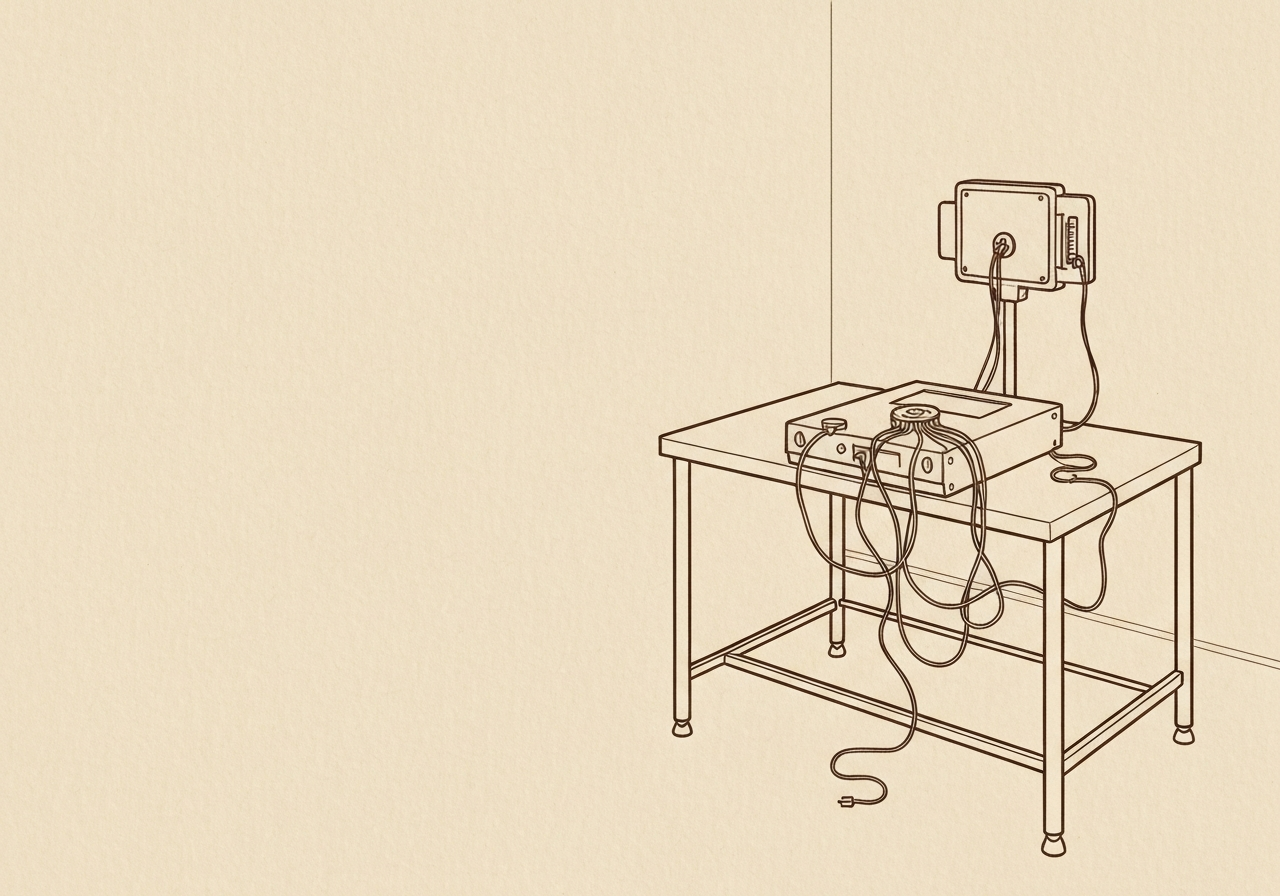
The case — Selvi v. State of Karnataka & Anr. — began like many investigations: a crime, a suspect, a police team eager to close the file. But this time, the police wanted tools that sounded like science fiction: brain mapping, polygraph tests (the classic lie detector that measures heart rate, breathing, and sweat), and narco-analysis (a procedure where a drug is injected to put the person in a semi-conscious state, supposedly making them unable to lie).
The petitioners refused. No to the needles. No to the electrodes. No to the drugs. The police insisted. The question reached the courts: could the state force a person to undergo these tests against their will?
The right that sits at the heart of every criminal trial
Article 20(3) of the Constitution is a short sentence with enormous weight: "No person accused of any offence shall be compelled to be a witness against himself." This is the right against self-incrimination (the right to remain silent and not be forced to provide evidence that could be used to convict you).
For decades, this right covered only spoken words or written documents. You could not be forced to confess on tape or sign a confession. But what about your brain? The electrical signals in your prefrontal cortex when you see a photograph of a crime scene? The words that tumble out when a drug lowers your inhibitions?
The Supreme Court had to decide: were these tests a modern thumbscrew — a physical invasion to extract information — or a legitimate investigative tool?
What the police argued
The state's lawyers had a practical argument. Crime investigation in India was difficult. Witnesses turned hostile. Evidence disappeared. These techniques, they said, were not torture. They were precise, objective, painless. A polygraph test just measures your pulse. Narco-analysis just relaxes you. Brain mapping just shows which parts of your brain light up when you see familiar objects. Where was the compulsion?
They argued these tests did not produce "testimony" in the traditional sense. A machine reading your blood pressure is not the same as a person speaking words. Article 20(3), they said, protected you from being forced to speak — not from being examined by science.
What the petitioners argued
The petitioners' lawyers saw it differently. The right against self-incrimination was not just about words. It was about the human mind. When the police inject you with sodium pentothal (the drug used in narco-analysis), they are not asking questions — they are dismantling your mental defences. When they show you crime scene photographs while your brain is being scanned, they are reading your thoughts without your consent.
This, they said, was the most intimate form of compulsion possible. Not a confession written on paper. A confession extracted from the deepest layers of your consciousness, while you were too drugged to say no.
The Supreme Court's reasoning
The bench agreed with the petitioners. In a landmark judgment, the Supreme Court held that the compulsory use of brain mapping, polygraph tests, and narco-analysis in a criminal investigation was unconstitutional. These tests could not be made part of the compulsory investigation process.
The court's logic was rooted in a simple observation: these techniques were inconclusive. A polygraph test could be fooled. A brain map could be misinterpreted. Narco-analysis produced statements from a person in a semi-conscious state — and a person who is half-asleep cannot give reliable evidence. The court noted that statements made during narco-analysis were made while the person was in a semi-conscious state, and therefore the evidence could not be considered conclusive.
But the deeper reasoning went beyond reliability. The court recognised that the right against self-incrimination protects not just the content of what a person says, but the mental process of deciding whether to speak at all. When you force a person to undergo narco-analysis, you remove that choice entirely. The drug does the deciding. The mind becomes a passive witness to its own exposure.
The ruling was understood to have broad implications — it was not just about one case in Karnataka, but about the limits of state power over the human mind.
Why the distinction matters
The court drew a careful line. It did not say these tests could never be used. If a person voluntarily consents — fully informed, with a lawyer present, and with the option to withdraw at any time — the tests could be conducted. But the results would still be treated as investigative aids, not as conclusive proof of guilt. They could point the investigation in a direction, but they could not be the sole basis for a conviction.
This distinction is crucial for every criminal lawyer in India. The judgment made clear: these forensic techniques produce opinions, not facts. A brain map is an expert's interpretation of data. A narco-analysis transcript is a drugged person's rambling. Neither is the same as a voluntary confession recorded before a magistrate. The ruling explicitly delineated the non-conclusive nature of evidence derived from these techniques, reinforcing that they are investigative aids, not substantive proofs of fact, especially when coerced.
The court's reasoning also touched on the practical realities of investigation. A polygraph test, the court observed, could be influenced by the skill of the operator, the mental state of the subject, and the quality of the equipment. A brain map could show activity, but it could not show intent — and intent is what criminal law cares about. Narco-analysis, the court noted, produced statements that were often rambling, incoherent, and impossible to verify. To treat such evidence as conclusive would be to abandon the standards of proof that the criminal justice system requires.
The broader implications for the justice system
The Selvi judgment did not shut the door on scientific evidence. It simply locked the door against coercion. Investigators can still use these techniques, but only with the suspect's free and informed consent. And even then, the results remain what they always were: opinions, not verdicts.
For the accused, this judgment is a shield. It says: your mind is your own. The police cannot inject you, scan you, or wire you up to a machine without your permission. The Constitution protects not just your body, but your thoughts.
For the prosecution, it is a reminder that the best evidence is still the evidence that a person gives freely, with their eyes open, in the full light of the law. The judgment also serves as a warning: if evidence is obtained through coercion, it will not only be thrown out — it may also taint the entire investigation, making it harder to secure a conviction even with other evidence.
The ruling has had a lasting impact on how Indian courts view scientific evidence. Before Selvi, there was a temptation to treat any test that involved a machine or a chemical as inherently reliable. After Selvi, courts are more cautious. They ask: was the test voluntary? Was it conducted properly? Is the result consistent with other evidence? The judgment did not ban science from the courtroom — it simply demanded that science be used with the same rigour and fairness as any other form of evidence.
For defence lawyers, the judgment provides a clear checklist. If a client is asked to undergo a polygraph, brain mapping, or narco-analysis test, the first question must be: is this voluntary? If the answer is no, the test is unconstitutional — and any evidence derived from it is inadmissible. If the answer is yes, the next question is: was the consent properly obtained, with full knowledge of the consequences and the right to withdraw? The judgment leaves no room for ambiguity on these points.
THE PLAY: If a client is asked to undergo a polygraph, brain mapping, or narco-analysis test, the first question must be: is this voluntary? If the answer is no, the test is unconstitutional — and any evidence derived from it is inadmissible.
What this means for investigations going forward
The Selvi judgment did not shut the door on scientific evidence. It simply locked the door against coercion. Investigators can still use these techniques, but only with the suspect's free and informed consent. And even then, the results remain what they always were: opinions, not verdicts.
For the accused, this judgment is a shield. It says: your mind is your own. The police cannot inject you, scan you, or wire you up to a machine without your permission. The Constitution protects not just your body, but your thoughts.
For the prosecution, it is a reminder that the best evidence is still the evidence that a person gives freely, with their eyes open, in the full light of the law.
The petitioners refused the test. The Supreme Court said they were right to refuse. A fundamental right was reaffirmed — a line drawn between investigation and invasion.