Electricity board can't jump queue in insolvency, Supreme Court rules
A power distribution company tried to recover ₹4.32 crore outside IBC by attaching properties. The Supreme Court said: no — the IBC's waterfall mechanism overrides the Electricity Act.
4.32
crores.
A power distribution company tried to recover ₹4.32 crore outside IBC by attaching properties. The Supreme Court said: no — the IBC's waterfall mechanism overrides the Electricity Act.
The electricity board attached his factory for unpaid bills. Then the company went bankrupt. The board thought it could keep the property.
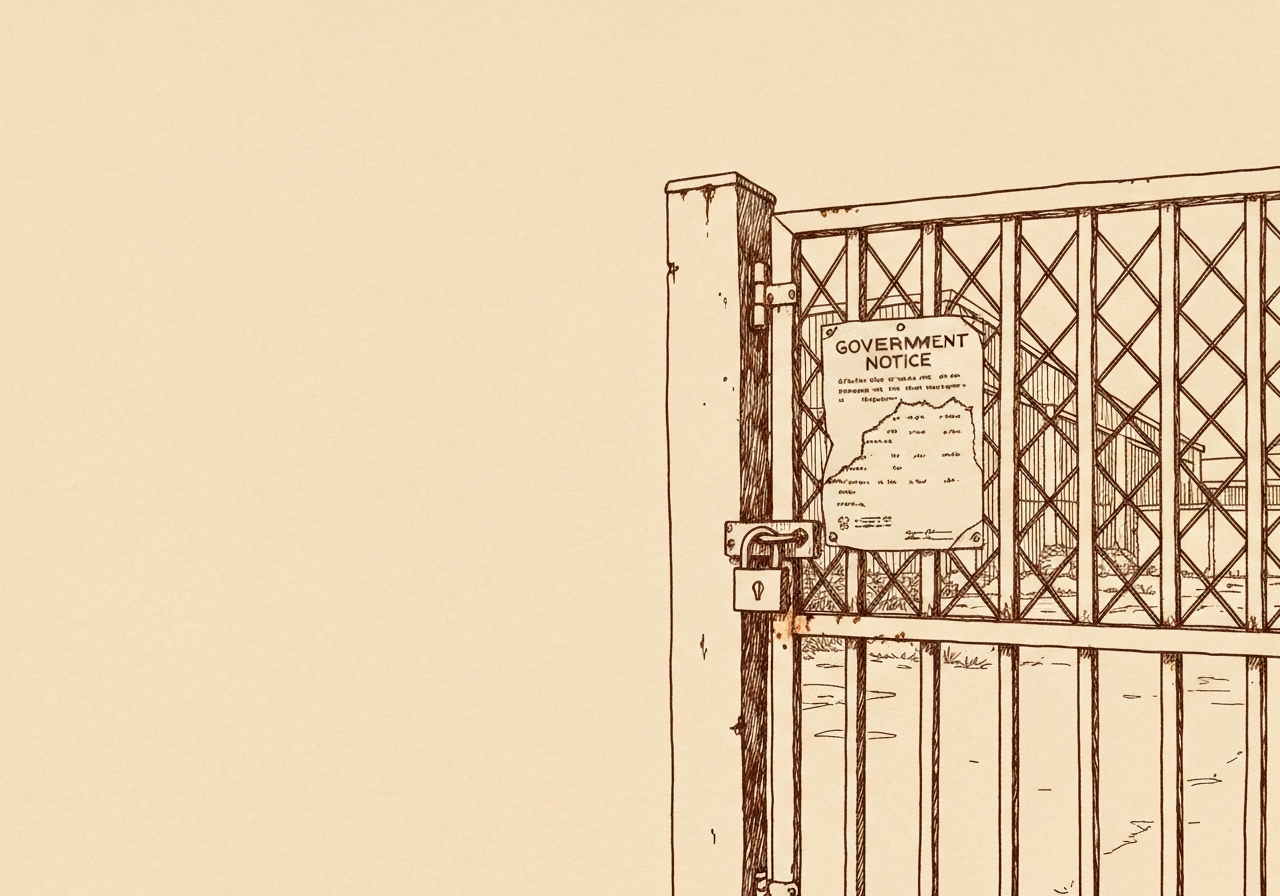
In January 2016, the district administration of Muzaffarnagar walked onto the premises of Raman Ispat Private Limited and pasted a notice on its gate. The property now belonged to the state. Paschimanchal Vidyut Vitran Nigam Ltd (PVVNL), the electricity distribution company, had asked for this. The company owed ₹4.32 crore in electricity bills. The attachment was a legal lock: these assets would be sold to recover that money.
But Raman Ispat was already drowning. It had entered insolvency proceedings under the Insolvency and Bankruptcy Code (IBC) — the law that handles companies that cannot pay their debts. No resolution plan succeeded. The company went into liquidation. The liquidator — the person appointed to sell the company's assets and distribute the money — saw the attachment and knew it was a problem. He went to the National Company Law Tribunal (NCLT) and asked for the properties back.
The question was simple. Could a state electricity board recover its dues by attaching property outside the IBC, even after the company had entered liquidation? Or did the IBC's waterfall mechanism — the strict order in which creditors get paid — override every other law?
When the district magistrate walked in
The story begins with a routine commercial relationship. PVVNL supplied electricity to Raman Ispat. The company paid its bills for a while. Then it stopped.
By early 2016, the unpaid amount had crossed ₹4 crore. PVVNL invoked the recovery provisions under the Electricity Act, 2003. The District Magistrate and Tehsildar of Muzaffarnagar attached Raman Ispat's properties. The attachment was a legal notice: these assets now belonged to the state.
But Raman Ispat's financial troubles went deeper than unpaid electricity bills. The company had defaulted on multiple debts. Creditors — banks, suppliers, employees — were all waiting. The company entered the Corporate Insolvency Resolution Process (CIRP) under the IBC, a court-supervised process where a resolution professional tries to find a buyer or a plan to revive the company.
No buyer came. No plan worked. The NCLT ordered liquidation.
The liquidator's move
Once liquidation begins, the liquidator takes control of all the company's assets. The IBC's Section 53 (the waterfall mechanism) lays down a strict hierarchy: secured creditors with registered security interests get paid first, then employees, then government dues, then unsecured creditors, and finally equity shareholders. Operational creditors — suppliers of goods and services, including electricity companies — fall somewhere in the middle.
The liquidator saw a problem. If the attachment held, PVVNL would get its ₹4.32 crore before anyone else. That would violate the IBC's priority rules.
So the liquidator went to the NCLT and asked for the attached properties to be released to him. PVVNL argued that the Electricity Act, 2003, gave it the power to recover dues as arrears of land revenue — a special status that should override the IBC. The NCLT disagreed. It ordered the properties released to the liquidator. PVVNL appealed to the National Company Law Appellate Tribunal (NCLAT), which upheld the NCLT's order. The electricity board then went to the Supreme Court.
The legal battle: which law wins?
Before the Supreme Court, PVVNL made three arguments. First, the Electricity Act, 2003, contains non-obstante clauses (provisions that say "notwithstanding anything in any other law") in Sections 173 and 174. These clauses, PVVNL said, meant the Electricity Act should prevail over the IBC. Second, electricity dues were government dues, entitled to priority under Section 53(1)(e) of the IBC. Third, the attachment of property created a security interest (a legal right over an asset to secure payment of a debt), making PVVNL a secured creditor entitled to be paid first.
The liquidator and the Union of India countered: the IBC is a complete code for insolvency. Section 238 of the IBC says the Code overrides any other law. The waterfall mechanism in Section 53 is designed to ensure orderly distribution of assets. Allowing individual creditors to recover outside this framework would destroy the system. Electricity dues, they argued, were operational debts (debts for the supply of goods or services), not government dues. And a mere statutory right to recover dues as arrears of revenue did not create a security interest under the IBC.
What the Supreme Court decided
The Supreme Court dismissed PVVNL's appeal. The bench — Justice S. Ravindra Bhat and Justice Dipankar Datta — held that Section 238 of the IBC overrides the Electricity Act, 2003, despite the latter's non-obstante clauses. The reason: the IBC is a later, special law on insolvency that deliberately altered the priority of claims. Allowing state electricity boards to jump the queue would undermine the entire purpose of the Code.
On the second point, the court held that dues payable to statutory corporations like electricity distribution companies do not constitute "government dues" under Section 53(1)(e) of the IBC. Only dues payable into the Consolidated Funds of India or states — taxes, tariffs, and other sums collected under Article 265 of the Constitution — qualify as government dues. PVVNL, being a distinct juristic entity (a separate legal person), could not claim that status.
On the third point, the court ruled that a mere statutory provision enabling recovery of dues as arrears of land revenue does not create a "security interest" under the IBC. For a creditor to be treated as secured, the security interest must be proved and registered under Regulation 21 of the Liquidation Regulations and Section 77 of the Companies Act, 2013. PVVNL had not done this. It was an operational creditor, nothing more.
Why this matters for every creditor
The judgment settles a recurring conflict between the IBC and sector-specific laws. State utilities — electricity boards, water authorities, municipal corporations — often have special recovery powers. They can attach property, cut off supply, or demand payment before anyone else. But once a company enters liquidation under the IBC, those powers stop. The waterfall mechanism binds every creditor, including the state.
For practitioners, the message is clear: if you are a statutory corporation with unpaid dues from a company in insolvency, do not try to recover outside the IBC. File your claim as an operational creditor and wait your turn in the waterfall. Trying to attach property after liquidation begins will only lead to litigation you will lose.
THE PLAY: If you hold a statutory right to recover dues as arrears of land revenue, register it as a security interest under the IBC before the company enters liquidation — or you will be treated as an unsecured operational creditor.
The electricity board attached his factory. The company went bankrupt. The board thought it could keep the property. The Supreme Court said: give it back.