Father wants to see his toddler. The court said yes — but changed the city.
A two-year-old was ordered to travel 300 km every Sunday for visitation. The Supreme Court stepped in, ruling that a child's welfare beats a parent's convenience.
300
km.
A two-year-old was ordered to travel 300 km every Sunday for visitation. The Supreme Court stepped in, ruling that a child's welfare beats a parent's convenience.
The family court said the father could see his daughter every Sunday — in his town, 150 km away from where she lived with her mother. The two-year-old would have to travel 300 kilometres every weekend, strapped into a car for hours, just so her father could exercise his visitation rights. The Supreme Court stopped it.
The child was not a defendant. She was not a piece of evidence. She was a toddler.
When the child became a commuter
The parents were both doctors. Their daughter was born in June 2022. Within two months, the marriage collapsed. The wife alleged domestic violence — she said her husband had tried to kill her and their infant. In June 2023, she filed for divorce under Section 13(1)(ia) of the Hindu Marriage Act (a provision that allows a spouse to seek divorce on grounds of cruelty). The husband responded by asking for visitation rights while the divorce case was pending.
On 10 November 2023, the Family Court granted his request. Every Sunday, from 10 AM to 12 PM, the father could see his daughter. But the visits had to happen in Karur — his town. The mother lived in Madurai, 150 km away. The round trip was 300 km. Every Sunday. With a toddler.
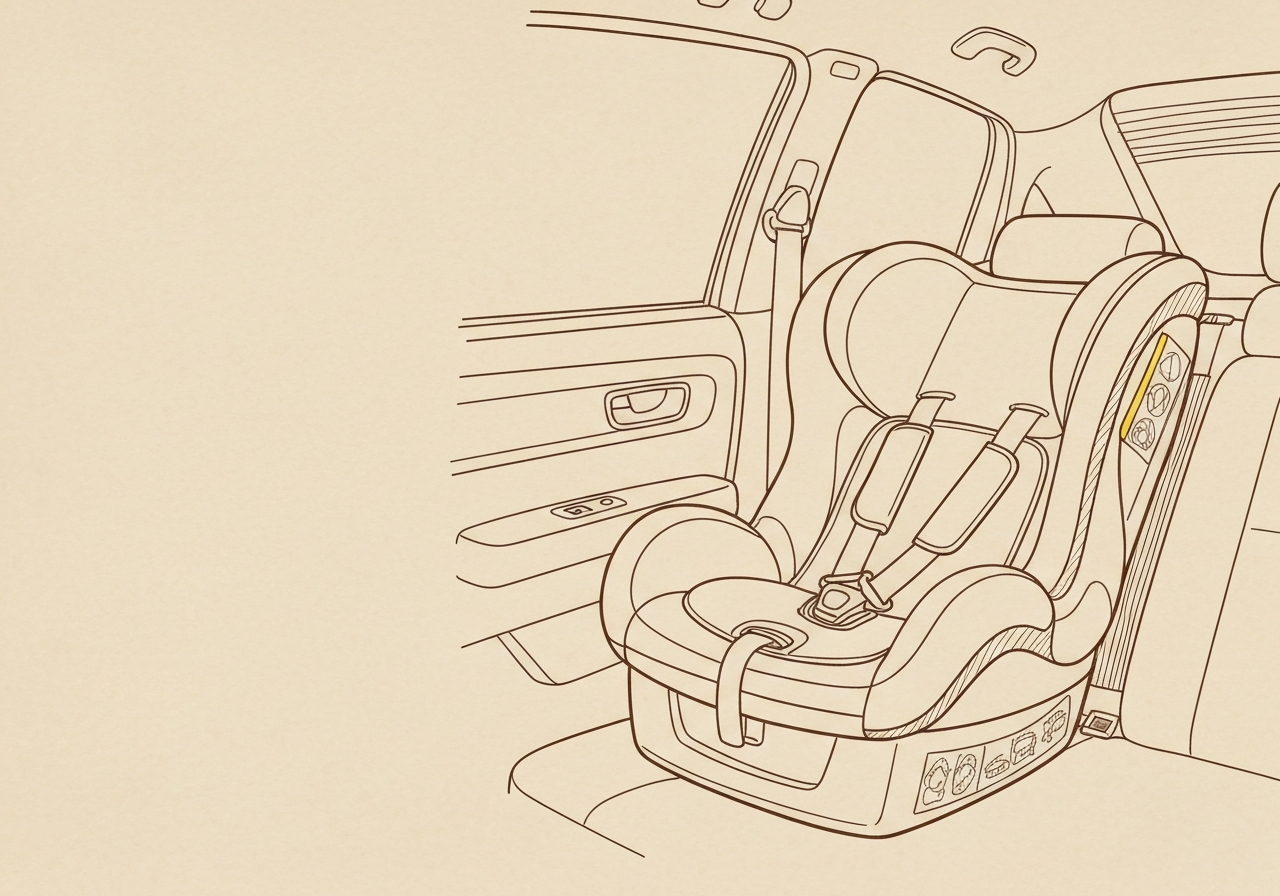
The wife appealed to the Madras High Court, arguing the arrangement was harmful to the child. On 21 March 2024, the High Court not only dismissed her appeal — it extended the visitation to four hours (10 AM to 2 PM), and after two months, to alternate weekends. The child would now travel even more. The High Court's reasoning, as recorded in the judgment, was that the father deserved more time with his daughter as the divorce proceedings dragged on. The mother's lawyer, in a quiet courtroom, held up a child's car seat — a silent argument that a toddler strapped in for hours every week was not a visitation plan but a health risk.
Why the Supreme Court stepped in
The wife approached the Supreme Court through a Special Leave Petition (a request for the Supreme Court to hear an appeal against a High Court order). The bench — Justice Vikram Nath and Justice Prasanna B. Varale — heard the case on 20 December 2024. The case was registered as Civil Appeal arising out of SLP (C) No. 18240 of 2024, and later cited as 2024 INSC 1036.
The core question was simple: should a two-year-old be forced to travel 300 km every week so a father can exercise his visitation rights?
The husband argued that as a natural guardian, he had a right to spend time with his child. The wife countered that the child's welfare — her health, her routine, her safety — had to come first. A 300 km round trip every Sunday was not a minor inconvenience. It was a health risk for a toddler. The wife argued that the 300 km round trip every Sunday was harmful to the two-year-old — the child's sleep patterns, feeding schedule, and general well-being were disrupted by the long hours on the road.
The child's welfare beats parental convenience
The Supreme Court agreed with the mother. The bench held that while a father's right to visitation is recognised, this right cannot override the best interest and welfare of the child. Visitation arrangements must prioritise the child's health and well-being over parental convenience or rights. The court's judgment stated: "The welfare of the child is of paramount consideration and must override all other considerations, including the rights of the parents."
The court noted that courts granting interim visitation rights must provide cogent reasons for the choice of venue. A venue requiring extensive travel by a child of tender age is adversarial to the child's interest and must be modified. The bench observed that the Family Court and the High Court had not provided sufficient justification for choosing Karur as the venue, given that the mother and child resided in Madurai and the child was only two years old.
The bench shifted the venue from Karur to Madurai — the mother's town. The father could now visit his daughter in a place that did not require the child to spend hours on the road. The High Court's order was modified to this extent. The judgment in Sugirtha v. Gowtham (2024 INSC 1036) made clear that a two-year-old's welfare cannot be sacrificed for parental convenience.
What the court did not change
The Supreme Court did not disturb the divorce proceedings. The wife's petition under Section 13(1)(ia) of the Hindu Marriage Act (the cruelty ground for divorce) remained pending before the Family Court. The court also did not question the father's right to visitation — it only changed where those visits would happen.
The bench made one more important observation. It said that matrimonial disputes and grave allegations between parents should not impede a child's right to have the care, company, and affection of both parents. Interim visitation rights of the non-custodial parent require careful and empathetic consideration during pendency of divorce proceedings. The court directed that the father could now exercise his visitation rights in Madurai, ensuring the child did not have to undertake the exhausting 300 km journey every Sunday.
The procedural journey was instructive. The Family Court's order of 10 November 2023 had granted visitation at Karur every Sunday from 10 AM to 12 PM. The Madras High Court, in its order of 21 March 2024, had dismissed the wife's appeal and extended the visitation to 10 AM to 2 PM, with alternative weekends after two months. The Supreme Court, on 20 December 2024, partly allowed the appeal — only on the question of venue — and shifted it to Madurai. The ratio decidendi was clear: while a father, as natural guardian, has the right to visit and enjoy the company of his child, this right cannot override the best interest and welfare of the child. Visitation arrangements must prioritize the child's health and well-being over parental convenience or rights.
Why this matters for every parent
This judgment is a reminder that in family law, the child is not a pawn. A parent's right to visitation exists, but it is not absolute. When a court designs a visitation schedule, the child's welfare — not the parent's convenience — must be the starting point.
For practitioners, the takeaway is clear: when arguing for or against visitation arrangements, lead with evidence of what serves the child's health, safety, and stability. A 300 km weekly commute for a toddler is not a visitation plan — it is a hardship. The Supreme Court's judgment in Sugirtha v. Gowtham provides a clear framework: courts must give cogent reasons for venue choices, and any arrangement that requires extensive travel by a child of tender age must be modified.
THE PLAY: When seeking or opposing interim visitation for a child of tender age, the party must demonstrate how the proposed venue and schedule serve the child's welfare — not just the parent's rights.
The two-year-old will no longer spend her Sundays in a car. The court ended where it began: with a child who deserves to be a child, not a commuter.