He admitted the debt. Then he raised a root objection. The court said: no shortcut.
Order 12 Rule 6 lets you skip trial if the other side admits your claim. But what if the admission comes with a fundamental legal challenge? The Supreme Court drew the line.
Denied.
Admission made.
Shortcut denied.
Order 12 Rule 6 lets you skip trial if the other side admits your claim. But what if the admission comes with a fundamental legal challenge? The Supreme Court drew the line.
The defendant said, 'Yes, we owe the money.' But also: 'This whole case is invalid.' The judge had to decide—can you admit and fight at the same time?
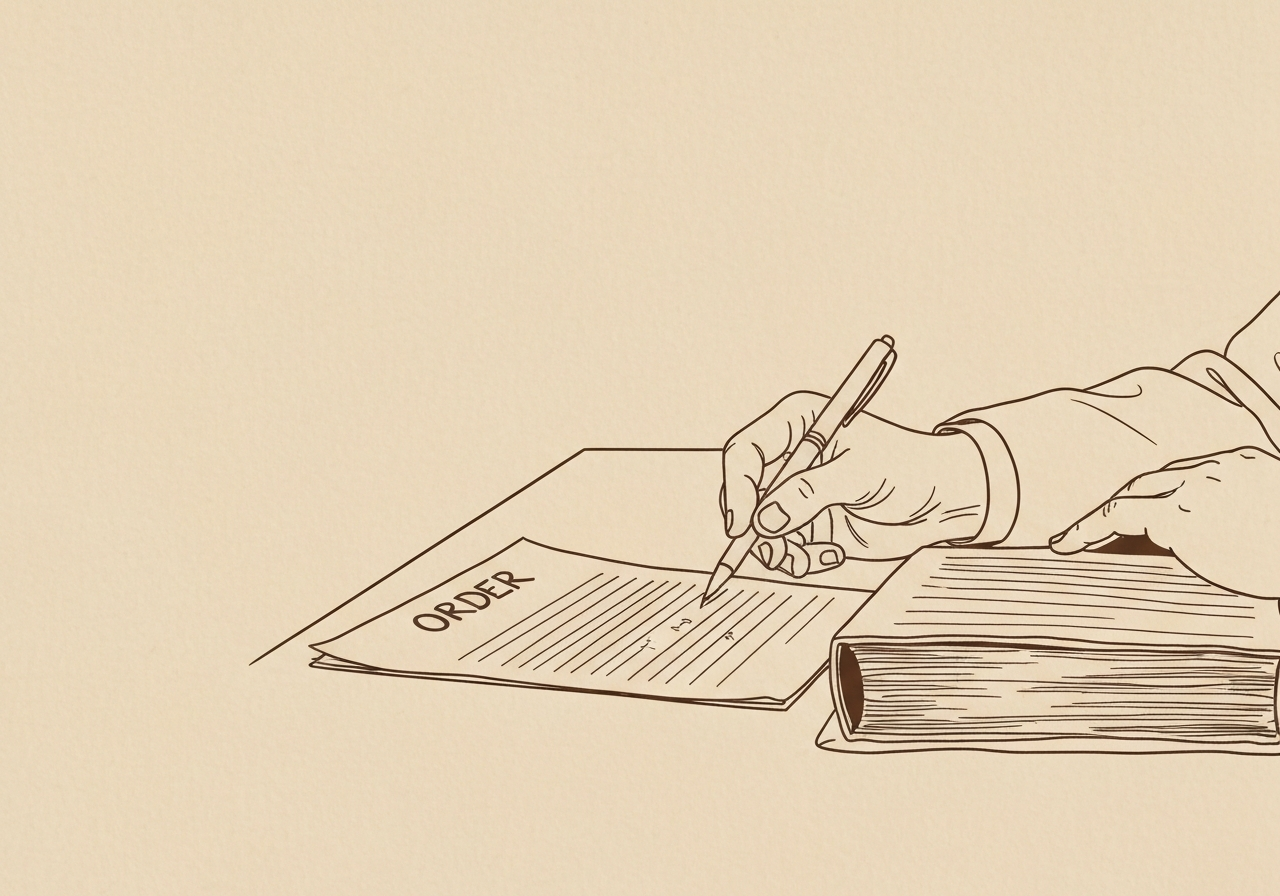
The bank's lawyer tapped a thick file on the desk. The defendant had walked into court and said the one thing every plaintiff wants to hear: we admit the claim. Under Order XII Rule 6 of the Civil Procedure Code (a rule that lets a court give a final judgment immediately if one side clearly admits the other's case), that should have been the end. No trial. No witnesses. No years of waiting. Just a decree, signed and sealed.
But the defendant had also said something else. The written statement had a single line crossed out in ink—the admission—but the paragraphs around it bristled with objections. This whole case is invalid. The admission came wrapped in a fundamental legal challenge—an objection that went to the very root of the lawsuit. The bank wanted its shortcut. The defendant wanted its day in court on the objection. And the judge had to decide: when an admission and a root objection sit in the same pleading, which one wins?
When the bank asked for a shortcut
The case was State Bank of India v. Midland Industries. The bank had sued to recover money. The defendants, in their written statement, admitted the debt. But they did not stop there. They raised objections that attacked the very foundation of the bank's claim—arguments that, if accepted, would mean the bank had no right to sue at all. The objection was raised in paragraph 6 of the defence, a single dense paragraph that questioned the legal basis of the entire lawsuit.
The bank moved quickly. It filed an application under Order XII Rule 6, asking the court to skip the trial and pass a decree immediately. The judge's pen hovered over the order sheet. The logic seemed airtight: the defendants had admitted the debt, so what was left to fight about?
But the defendants pushed back. An admission, they argued, does not mean the court must close its eyes to everything else. If the admission is accompanied by a legal objection that could destroy the entire lawsuit, the court cannot simply ignore that objection and hand down a decree. The rule was meant for clear, simple cases—not for cases where fundamental questions of law remained unanswered.
The court draws a line
The Supreme Court agreed with the defendants. Order XII Rule 6 serves a specific purpose: to avoid making the plaintiff wait for a decree when there is a "clear, unequivocal, unambiguous, and unconditional admission of the claim." The rule is designed to secure a speedy outcome only if there is "no dispute between the parties" and the admission makes it plain that the plaintiff is entitled to judgment.
But that was not this case. The courtroom fell silent as the court observed that the rule "is not intended to apply where there are serious questions of law to be asked and determined." Where the "defendants have raised objections which go to the very root of the case, it would not be proper to exercise this discretion and pass a decree in favor of the plaintiff." The judge set down the pen. The shortcut was denied.
An admission is powerful—it can end a case. But an admission that comes packaged with a fundamental legal challenge does not eliminate the need for a trial. It merely shifts the focus. The court still has to decide whether the objection is valid. And that decision cannot be made by simply accepting the admission and ignoring the objection.
The ruling established a clear principle: where specific issues have been raised in spite of an admission, the plaintiff is still bound to lead evidence and prove those issues before becoming entitled to a decree. The admission gets you part of the way. It does not get you all the way.
When "vexed questions" appeared
Around the same time, the Supreme Court dealt with a similar problem in Manisha Commercial Ltd. v. N.R. Dongre. The facts were different, but the question was the same: when can a court refuse to give judgment on an admission?
Manisha Commercial Ltd. had filed an application under Order XII Rule 6, seeking judgment against N.R. Dongre based on an alleged admission. The file felt thin in the lawyer's hands—the admission was there, but so were pages of legal argument. Justice Vikramajit Sen dismissed the application. The court observed that while the purpose of the rule is to achieve a quicker end to the dispute based on admissions, the trial court is "enjoined to meaningfully fulfill this judicial exercise."
The key phrase was "vexed and complicated questions." The court held that it is "wholly inappropriate to permit any party to employ this provision where vexed and complicated questions or issues of law had arisen." Even if there is an unequivocal admission, Order XII Rule 6 invests the judge with discretion. And if "the passing of a judgment would work injustice on it, judgment could be declined."
This was a crucial refinement. The rule does not operate automatically. It is not a vending machine where you insert an admission and get a decree. The judge must look at the whole case—the admission, the objections, the legal questions—and decide whether a shortcut would be fair. If the admission is clear but the surrounding legal issues are tangled, the court can say: No. Go to trial.
Why forcing a trial is not a waste
One argument that banks and plaintiffs often make is that forcing a full trial when there is an admission is a "futile exercise." Why spend months or years litigating a case when the other side has already admitted the core claim?
The Supreme Court rejected that argument in Manisha Commercial. When fundamental legal or complex factual disputes are evident, forcing parties to undergo a full trial is not a "futile exercise." It is a necessary step to prevent a serious miscarriage of justice. A trial is not just about finding facts. It is about testing arguments, hearing evidence, and ensuring that the judgment is sound. If a root objection exists, the court cannot simply sweep it under the rug by accepting the admission and passing a decree.
The logic is simple but powerful. An admission tells you what the defendant concedes. It does not tell you whether the plaintiff's case is legally valid. If the defendant says, "Yes, I owe the money, but the contract was illegal from the start," the admission does not answer the question of illegality. That question requires a trial.
Consider the procedural texture of these cases. In State Bank of India v. Midland Industries, the written statement ran several pages—the admission occupied a single line, but the objections filled the rest. The judge had to read the entire document, not just the one line that favoured the bank. In Manisha Commercial Ltd. v. N.R. Dongre, the application under Order XII Rule 6 was accompanied by a stack of legal precedents, each one arguing that the admission was enough. But the court looked beyond the admission to the tangled legal questions beneath.
The smell of old paper filled the courtroom as the judge reviewed the pleadings. The admission was there, clear and unambiguous. But so were the objections—root objections that questioned whether the suit could proceed at all. The judge could not ignore them. The rule does not permit a shortcut when the path is blocked by fundamental legal questions.
What this means for practitioners
For lawyers, the lesson is straightforward. Order XII Rule 6 is a powerful tool, but it has limits. If you are the plaintiff, do not assume that an admission in the written statement guarantees a decree. Look at the objections. If they go to the root of the case—if they challenge the very basis of your claim—you may still need to lead evidence and prove your case at trial.
If you are the defendant, the message is equally clear. An admission does not have to be fatal. If you have a fundamental legal objection, raise it clearly and specifically. The court may decide that the objection deserves a full hearing, even if you have admitted the underlying facts.
THE PLAY: When a defendant admits the claim but raises a root objection, do not file an Order XII Rule 6 application—the court will likely refuse it, and you will have wasted time and credibility.
The court ended where it began: with an admission, an objection, and a judge who refused to take the shortcut. The file was closed, but the case was far from over.