He claimed tenancy in a bank's mortgaged flat. The Supreme Court said: not without a registered lease.
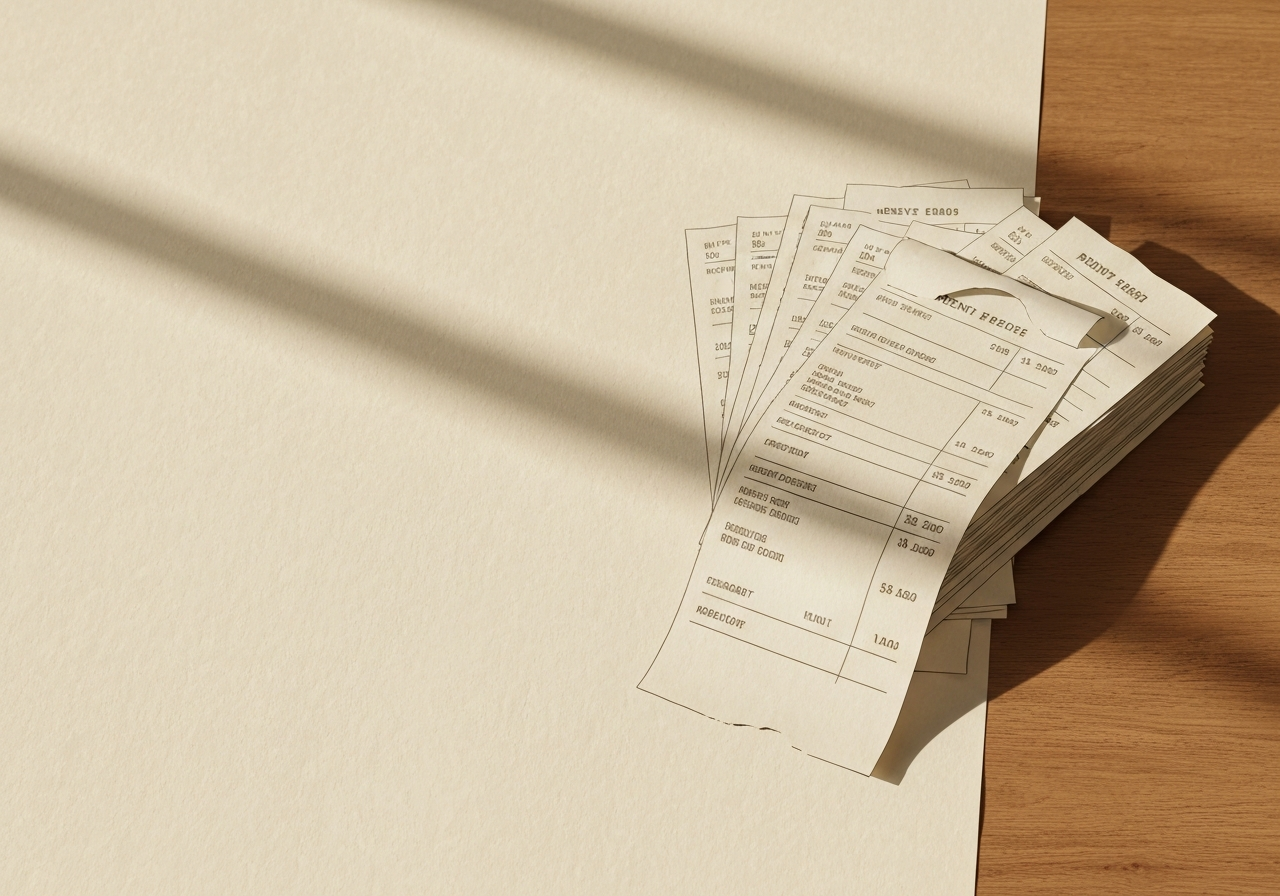
Hemraj Salian said he'd been renting a Powai flat since 2012. But the bank had already taken the flat as security for a Rs 5.5 crore loan. The Court found his rent receipts were just xerox copies—and the borrowers never mentioned him.
6
years.
Hemraj Salian said he'd been renting a Powai flat since 2012. But the bank had already taken the flat as security for a Rs 5.5 crore loan. The Court found his rent receipts were just xerox copies—and the borrowers never mentioned him.
He showed xeroxed rent receipts and claimed he was a tenant. The bank said: prove it with a registered lease.
A man living in a Powai flat worth crores, paying Rs 20,000 a month in rent since June 2012, walked into the Supreme Court with nothing but photocopies. He wanted to stop a bank from taking the flat. The Court said: you cannot.
Could a handful of xeroxed receipts—no registered deed, no mention of a tenant by the borrowers themselves—stand between HDFC Bank and its Rs 5.5 crore? The Supreme Court had to answer that question. The courtroom fell silent as the bench examined the thin stack of papers, the only evidence of a tenancy that had supposedly run for years.
When the borrowers stopped paying
In April 2013, HDFC Bank lent Rs 5.50 crore to a group of borrowers. They mortgaged a flat in Powai, Mumbai—a neighbourhood where property prices have climbed steeply. The deal was simple: pay the instalments, keep the flat. Default, and the bank takes it. The mortgage deed was signed, stamped, and registered. The flat, worth crores, was now the bank's security.
The borrowers defaulted. By January 2014, the bank declared the account a non-performing asset (NPA—a loan where payments have stopped for a specified period). Under the SARFAESI Act (a law that lets banks seize and sell defaulted assets without going to court), the bank issued a notice under Section 13(2), demanding repayment within 60 days. The borrowers did not pay. The bank's recovery machinery began to turn.
The bank moved to take physical possession of the flat. That is when Hemraj Salian stepped in. He walked into the Chief Metropolitan Magistrate's court in Mumbai, the smell of stale files and disinfectant thick in the air, and claimed he had been living there for years.
The man who said he lived there
Salian approached the Chief Metropolitan Magistrate (CMM) in Mumbai, claiming he had been a tenant since June 2012—paying Rs 20,000 per month. He argued that the Maharashtra Rent Control Act, 1999, protected him. The bank could not evict him without following that law, he said. He filed an intervention application (a request to be heard in the bank's possession proceedings) before the CMM under Section 14 of the SARFAESI Act (the provision that lets a magistrate assist a bank in taking possession).
The CMM's courtroom was quiet as Salian's lawyer held up a stack of photocopies. "This is proof of tenancy," he said. The magistrate looked at the papers—xerox copies of rent receipts, some faded, others crisp. The earliest was dated after the mortgage was created in April 2013. The borrowers themselves had never mentioned a tenant. The magistrate shook his head. In December 2015, he dismissed the application. A follow-up order in January 2016 also went against Salian. Salian appealed to the Supreme Court directly, arguing that his tenancy rights were being steamrolled by a bank.
Why the court looked at the receipts
The Supreme Court bench—Justice S. Abdul Nazeer and Justice Krishna Murari—examined the evidence. The only sound in the courtroom was the rustle of paper as they turned over the xeroxed receipts. What they found was telling.
Salian had submitted only xerox copies of rent receipts. The earliest receipt was dated after the mortgage was created in April 2013. More importantly, the borrowers—the people who had taken the loan and mortgaged the flat—had never once mentioned a tenant. Not in their loan application. Not in their mortgage documents. Not in any communication with the bank.
"The borrowers themselves never mentioned any tenant," the Court noted. If a flat worth crores was rented out, the borrowers would have disclosed it—because a tenanted property is harder for a bank to sell. Their silence was, in the Court's view, a strong indicator that the tenancy claim was an afterthought. The bench leaned forward, peering at the photocopies, searching for any sign of authenticity. There was none.
The law of leases: why registration matters
The legal question turned on Section 107 of the Transfer of Property Act, 1882 (the provision that governs how leases are created). Under this section, a lease for a term exceeding one year must be made by a registered instrument—a formal, government-stamped document registered with the sub-registrar. An oral tenancy or an unregistered document is valid only for a year at most; beyond that, it has no legal standing. The section, written in the 19th century, was designed to prevent disputes like this one—to force parties to put their agreements in writing.
Salian claimed his tenancy began in June 2012 and was ongoing. That was more than one year. Under Section 107, he needed a registered lease deed. He had none. The Court's earlier judgment in Kanaiyalal Lalchand Sachdev v. State of Maharashtra (2011) had already established that an unregistered lease for more than a year is void. Salian's case fell squarely within that principle.
The Court also applied Section 65-A of the Transfer of Property Act (which allows a mortgagor—the borrower—to lease the property only under certain conditions, and only if the lease is consistent with the mortgage). Even if the borrowers had leased the flat to Salian, they could not do so in a way that defeated the bank's security interest without the bank's consent. The mortgage deed itself would have contained covenants restricting the borrower's right to lease the property without prior approval.
And there was another problem: timing.
What happened after the bank's notice
Under Section 13(13) of the SARFAESI Act, once a bank issues a notice under Section 13(2), the borrower cannot transfer the secured asset—by sale, lease, or otherwise—without the secured creditor's consent. Any transfer made after that notice is void against the bank. This provision is a critical safeguard: it prevents borrowers from stripping the asset of value after they have defaulted.
Salian's tenancy claim, even if genuine, could not survive this provision. The bank's notice was issued in January 2014. Any lease created after that date without the bank's consent was unenforceable. And the receipts Salian produced were all dated after the mortgage—some possibly after the notice itself. The Court did not need to decide the exact date of the tenancy; the absence of a registered deed was fatal regardless.
The procedural journey had been long. From the CMM's dismissal in December 2015 to the Supreme Court's final order in August 2021, nearly six years had passed. Salian had lived in the flat throughout, paying rent to the borrowers who had themselves stopped paying the bank. The bank, meanwhile, had been unable to take possession, its security interest frozen by the litigation.
The Rent Act cannot save a tenant-in-sufferance
Salian argued that the Maharashtra Rent Control Act, 1999, protected him. The Court rejected this argument. It held that a "tenant-in-sufferance"—a person who claims tenancy without proper legal documentation—cannot use the Rent Act to override the SARFAESI Act. Section 35 of the SARFAESI Act gives it overriding effect over other laws. A rent control law, the Court said, cannot protect a tenancy that was never properly created.
The Court relied on its earlier judgment in Harshad Govardhan Sondagar v. International Asset Reconstruction Co. Ltd. (2014), where it had held that a tenant with a registered lease and the bank's consent can be protected—but a tenant without either cannot. In that case, the Court had carefully balanced the rights of tenants against the needs of secured creditors. A genuine tenant with proper documentation could stay; a tenant with nothing but photocopies could not.
It also applied Bajarang Shyamsunder Agarwal v. Central Bank of India (2019), which clarified that the Rent Act does not shield a tenant from SARFAESI proceedings if the tenancy was created after the mortgage without the bank's consent. In that case, the Court had held that a tenant claiming protection under rent control laws must still satisfy the requirements of the SARFAESI Act. The two statutes, the Court said, must be read harmoniously—and the SARFAESI Act's overriding effect means that a tenancy created in defiance of its provisions cannot be saved.
The judgment: no merit, no protection
The Supreme Court dismissed Salian's appeals. "We do not find any merit in these appeals," the bench said. The Court held that:
- A person claiming tenancy of a secured asset for more than one year must produce a registered instrument. An oral tenancy or unregistered document offers no protection beyond the statutory period under Section 107 of the Transfer of Property Act.
- The Rent Act cannot protect a tenant-in-sufferance against SARFAESI proceedings, given the overriding effect of Section 35 of the SARFAESI Act.
- After a Section 13(2) notice, any transfer of the secured asset—including a lease—requires the secured creditor's consent under Section 13(13). Without that consent, the tenancy is unenforceable.
The bank could proceed with possession. Salian was out. The courtroom emptied, the xeroxed receipts left behind on the bench, a silent testament to a claim that never had legal legs.
What this means for tenants and banks
For tenants: a rent receipt, even a genuine one, is not enough. If you are renting a property that is mortgaged to a bank, get a registered lease deed. And if the borrower creates a tenancy after the bank has issued a default notice, that tenancy will not survive a foreclosure. The law is clear: registration is not a formality; it is the foundation of a valid lease.
For banks: the judgment reinforces that SARFAESI proceedings are not easily derailed by unregistered tenancy claims. A photocopied receipt is not proof. A registered lease, with the bank's consent, is the only shield. The judgment also clarifies the procedural path: a bank can seek the CMM's assistance under Section 14, and the CMM can examine the validity of a tenancy claim before deciding whether to hand over possession.
The case also highlights the importance of the procedural journey. From the CMM's order in 2015 to the Supreme Court's final word in 2021, the law held steady. The same principles—registration, consent, overriding effect—applied at every stage. For litigants, the lesson is clear: do not rely on photocopies when the law demands a registered deed.
THE PLAY: A tenancy exceeding one year over a secured asset requires a registered lease deed and the bank's consent—without both, the tenant has no protection against SARFAESI proceedings.
The flat in Powai remains with the bank. The rent receipts remain xerox copies. And the man who claimed tenancy remains a tenant only in name.