He hid engine damage from the ship inspector. The insurer didn't have to pay.
A vessel sank after a tug boat collision. But the insurer refused to pay because the owner had secretly obtained a safety certificate without disclosing a broken engine.
8.27
crores.
A vessel sank after a tug boat collision. But the insurer refused to pay because the owner had secretly obtained a safety certificate without disclosing a broken engine.
The ship's engine was wrecked. The owner got a new safety certificate without telling the inspector. Then the ship sank.
On a routine day at sea, the M.V. Sea Panther — a chartered vessel insured for crores — was struck by a tug boat. It went down. The owner, Hind Offshore Pvt. Ltd., filed a claim for Rs. 8.27 crores for total loss. The insurer, IFFCO-Tokio General Insurance, refused to pay a single rupee. Their reason was not the collision. It was what the owner had hidden before the ship ever left port.
One question that sank the claim
Could an insurance company walk away from paying for a sunken ship because the owner had quietly obtained a safety certificate without disclosing a broken engine — even though the engine had nothing to do with the collision? The Supreme Court of India would have to decide whether a hidden defect, unrelated to the accident, could still void the entire insurance contract.
When the engine broke and the repair never came
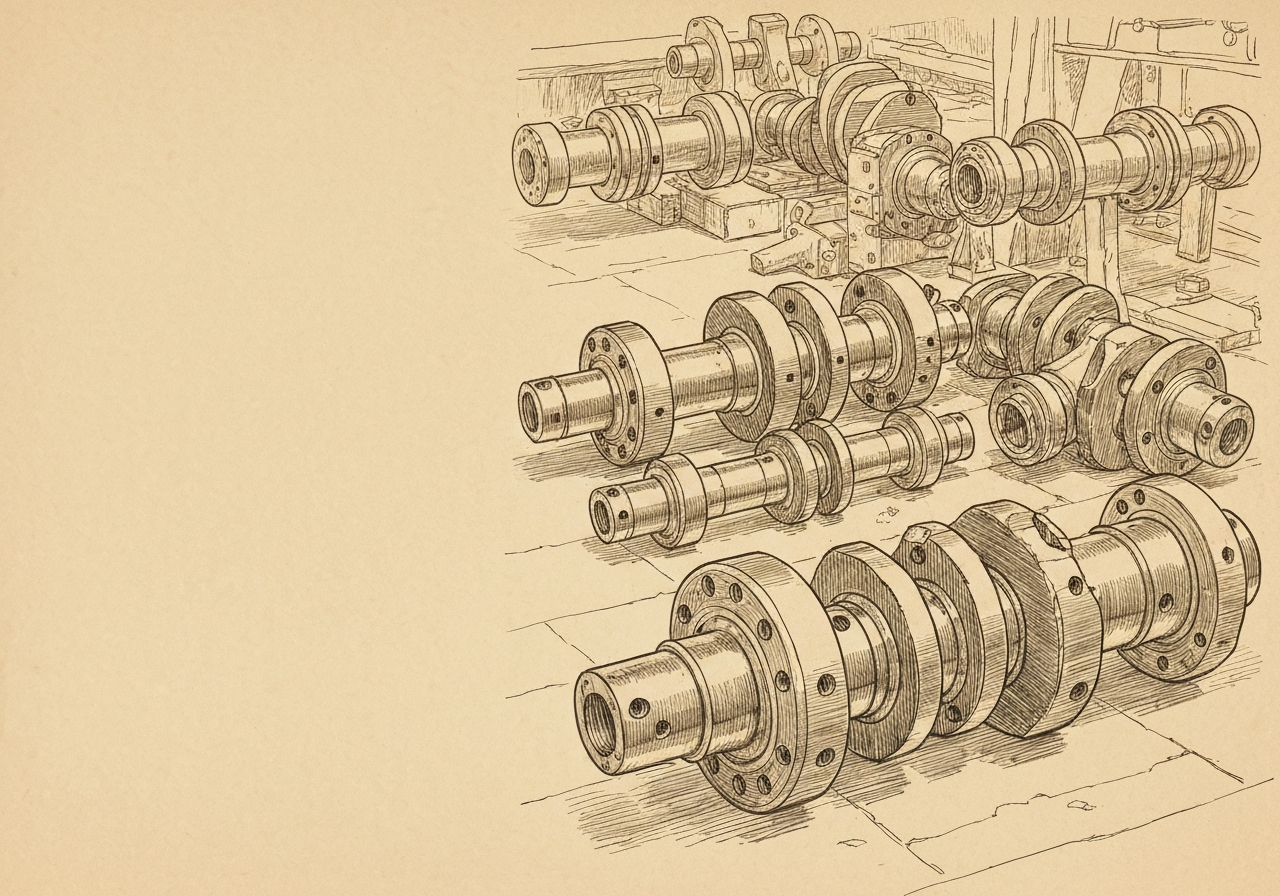
Hind Offshore chartered the M.V. Sea Panther and insured it with IFFCO-Tokio under a marine hull insurance policy. During the first insurance period, the vessel's port main engine suffered catastrophic damage. The crankshafts and connecting rods — the core components that turn the engine's pistons — were found beyond repair. The crankshafts lay on the workshop floor, their surfaces scored and pitted beyond salvage, the connecting rods twisted and useless. The insurer advanced Rs. 1 crore to the owner specifically for replacing these parts.
The owner never replaced them. Instead, only temporary repairs were done. The damaged parts stayed in the engine, hidden beneath hastily patched casings. When the first policy ended, the owner needed a fresh Class Certificate — a formal document issued by a classification society certifying that a vessel meets safety and seaworthiness standards. The owner approached the American Bureau of Shipping (ABS) for this certificate.
ABS was not told about the unrepaired engine damage. The certificate was issued. A fresh insurance policy followed. Days later, the vessel sank after being struck by a tug boat.
"You hid it" vs. "It didn't cause the sinking"
IFFCO-Tokio repudiated the claim. Its position was straightforward: the Class Certificate was obtained by concealing material defects from ABS. Under the policy's terms, the owner had warranted — promised as a binding condition — that the vessel would maintain its class certification. By hiding the engine damage from ABS, the owner had breached that warranty. The policy was void from the moment the certificate was obtained.
Hind Offshore argued differently. The engine damage, they said, had nothing to do with the sinking. The ship went down because of a collision with a tug boat — an insured peril. The insurer had already paid Rs. 1 crore for the engine repair, so it knew about the damage. If the insurer knew and still issued a fresh policy, that amounted to acceptance. The claim should be paid.
The consumer commission said no
The National Consumer Disputes Redressal Commission (NCDRC) — the consumer court that hears appeals against insurers — dismissed Hind Offshore's complaint in May 2015. The commission held that the owner's failure to disclose the unrepaired engine damage to ABS before obtaining the Class Certificate was a fundamental breach. The certificate was invalid. The warranty under the policy had been broken. The file, thin and unpersuasive, was closed.
The owner appealed to the Supreme Court.
A warranty is not a suggestion
The Marine Insurance Act, 1963, treats warranties with unusual severity. Under Section 35 (which defines the nature of a warranty), a warranty is a condition that must be exactly complied with — it does not matter whether the breach is material to the loss. If the assured promises that a vessel will maintain its class certificate, and that certificate is obtained by concealment, the warranty is broken from the start. Under Section 37 (which deals with express warranties), the insurer is discharged from liability from the date of the breach. The loss itself — the collision — is irrelevant.
The policy also contained a termination clause — Clause 4.1 — which stated that if the vessel's class certificate was suspended or cancelled, the insurance would automatically terminate. The ABS Rules themselves, under Section 2 on Suspension and Cancellation of Classification, required the owner to report any damage affecting the vessel's class. The owner had not done so.
The Supreme Court's answer: the policy was dead before the collision
In August 2023, a bench of Justice A.S. Bopanna and Justice M.M. Sundresh dismissed the appeal. The courtroom fell silent as the judgment was read. Justice Bopanna leaned forward, the only sound the rustle of paper as he turned the case file. The court held that the Class Certificate was invalid because the owner had failed to disclose the unrepaired engine damage to ABS. This constituted a breach of warranty under the Marine Insurance Act. The insurer was discharged from liability from the date of the breach — meaning the policy was effectively dead before the collision ever happened. The bench held that "the non-disclosure to ABS rendered the Class Certificate invalid, constituting a breach of warranty."
The court rejected the owner's argument that the insurer's knowledge of the engine damage amounted to a waiver. Mere knowledge, the bench said, is not enough. Waiver requires an express representation — a clear statement from the insurer that it accepts the breach and will not enforce the warranty. Issuing a fresh policy does not, by itself, indicate acceptance of deficiencies in the vessel's classification.
The court also clarified where the burden lies. It is the assured — the owner — who must bring defects and shortcomings to the notice of the Classification Society before a Class Certificate is issued. The insurer is not required to investigate or verify whether the owner's representations about classification are accurate.
Precedents that guided the court
The Supreme Court relied on several earlier decisions to frame its reasoning. In Rajankumar & Brothers (IMPEX) v. Oriental Insurance Company Ltd. — (2020) 4 SCC 364 — the court had held that a breach of warranty under the Marine Insurance Act discharges the insurer from liability from the date of breach, regardless of whether the breach caused the loss. In Sea Lark Fisheries v. United India Insurance Company & Anr. — (2008) 4 SCC 131 — the principle was reaffirmed: a warranty must be exactly complied with, and non-compliance is fatal to the claim. The court also cited Contship Container Lines Ltd. v. D.K. Lall & Ors. — (2010) 4 SCC 256 — which dealt with the duty of utmost good faith (uberrimae fidei) in insurance contracts. In The New India Assurance Ltd. v. M/s. Protection Manufacturers Pvt. Ltd. — (2010) 7 SCC 386 — the court had clarified that knowledge of a breach does not amount to waiver without an express representation. New India Assurance Company Ltd. v. Pradeep Kumar — (2009) 7 SCC 787 — reinforced the strict compliance standard for warranties. The Singapore High Court's decision in Marine Offshore Pvt. Ltd. v. China Insurance Company (Singapore) Pvt. Ltd. & Anr. — (2006) 4 SLR 689 — was also cited, holding that non-disclosure to a classification society voids the certificate. Finally, the NCDRC's own decision in Ceyaki Shipping Pvt. Ltd. v. New India Assurance Pvt. Co. Ltd. — Consumer Case No. 278 of 2011 (21.03.2017) — had similarly held that a Class Certificate obtained without disclosing damage is invalid.
The ratio: three principles that govern
The ratio decidendi of the judgment rests on three clear principles. First, where an assured fails to disclose known damage or defects of a vessel to the Classification Society before obtaining a Class Certificate, the Class Certificate is rendered invalid, constituting a breach of warranty under the Marine Insurance Act, 1963. The insurer is consequently discharged from liability from the date of breach regardless of whether the breach was material to the risk. Second, mere knowledge on the part of the insurer that there was a breach of warranty does not amount to a waiver in the absence of an express representation to that effect. The formal issuance of a marine insurance policy does not indicate acceptance or waiver of deficiencies in the vessel's classification. Third, the onus to bring defects and shortcomings to the notice of the Classification Society before the issuance of a Class Certificate lies entirely on the assured. It is not the insurer's burden to investigate or verify whether the assured's representations regarding classification are accurate.
Why this matters for anyone who insures a vessel
For ship owners, charterers, and marine insurers, the judgment is a sharp reminder: a warranty of class is not a formality. If you obtain a Class Certificate by concealing damage, the certificate is worthless — and so is your insurance. The fact that the damage did not cause the loss does not help you. The breach is judged at the moment the warranty was made, not at the moment of the accident.
For practitioners advising marine clients, the lesson is to audit every disclosure made to a classification society before a certificate is issued. A single omission — even one the insurer already knows about — can void the entire policy. The procedural journey from the NCDRC to the Supreme Court, spanning eight years, underscores the cost of such an omission: not just the claim, but the time and expense of litigation itself.
THE PLAY: Before obtaining or renewing a Class Certificate, disclose every material defect to the Classification Society in writing — even if the insurer already knows about it.
The ship sank. The insurer paid nothing. The engine that broke before the collision never had to be fixed — it only had to be mentioned. The crankshafts remained on the workshop floor, their story untold until the court finally spoke.