He lured a 7-year-old with lychees, raped and killed her. Why the Supreme Court spared his life.
The crime was brutal. The evidence was damning. But the judges found something in his past that made them say: death is not the only answer.
11
injuries.
The crime was brutal. The evidence was damning. But the judges found something in his past that made them say: death is not the only answer.
He took a little girl to pick lychees. She never came home. The court upheld his conviction — then did something unexpected.
A 35-year-old man gave children money for toffees. He shooed them away. Then he told a seven-year-old he would take her to pick lychees. She went with him. She never came back.
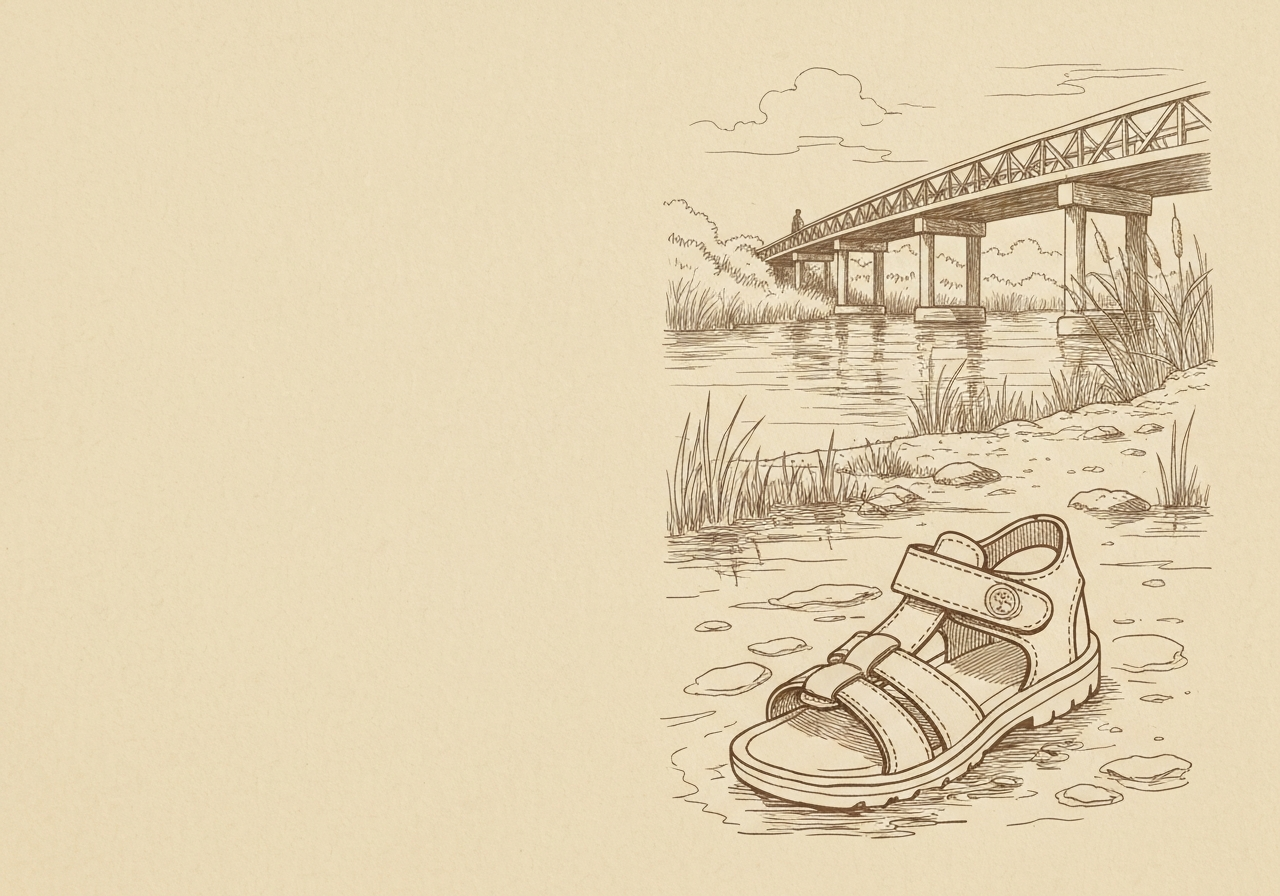
Her mother searched all night — her voice cracking as she called out into the dark, the silence of the village answering only with the rustle of leaves. By morning, she filed a complaint, her hands trembling as she gave the written statement to the police. They arrested Pappu near a health centre. He led them to the dead body near a river bridge, the air thick with the smell of damp earth and decay. The child had eleven injuries: skull fractures, a torn vagina, and other wounds consistent with rape and murder. The post-mortem report, its pages thin and clinical, listed each injury with cold precision. The question was never whether he did it. The question was whether a man who commits a crime this brutal should be hanged — or whether something in his past makes death not the only answer.
When the mother searched all night
The girl was playing with neighbourhood children in her village in Kushinagar, Uttar Pradesh. Pappu, from the same village and caste, approached them. He gave them money. He sent the other children away. He told the girl he would take her to pick lychees. She went with him. She never came home.
Her mother searched through the night — the weight of dread pressing on her chest, the silence broken only by her own footsteps on the dusty path. By morning, the girl had not returned. The mother filed a written complaint with the police, her voice barely steady as she spoke. They arrested Pappu near a health centre. During questioning, he led them to the dead body at a far-away lonely place near a river bridge — the ground damp, the air still, the child's body lying among the reeds. A medical examination revealed eleven injuries: skull fractures, a torn vagina, and other injuries consistent with rape and murder. The report's pages felt heavy in the hands of the investigators, each line a testament to the violence inflicted.
The prosecution built its case entirely on circumstantial evidence — no eyewitnesses to the actual crime. The case rested on three pillars: the last-seen theory (the girl was last seen alive with Pappu), the discovery of the dead body at Pappu's instance (a legal principle under Section 27 of the Evidence Act, which allows the court to consider information given by an accused that leads to the discovery of a fact), and medical and forensic evidence that corroborated the rape and murder.
Why the burden shifted to Pappu
The Trial Court convicted Pappu under multiple provisions: Section 302 of the Indian Penal Code (murder), Section 376 (rape), Section 201 (causing disappearance of evidence), and Section 5/6 of the Protection of Children from Sexual Offences Act, 2012 (aggravated penetrative sexual assault). The court sentenced him to death.
Pappu appealed to the High Court of Judicature at Allahabad. It confirmed both the conviction and the death sentence. The case reached the Supreme Court by way of special leave — a petition under Article 136 of the Constitution, which gives the Supreme Court the discretion to hear appeals from any court or tribunal in the country.
The prosecution argued that the circumstantial evidence formed a complete chain. The last-seen evidence was cogent and trustworthy. Pappu had led the police to the dead body at a lonely place far from the village. Under Section 106 of the Evidence Act (which says that facts within the special knowledge of a person must be proved by that person), and Section 29 of the POCSO Act (which creates a legal presumption that certain offences have been committed once the foundational facts are established), the burden had shifted to Pappu to explain his whereabouts and how he knew where the body was. He offered no explanation.
Pappu's defence argued that the last-seen evidence alone was not enough to sustain a conviction. The Supreme Court found that the Trial Court and High Court had concurrently returned findings of fact — meaning both courts had independently reached the same conclusion — and that there was no error of law, misreading of evidence, or disregard of judicial process norms that would justify interfering with those findings.
When the judges looked at the man, not just the crime
The Supreme Court upheld the conviction. Then it turned to the question of punishment. Here, the judgment took an unexpected turn.
The court applied the rarest-of-rare doctrine, which has governed death penalty sentencing in India since the landmark case of Bachan Singh v. State of Punjab (1980). Under this doctrine, the death sentence is not to be awarded merely because the crime is abhorrent. The court must consider two sets of factors: aggravating factors (what makes the crime especially heinous) and mitigating factors (what makes the criminal less deserving of death). The court must ask: is there any possibility of reform and rehabilitation? If the answer is yes, death is not the only answer.
The court found that the Trial Court and High Court had focused almost entirely on the brutality of the crime — the age of the victim, the nature of the injuries, the betrayal of trust. They had not adequately considered the mitigating factors pertaining to Pappu himself.
Pappu had no criminal antecedents. He was not a hardened criminal with a history of violence. His conduct in jail was unblemished — the prison records, with their neat entries, showed no complaints. And he had a family: a wife, children, and an aged father. The court concluded that these factors indicated a probability of reformation. It could not be said that there was no possibility of reform and rehabilitation.
The court observed that "the abhorrent nature of the crime alone cannot be the decisive factor for awarding death sentence; equally relevant mitigating factors pertaining to the criminal must receive due consideration before concluding that any punishment other than death is foreclosed." It cited its own precedents — Rajendra Pralhadrao Wasnik v. State of Maharashtra (2019), Mohd. Mannan v. State of Bihar (2019), and Shatrughna Baban Meshram v. State of Maharashtra (2021) — all of which had held that the abhorrent nature of the crime alone cannot be the decisive factor. Mitigating factors pertaining to the criminal must receive due consideration before concluding that any punishment other than death is foreclosed.
The court further noted that "when the accused has no criminal antecedents, is not a hardened criminal, has unblemished jail conduct, and has a family of wife, children and aged father, it cannot be said there is no probability of reform and rehabilitation; these indicate probability of reformation." The courtroom fell silent as the bench delivered this finding — the weight of the words settling over the lawyers and the family members present.
The mid-way approach: life without remission
The court then did something that has become increasingly common in Indian death penalty jurisprudence. It commuted the death sentence to life imprisonment — but with a crucial condition. Pappu would serve imprisonment for the remainder of his natural life without any right of remission or premature release. He would never walk free.
This approach — sometimes called the "mid-way" approach — was approved by the Supreme Court in Union of India v. V. Sriharan (2016). It balances two competing principles: the need for deterrence and retribution in heinous crimes, and the preservation of human life. The criminal is not hanged, but he is also never released. He dies in prison.
The court partly allowed the appeals. The conviction under all provisions was maintained. The death sentence under Section 302 IPC was commuted to imprisonment for life for the remainder of natural life without any right of remission or premature release. The other sentences — for rape, causing disappearance of evidence, and aggravated penetrative sexual assault — were maintained.
What this means for practitioners
For criminal lawyers, this judgment reinforces two critical points. First, the rarest-of-rare doctrine requires a genuine, individualised assessment of the criminal's capacity for reform — not just a recitation of the crime's brutality. The court's reasoning shows that even in the most brutal cases, the law demands a careful weighing of the criminal's background, his family ties, and his conduct in custody. Second, the "life without remission" option is now a well-established alternative to the death sentence. Practitioners should be prepared to argue for it when mitigating factors exist but the crime is too grave for ordinary life imprisonment.
The judgment also underscores the importance of gathering evidence of reformability early in the case. A clean criminal record, good jail conduct, and family support are not afterthoughts — they are the very factors that can tip the scales from death to life. The court's approach in Pappu v. The State of Uttar Pradesh demonstrates that the death penalty is not automatic, even when the crime is unspeakable.
THE PLAY: When defending a client facing the death sentence, gather evidence of no criminal antecedents, good jail conduct, and family ties — these are the three factors the Supreme Court treats as indicators of reformability, even in the most brutal cases.
The little girl who went to pick lychees never came home. The man who took her will never leave prison. The court ended where it began: with a child's body near a river bridge, the smell of damp earth and the silence of the reeds, and a question about what justice demands when the crime is unspeakable but the criminal is not beyond redemption.