He stayed quiet when the document was shown. Now it's too late.
The Supreme Court says you can't object to how evidence was presented years later—if you didn't speak up at the right time.
Held.
Silence is consent.
Object at trial.
The Supreme Court says you can't object to how evidence was presented years later—if you didn't speak up at the right time.
He watched the other side submit a photocopy instead of the original. He said nothing. Years later, he tried to object. The court said: you waited too long.
The certified copy with its faded seal sat in the case file, marked as an exhibit, unchallenged. The trial judge had seen it. The lawyers had argued around it. The clerk's stamp thudded onto the paper as it was admitted into the record. Nobody raised a hand to say: this is a copy, not the original. It was only after the judgment came down, after the appeal was filed, that the objection surfaced — like a latecomer to a locked courtroom, finding the door bolted.
The Supreme Court had a single question to answer in RVE Venkatachala Gounder v. Arulmigu: can a party wait until the appellate stage to complain about how a document was proved?
When the photocopy went in without a word
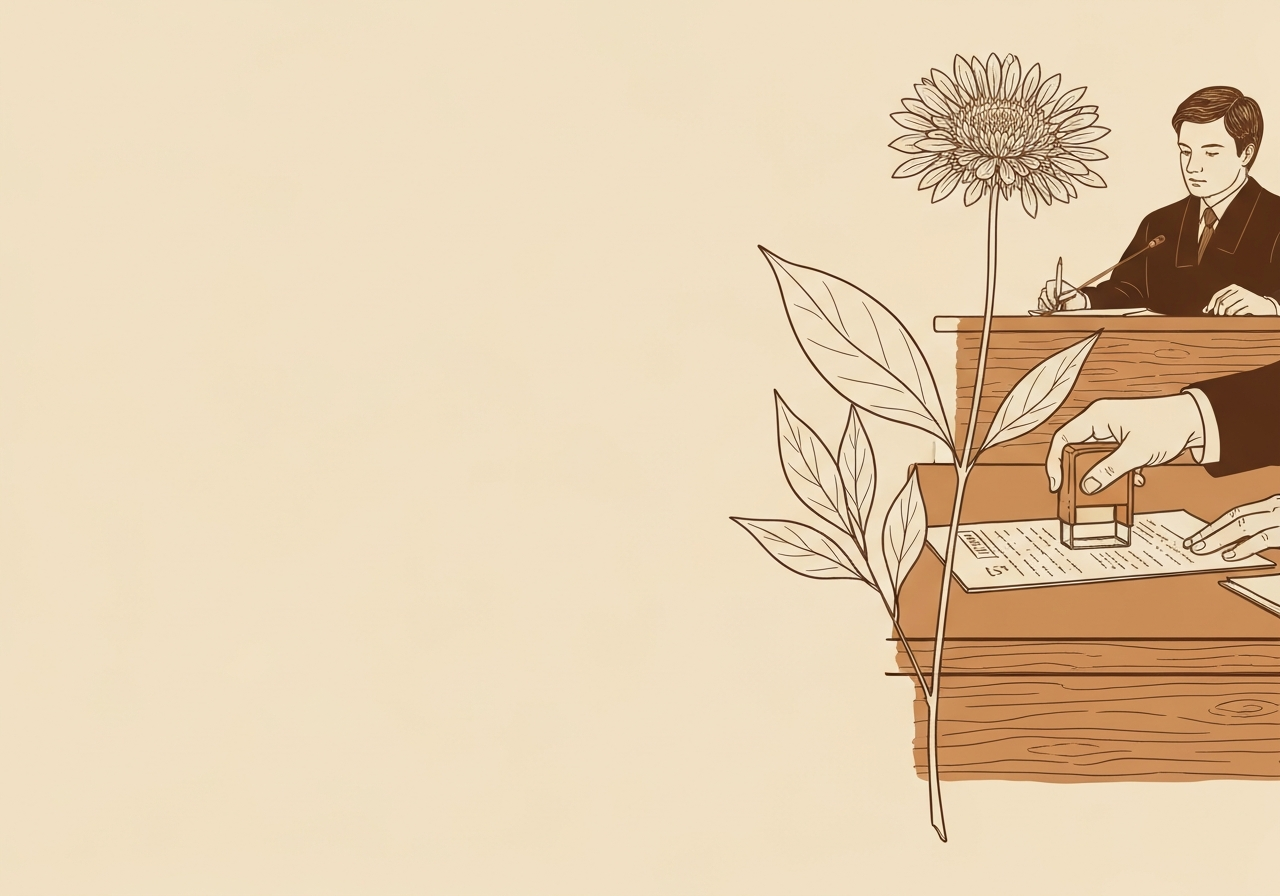
The dispute between RVE Venkatachala Gounder and Arulmigu began, as most civil disputes do, with a document. One side produced a certified copy of a record — not the original — and asked the court to mark it as an exhibit. The other side watched. The judge glanced up from the bench and asked if there was any objection. The courtroom fell silent, save for the rustle of papers and the distant hum of a ceiling fan. A clerk stamped the paper. The document was marked.
The trial proceeded. Witnesses were examined, their voices echoing off the wooden panels. Arguments were heard. The trial court delivered its judgment, the judge's glasses reflecting the fluorescent light as the order was read out.
Only then — on appeal — did the losing party raise a new argument: the document should never have been admitted because it was a copy, not the original. The mode of proof (the method by which a document is presented and authenticated in court), they said, was defective.
The appellate court had to decide: was this a valid objection, or was it too late?
The rule that fairness built
The Supreme Court, in RVE Venkatachala Gounder v. Arulmigu, laid down a principle that sounds simple but carries heavy consequences. If a party wants to object to the way a document is proved — for example, that a photocopy was submitted instead of the original — that objection must be raised at the time the document is marked as an exhibit. Not later. Not on appeal.
The logic is straightforward. If the objection is raised immediately, the party who produced the document can fix the problem. They can summon the original. They can call the witness who can authenticate the copy. They can cure the defect right there, in the same trial, while the courtroom is still warm and the witnesses are still within reach.
But if the objection waits until the appeal, the other side is ambushed. The trial is over. Witnesses have been discharged, their addresses lost in the shuffle of old files. The original document may have been lost or destroyed, eaten by time or carelessness. The party who relied on the document has no chance to fix what was wrong.
The court called this "inconsistent with the rule of fair play," holding that allowing such a late objection would "seriously prejudice interests of that party" — the party who had placed the certified copy on record "without protest by the other side."
Consider a hypothetical trial scenario. A plaintiff walks into court with a certified copy of a will. The defendant's lawyer, confident of winning on other grounds, lets the copy be marked without a murmur. The trial runs its course. Witnesses testify. The judge delivers a verdict against the defendant. On appeal, the defendant's lawyer argues that the will was never properly proved because only a copy was tendered. The Supreme Court's answer, drawn from RVE Venkatachala Gounder, is blunt: you should have objected then. You did not. The document stands. The judgment stands. The silence you chose is now your chains.
Why silence becomes consent
The legal term for what happens here is waiver (giving up a right by not exercising it in time). When a party watches a document being marked without objection, the law treats their silence as consent to the mode of proof — even if that mode was technically defective.
This is not a small point. In Indian civil procedure, documents are the backbone of most cases. A sale deed, a will, a lease agreement, a partnership deed — these are not just pieces of paper. They are the evidence that decides who wins and who loses. If every losing party could wait until appeal to say "that document was a copy, not the original," no trial judgment would ever be final. The system would collapse under the weight of endless second-guessing.
Consider how this plays out in a typical trial. Imagine a plaintiff produces a certified copy of a sale deed to prove ownership. The defendant's lawyer sits through the marking, says nothing, cross-examines witnesses on other points, and loses the case. On appeal, the defendant argues that the sale deed was never properly proved because only a copy was tendered. The Supreme Court's answer, drawn from RVE Venkatachala Gounder, is blunt: you should have objected then. You did not. The document stands.
The Supreme Court was clear: the objection as to mode of proof must be taken at the time of marking the document as an exhibit. If raised before the trial court, the concerned party "could have cured the mode of proof by summoning the original copy of document."
Raise it at the appellate stage, and the court will shut it down.
The prejudice that cannot be undone
The court's reasoning turned on one word: prejudice (unfair disadvantage). Allowing a late objection, the court said, would "seriously prejudice interests of that party" — the party who produced the document in good faith, without protest from the other side.
Think about what that party has lost by the time the appeal arrives. They have already paid for the trial. They have already presented their evidence. They have already argued their case based on that document. To now be told that the document is inadmissible — years later, when the original may no longer be available, when witnesses have scattered like leaves in the wind — is not just unfair. It is destructive of the entire trial process.
The court recognised that procedural rules exist not to trap litigants, but to create a fair playing field. And a fair playing field requires objections to be made when they can still be fixed — not when they can only be used as a weapon.
This principle was reinforced in subsequent decisions, including Dayamathi Bai, where the courts reiterated that the plea regarding mode of proof "cannot be permitted to be taken at the appellate stage for the first time." The reasoning in Dayamathi Bai echoed the same concern: that allowing a party to lie in wait, to hold back an objection until the appeal, would undermine the integrity of the trial process itself. The courts were not willing to let procedural gamesmanship defeat substantive justice.
What this means for every litigant
For lawyers and parties in civil trials, the message is unmistakable: watch every document as it comes in, and object immediately if something is wrong. Do not save objections for appeal. Do not assume you can raise them later. The court will treat your silence as acceptance.
For the party producing a document, the lesson is equally important: if the other side does not object when the document is marked, that document is safe. Even if the mode of proof was technically defective, the failure to object at the right time cures the defect.
The certified copy with its faded seal remains in the file. The clerk's stamp is still visible on the margin. The silence that filled the courtroom when the document was marked has become a binding promise — a promise that the objection would come now or never. It came too late.
THE PLAY: Object to defective evidence the moment it is marked — or lose the right to object forever.
The document stayed in the file. The objection stayed outside the courtroom door. And the court ended where it began: with a party who waited too long, and a rule that refused to let him turn back the clock.