How a xerox copy of a trade mark certificate became a courtroom mess
The Supreme Court slammed lower courts for marking photocopies as exhibits 'subject to objection' — a practice that lets flawed evidence slip in and derails trials.
2
courts.
The Supreme Court slammed lower courts for marking photocopies as exhibits 'subject to objection' — a practice that lets flawed evidence slip in and derails trials.
The judge let the xerox copy in 'subject to objection.' The Supreme Court said that was a serious mistake — and it's a trap that weakens every case.
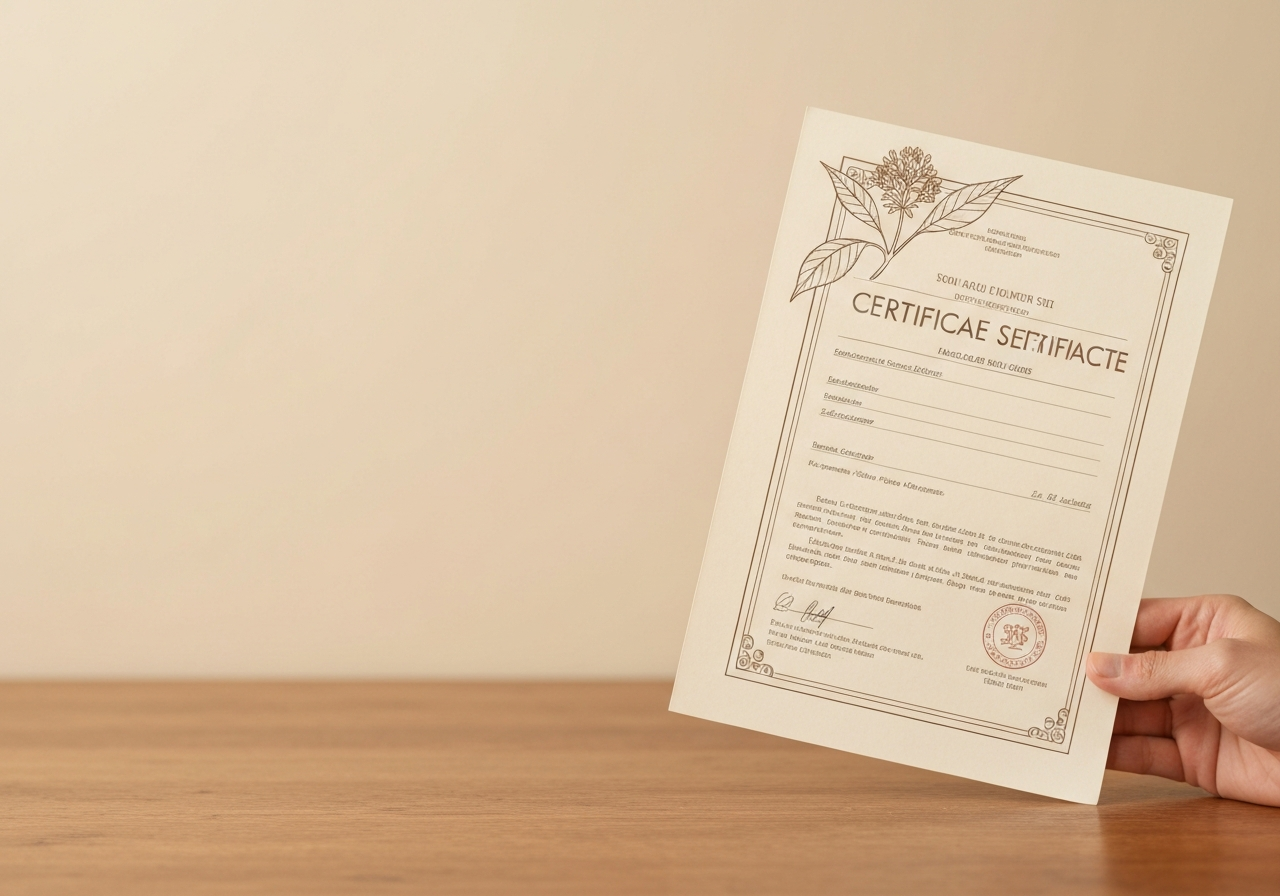
The lawyer for Shalimar Chemical Works Ltd. held up a photocopy of a trade mark registration certificate. The lawyer for Surendra Oil and Dal Mills objected — this was not the original. The judge nodded, accepted the objection, and then did something that sounded reasonable but turned out to be legally disastrous: he marked the photocopy as an exhibit "subject to objection of proof and admissibility." The trial moved on. The document sat in the record, technically challenged but never resolved. Years later, the Supreme Court called this practice a serious mistake — one that undermines the entire evidentiary process.
When the photocopy walked in
The case was Shalimar Chemical Works Ltd. v. Surendra Oil and Dal Mills. Shalimar Chemical Works Ltd., the plaintiff, wanted to prove it owned a registered trade mark. To do that, it needed to show the court its certificate of registration — the official document issued by the Trade Marks Registry. What it produced instead was a xerox copy. The paper felt thin and cheap in the lawyer’s hand, a flimsy shadow of the official document it was meant to replace.
The defendant objected immediately. A photocopy could be altered, misaligned, or simply not what it claimed to be. The trial court heard the objection, acknowledged it, and then made a choice the Supreme Court later described as a serious mistake committed at every stage of the proceedings. The judge’s expression was one of weary pragmatism as he waved the document onto the record, as if setting aside a minor inconvenience for later.
The 'subject to objection' trap
Indian trial courts have a common habit. When a party objects to a document — because it is a photocopy, or because it has not been properly stamped, or because its authenticity is in doubt — the judge often marks the document as an exhibit "subject to objection." The idea sounds pragmatic: let the document into the record for now, hear the objection later, decide its admissibility when the case is finally argued.
The Supreme Court saw the problem clearly. Marking a document "subject to objection" resolves nothing. It kicks the can down the road. The document sits in the evidence file, the other side must respond to it, and the trial proceeds on the assumption that the document might be valid. By the time the objection is finally heard — often at the final arguments stage — the damage is done. The party that produced the flawed document never had to fix the problem. The other side spent time and money challenging something that should never have been let in. The silence in the courtroom when the Supreme Court delivered its observation on this practice felt heavy, as if the weight of a thousand pending objections had just been named.
What the trial court should have done
The Supreme Court laid out the correct approach. When a party objects to a document at the time it is being marked as an exhibit, the trial court must make a decision right then. If the document is clearly inadmissible — like an uncertified photocopy of a registration certificate — the court should refuse to take it on record. The party that wants to use the document must then find another way to prove its case: produce the original, get a certified copy from the registry, or lead other evidence.
The crucial test, the Court said, is whether the defect could have been cured at the stage of marking the document. If the answer is yes — and in this case, the plaintiff could have simply produced the original certificate or a certified copy — then the court must give the party an opportunity to rectify the deficiency. But it must not let the flawed document into evidence conditionally. It must either reject it outright or give a short adjournment for the party to bring the proper document.
Why this matters for every trial
The Supreme Court's reasoning applies far beyond trade mark certificates. Every day in Indian courts, lawyers produce photocopies of contracts, letters, agreements, and official documents. The other side objects. The judge says "subject to objection." And the trial lumbers on with a piece of evidence that may be worthless.
For practitioners, the lesson is sharp. If you are the party objecting to a document, do not accept a "subject to objection" marking. Insist that the court rule on your objection then and there. If the document is inadmissible, it should not enter the record at all. If the defect is curable, the other side should be forced to cure it immediately — not given a free pass to let a flawed document sit in the file for years.
For the party producing the document, the lesson is equally clear. Bring the original. Bring a certified copy. Do not rely on the court's indulgence to let a photocopy in "subject to objection." That indulgence may vanish at the appellate stage, and you may find yourself with no evidence at all.
THE PLAY: When a document is objected to at the marking stage, demand an immediate ruling — do not let it enter the record "subject to objection" because that postpones the fight and weakens your case.
When the defect could have been cured
The Supreme Court drew a critical distinction. Some evidentiary defects are fatal and cannot be cured — for example, a document that is inherently forged or one that requires a specific form of proof that cannot be supplied later. But many defects are curable: a missing stamp, a lack of certification, a photocopy where the original exists. In those cases, the court must give the party an opportunity to cure the defect at the marking stage itself.
What the trial court cannot do is what it did in Shalimar Chemical Works Ltd. v. Surendra Oil and Dal Mills: let the document in conditionally, leaving the objection to be decided at some distant future date. That practice, the Supreme Court said, was a serious mistake — and it is a mistake that Indian trial courts make every day. The Court’s observation that "serious mistakes were committed in the case at all stages by the lower courts" was a stark rebuke, hanging in the air long after the judgment was read.
The case ended with a clear message. Evidence is not a game of let's-pretend. A document is either admissible or it is not. The time to decide is when it is offered — not years later, when the trial is over and the judgment is being written.
The texture of a flawed record
Consider the physical weight of that xerox copy. It was not the crisp, embossed original from the Trade Marks Registry, but a blurred reproduction on office paper. The edges were soft, the ink slightly smudged. In the hands of the trial judge, it felt like a placeholder — a document that was there but not quite real. Yet it was marked as an exhibit, placed in the file, and treated as evidence. The objection was noted but not resolved. The file grew thicker, but the legal question grew no clearer. That is the trap the Supreme Court identified: a procedural shortcut that creates a mess for every case it touches.
For the lawyer who objected, the moment was frustrating. The objection was valid, the defect was obvious, and the cure was simple — yet the trial court’s conditional marking meant that the issue would not be decided for months, perhaps years. The lawyer for Shalimar Chemical Works Ltd., meanwhile, breathed a quiet sigh of relief. The document was in. The fight was postponed. But the Supreme Court made clear that such postponements are a disservice to justice. A case must be decided on proper evidence, not on documents that enter the record through a procedural loophole.
The lesson from this case is simple but profound: when a document is offered in evidence, the trial court must rule on objections immediately. If the defect is curable, give the party a chance to cure it. If it is not, reject the document. Do not let it sit in the record "subject to objection." That is not pragmatism. It is a serious mistake.