Insurer knew shop was in basement, still added 'basement not covered' clause
Supreme Court says an exclusion clause that destroys the contract's purpose, introduced by the insurer with full knowledge, cannot be used to deny a claim.
1
clause.
Supreme Court says an exclusion clause that destroys the contract's purpose, introduced by the insurer with full knowledge, cannot be used to deny a claim.
TATA AIG inspected the basement shop, issued the policy, then added a clause saying basements are not covered. When fire struck, they said—nothing. They simply pointed to the fine print and walked away. The shop owner, who had paid premiums in good faith, was left staring at a policy that seemed to insure everything except the very thing it was bought to protect.
The question before the Supreme Court was deceptively simple: Can an insurance company inspect a basement shop, know it is a basement shop, issue a policy for that shop, slip in a clause that excludes basement coverage, and then use that same clause to deny the claim when the shop burns down?
When the inspector walked through the basement door
M/s Texco Marketing Pvt. Ltd. ran its business from a shop located in a basement. The company approached TATA AIG General Insurance Company for a Standard Fire & Special Perils policy—the kind of comprehensive cover that protects against fire, explosion, storms, and similar risks. Before issuing the policy, TATA AIG sent its own inspectors to the shop. They inspected the premises. They saw the basement. They knew exactly what they were insuring.
The policy was issued. Premiums were paid. The shop operated as usual.
But buried inside the policy document was an exclusion clause that stated basements were not covered. The shop owner was never told about this clause in plain language. The insurer did not draw attention to it. The clause simply existed, printed in the fine print of a standard-form contract that the insured had no power to negotiate.
To make matters worse, TATA AIG had also insured another basement shop belonging to a different party in the same building—without any such exclusion. The insurer knew basements were insurable. It simply chose to insert a hidden trap in this particular policy.
When the fire came
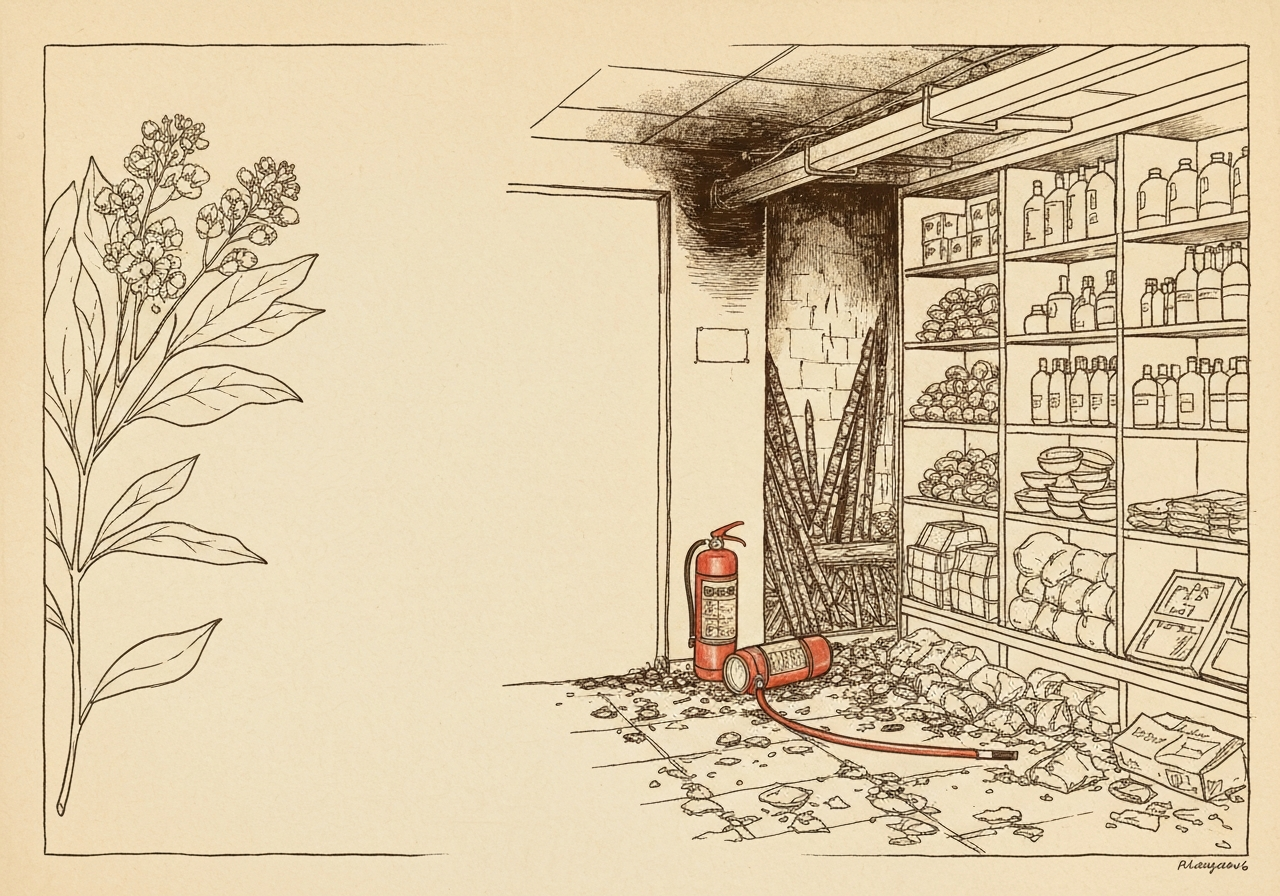
A fire broke out. The basement shop suffered damage—the flames gutted the space, leaving charred stock and smoke-stained walls. M/s Texco Marketing filed a claim. TATA AIG rejected it, pointing to the exclusion clause. The shop owner was told, in effect: we insured your basement shop, but we never intended to cover it.
The company approached the State Consumer Disputes Redressal Commission. The State Commission found TATA AIG guilty of deficiency in service (a failure to provide the promised standard of service) and unfair trade practice (a business practice that deceives or harms consumers). The insurer was ordered to pay the claim.
TATA AIG appealed to the National Consumer Disputes Redressal Commission. The National Commission reversed the State Commission's order. It accepted that the insurer had violated mandatory disclosure rules under the IRDA (Protection of Policy Holder's Interests) Regulation, 2002—rules that require insurers to explain policy terms clearly and provide copies of all documents. But despite this finding, the National Commission still applied the exclusion clause and denied the claim.
The shop owner appealed to the Supreme Court.
Why the exclusion clause could not stand
The Supreme Court examined the case through the lens of three legal principles that together form the bedrock of insurance law in India.
The first was uberrimae fidei (the duty of utmost good faith)—a principle that requires both the insurer and the insured to deal with each other honestly and disclose all material facts. The court found that TATA AIG had violated this duty. It knew the shop was in a basement. It inspected the premises. It issued the policy. Then it introduced an exclusion clause that contradicted the very purpose of the contract.
The second was the doctrine of adhesion contracts—standard-form contracts drafted by one party (here, the insurer) that the other party must accept or reject without negotiation. Indian courts have long held that such contracts must be interpreted strictly against the drafter. Any ambiguity in an exclusion clause must be resolved in favour of the insured.
The third was the blue pencil doctrine (the legal power to strike out a contract clause that is void or unenforceable while keeping the rest of the contract intact). The court held that an exclusion clause that destroys the main purpose of the contract at its inception is void ab initio (void from the very beginning) and must be severed from the policy.
The court also applied Section 19 of the Indian Contract Act, 1872, which says that a contract obtained through fraud or misrepresentation is voidable at the option of the party whose consent was obtained by the fraud. Here, the insurer had suppressed the existence of the exclusion clause and misrepresented the scope of coverage. The insured could therefore choose to void the exclusion clause—and the insurer could not benefit from its own wrongdoing.
What the IRDA regulations demanded
Clause 3(ii) of the IRDA (Protection of Policy Holder's Interests) Regulation, 2002 requires an insurer to provide all material information about the policy to the insured. Clause 3(iv) requires the insurer to give the insured a certificate explaining the key terms. Clause 4 requires the insurer to furnish a copy of the proposal form (the application filled by the insured) along with the policy document.
The Supreme Court noted that TATA AIG had violated all three requirements. The exclusion clause was buried in fine print. The insured was never told about it in clear language. The policy documents were not properly furnished. The court held that non-compliance with these mandatory regulations made the exclusion clause unenforceable against the insured.
The court's central reasoning
Justice Surya Kant and Justice M.M. Sundresh, writing for the bench, laid down a principle that will now govern similar disputes: "An exclusion clause that destroys the very contract at its inception, introduced by the insurer with knowledge of the excluded risk, cannot be relied upon by the insurer to repudiate the claim."
The court drew on its own precedents. In Skandia Insurance Co. Ltd. v. Kokilaben Chandravadan (1987), the court had held that exclusion clauses must be read down to avoid defeating the main purpose of the contract. In B.V. Nagaraju v. Oriental Insurance Co. Ltd. (1996), the court had said that an insurer cannot rely on a breach of condition that has no causal connection to the loss. In Modern Insulators Ltd. v. Oriental Insurance Co. Ltd. (2000), the court had reiterated that exclusion clauses must be construed strictly against the insurer.
The court also cited George Mitchell (Chesterhall) Ltd v. Finney Lock Seeds Ltd. (1983), an English case that established the principle that a clause excluding liability for a fundamental breach of contract may be held unreasonable and unenforceable.
The Supreme Court set aside the National Commission's order and restored the State Commission's decision. TATA AIG was directed to pay the claim.
THE PLAY: If an insurer inspects your premises, knows the risk, issues a policy, and later tries to deny a claim using a hidden exclusion clause that contradicts the policy's purpose, the clause is void and cannot be enforced—regardless of what the fine print says.
The basement shop burned. The insurer walked away. The Supreme Court brought them back.