Iron ore exporter loses Rs 52 cr incentive after policy change mid-contract
Chowgule & Co. signed a deal when processed ore was eligible. By the time exports happened, the rules had changed. The Supreme Court says: the date of export, not contract, decides eligibility.
Held.
Policy changed.
Promise broken.
Chowgule & Co. signed a deal when processed ore was eligible. By the time exports happened, the rules had changed. The Supreme Court says: the date of export, not contract, decides eligibility.
They signed a contract in February 1990 to export processed iron ore. By the time the ships sailed, the government had changed the rules — and the Supreme Court just told them: too late.
The company had done everything by the book. It entered into a contract with a Japanese buyer in February 1990, when the government's trade policy explicitly allowed exporters of processed iron ore to earn 'additional licences' — tradable permits that functioned as cash incentives. The company exported processed iron ore worth about Rs 52 crores between April 1990 and March 1991. When it applied for the incentive, the authorities said no. By the time those exports happened, a new policy had come into effect, and processed iron ore was no longer on the list of eligible items.
The question that hung over the case was simple: when the government changes an incentive policy between the signing of a contract and the actual export, which date decides the exporter's eligibility?
February 1990 — the contract that looked safe
Chowgule & Company, a recognised trading house based in Goa, signed an export contract with a Japanese company for processed iron ore. At that time, the Import-Export Policy for 1988-91 (the Exim Policy) was in force. Under that policy, exporters of processed iron ore could earn 'additional licences' based on their Net Foreign Exchange (NFE) earnings — essentially, the government rewarded exporters with permits they could sell or use to import other goods.
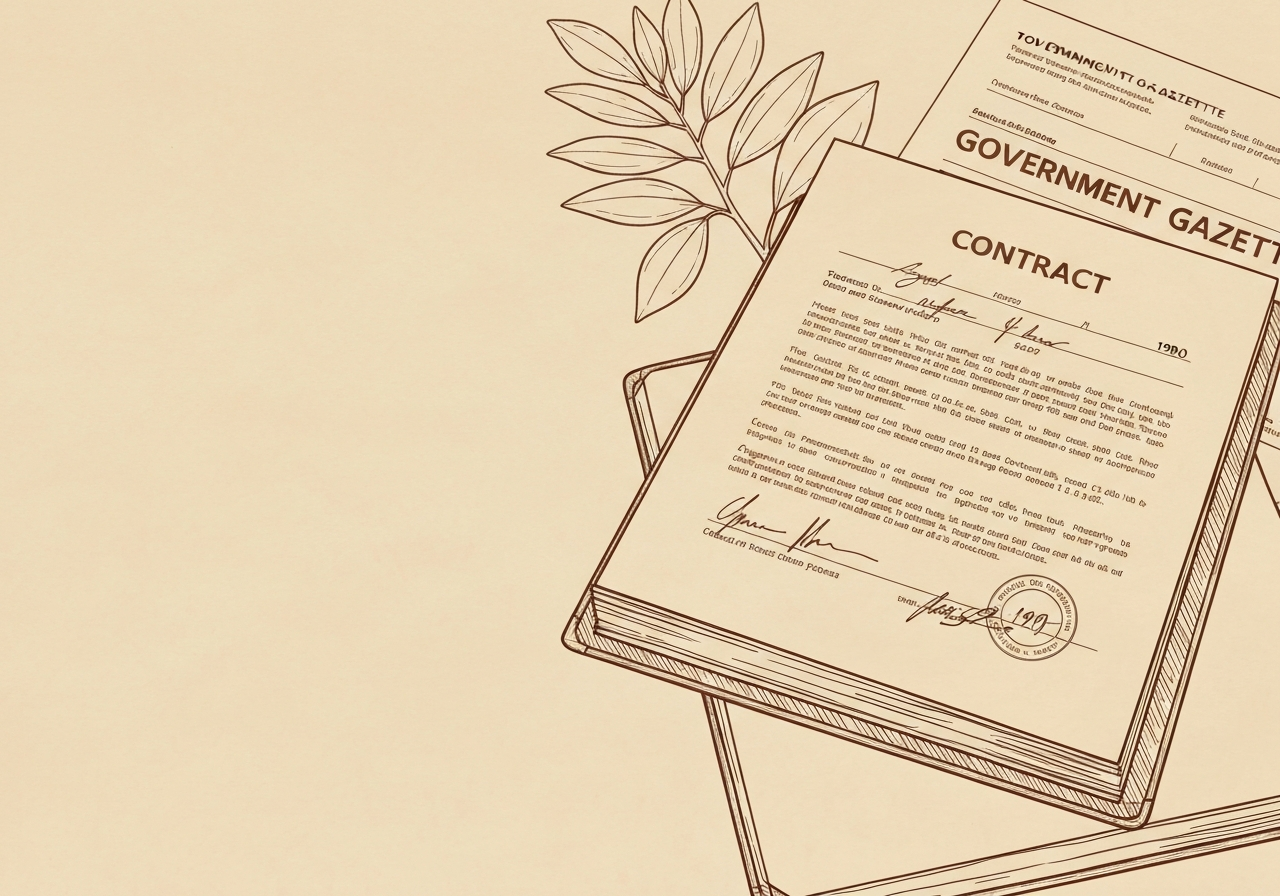
The company was a recognised trading house, a status that came with certain expectations of policy stability. It relied on the incentive structure when it priced the contract, committed to delivery timelines, and arranged shipping. The contract was signed in good faith, under a policy that said: export processed iron ore, earn additional licences. The contract document itself felt substantial in the hand — pages of fine print, signatures, and the weight of a commercial promise built on a government assurance.
When the policy changed — one word dropped
Before Chowgule could complete its exports, the government introduced a new Exim Policy for 1990-93. The change was small in wording but massive in consequence. The old policy's Appendix 12 listed 'Minerals and ores – unprocessed' as ineligible for the incentive. The new policy expanded that entry to simply 'Minerals and ores,' dropping the word 'unprocessed.' Processed iron ore, which had been eligible under the old policy, was now squarely in the ineligible category. The notification itself was a dry bureaucratic document — a few lines of text in the Gazette — but for Chowgule, it read like a door slamming shut.
The company exported processed iron ore worth approximately Rs 52 crores between April 1990 and March 1991 — all of it under the new policy regime. When it applied for additional licences based on these exports, the authorities rejected the application. The reason: the exports occurred during a period when processed iron ore was ineligible for the incentive.
The long procedural road
What followed was a legal odyssey that stretched three decades and touched nearly every level of the adjudicatory system. The procedural journey reveals just how determined the company was — and how consistently the authorities held their ground.
The company first applied to the Assistant Chief Controller of Imports and Exports in July 1992. The application was rejected. On appeal, the Joint Director General of Foreign Trade remanded the matter for fresh consideration. But when the Assistant Chief Controller re-examined the case in April 1993, the result was the same: rejection. A first appeal against this fresh adjudication was dismissed in September 1993. A second appeal to the Additional Director General of Foreign Trade met the same fate in October 1994.
The company then moved the High Court of Bombay at Goa through a writ petition. In September 1995, the High Court remanded the matter back to the authorities. The Additional Director General of Foreign Trade heard the case again in January 1996 — and rejected it once more. A second writ petition before the High Court in 1996 finally brought some relief: in January 2001, the High Court allowed the petition. But the victory was short-lived. The Union of India appealed to the Supreme Court, which in April 2007 set aside the High Court's order and remanded the matter back for fresh consideration. The High Court heard the case again and dismissed the writ petition in June 2008. That dismissal brought the company back to the Supreme Court in the present appeal — which was finally decided on November 4, 2022.
When the Supreme Court bench of Justice M.R. Shah and Justice Krishna Murari assembled to hear the matter, the courtroom was quiet — the kind of quiet that settles over a room when a case has been argued for years and the judgment is about to land. The file before the judges was thick with decades of paperwork: administrative orders, High Court judgments, and the original contract from 1990.
The argument that almost worked — promissory estoppel
Chowgule argued that it had relied on the old policy when entering the contract in February 1990. The company invoked the doctrine of promissory estoppel (a legal principle that prevents the government from going back on a promise when someone has acted on that promise to their detriment). It said: we signed this contract because you promised us incentives. We cannot now unwind the contract. You must honour your promise.
The company also argued discrimination. It pointed to other exporters who had allegedly been granted additional licences for similar exports during the same period. If others got the benefit, Chowgule argued, denying it the same benefit violated Article 14 of the Constitution (the right to equality before the law).
The government's position was straightforward: trade policy is not a contract. Incentives are not entitlements. The relevant date for eligibility is the date of actual export, not the date of the contract. Under the policy in force when the exports happened, processed iron ore was ineligible. No amount of prior reliance could change that.
The Supreme Court's three propositions
The Supreme Court dismissed the appeal, upholding the rejection of Chowgule's incentive claim. The court's reasoning rested on three clear propositions, each drawn from settled precedent.
First, the relevant date for determining eligibility for an additional licence is the date of actual export, not the date of entering into the contract. Where the export occurs under a new policy regime that lists the exported item as ineligible, the exporter cannot claim benefit under the old policy. The court was unambiguous: "For the purpose of determining eligibility for additional licence/incentive under Exim Policy, the relevant date is the date of actual export, not the date of entering into the contract."
Second, the doctrine of promissory estoppel does not apply to policy decisions regarding trade incentives. The Directorate General of Foreign Trade (DGFT) and the Union government are free to change the Exim Policy from time to time, deciding which items incentives shall or shall not apply to. No exporter can claim an incentive as a matter of right, and such incentives may be varied or withdrawn. The court cited its own precedent in Union of India v. V.V.F. Limited (2020) and State of Uttar Pradesh v. Birla Corporation Limited (2020) to reinforce this point. The court held that "the doctrine of promissory estoppel is not applicable to policy decisions regarding trade incentives."
Third, the court rejected the discrimination argument with a sharp observation: "Merely because some other similarly situated persons were wrongly granted a benefit, an applicant cannot claim parity to obtain the same benefit through negative discrimination." Illegality cannot be perpetuated by extending it to others. If the authorities wrongly gave incentives to some exporters, the remedy is to correct that error — not to repeat it.
Why this matters for every exporter
For any business that relies on government incentive schemes, this judgment is a cold reminder: policy promises are not contracts. An exporter who signs a long-term contract based on an existing incentive structure bears the risk that the policy may change before the goods actually ship. The date of export, not the date of the agreement, is what the court will look at. The Supreme Court's ratio decidendi makes this explicit: "Where the export occurs under a new policy regime that lists the exported item as ineligible, the exporter cannot claim benefit under the old policy."
The implications extend beyond iron ore. Any exporter in any sector who enters into a long-term supply contract based on an existing incentive scheme must now reckon with the possibility that the scheme could be altered or withdrawn before the goods leave the country. The court's observation that "no exporter can claim an incentive as a matter of right, and such incentive may be varied or withdrawn" leaves no room for ambiguity.
THE PLAY: Build policy-change clauses into your export contracts — or price them assuming the incentive may disappear before the ship sails.
The court ended where it began: with a contract signed in February 1990, and exports that happened too late. The appeal was dismissed with no order as to costs — a quiet end to a case that had consumed thirty years of litigation. The contract that once felt so solid now sits in a file, a reminder that in trade policy, timing is everything.