Is your phone a computer? A court just answered.
The High Court ruled that a mobile phone fits the IT Act's definition of a 'computer'—and that changes how evidence from it is treated.
Held.
Phone is a
computer.
The High Court ruled that a mobile phone fits the IT Act's definition of a 'computer'—and that changes how evidence from it is treated.
Your phone is in your pocket. But legally, it might be a computer. A man named Syed Asifuddin stood before the Andhra Pradesh High Court arguing that the device in his hand was nothing more than a communication tool—a phone, not a computer. The court disagreed. And in that disagreement, it redefined what counts as digital evidence in India.
The case began with a criminal dispute. The prosecution wanted to use data from Syed Asifuddin's mobile phone as evidence. There was a catch. The Information Technology Act, 2000—India's primary law governing electronic records—has strict rules about how evidence from a "computer" must be handled and authenticated. If a mobile phone was not a computer, those rules would not apply. The evidence could be treated differently.
The defence argued: a mobile phone is a simple communication device. It makes calls. It sends texts. It does not meet the rigorous standards of a traditional computer or computer system. Therefore, the strict evidentiary requirements under the IT Act should not apply to data extracted from it.
The courtroom was quiet as the arguments were made. The air was thick with the smell of old files and the low hum of a ceiling fan. The judges sat behind a high wooden bench, their eyes scanning the thick statute book open before them. The defence lawyer gestured with his hands, holding up a mobile phone as if to say, "This? This is a computer?" The room waited.
Inside the statute's black box
The High Court had to interpret three key definitions from Section 2(1) of the IT Act: clauses (i), (j), and (l). These clauses define "computer," "computer network," and "computer system." The court read them together to understand what the legislature intended.
Clause (i) defines a computer as "any electronic, magnetic, optical or other high-speed data processing device or system which performs logical, arithmetic, and memory functions by manipulations of electronic, magnetic or optical impulses, and includes all input, output, processing, storage, computer software, or communication facilities which are connected or related to the computer in a computer system or computer network."
Clause (j) defines a computer network as the interconnection of one or more computers through various communication media. Clause (l) defines a computer system as a device or collection of devices, including input and output support facilities, that contains computer programs and performs functions such as logical, arithmetic, and memory operations.
On their own, these definitions sound like they describe a desktop machine with a tower, monitor, and keyboard. The court saw something broader. One of the judges read the definition aloud, his voice steady and deliberate. The words echoed off the high ceilings of the courtroom. "Any electronic, magnetic or optical device used for storage of information..." He paused, letting the weight of the phrase settle. The defence lawyer shifted in his seat.
The circuit board that changed everything
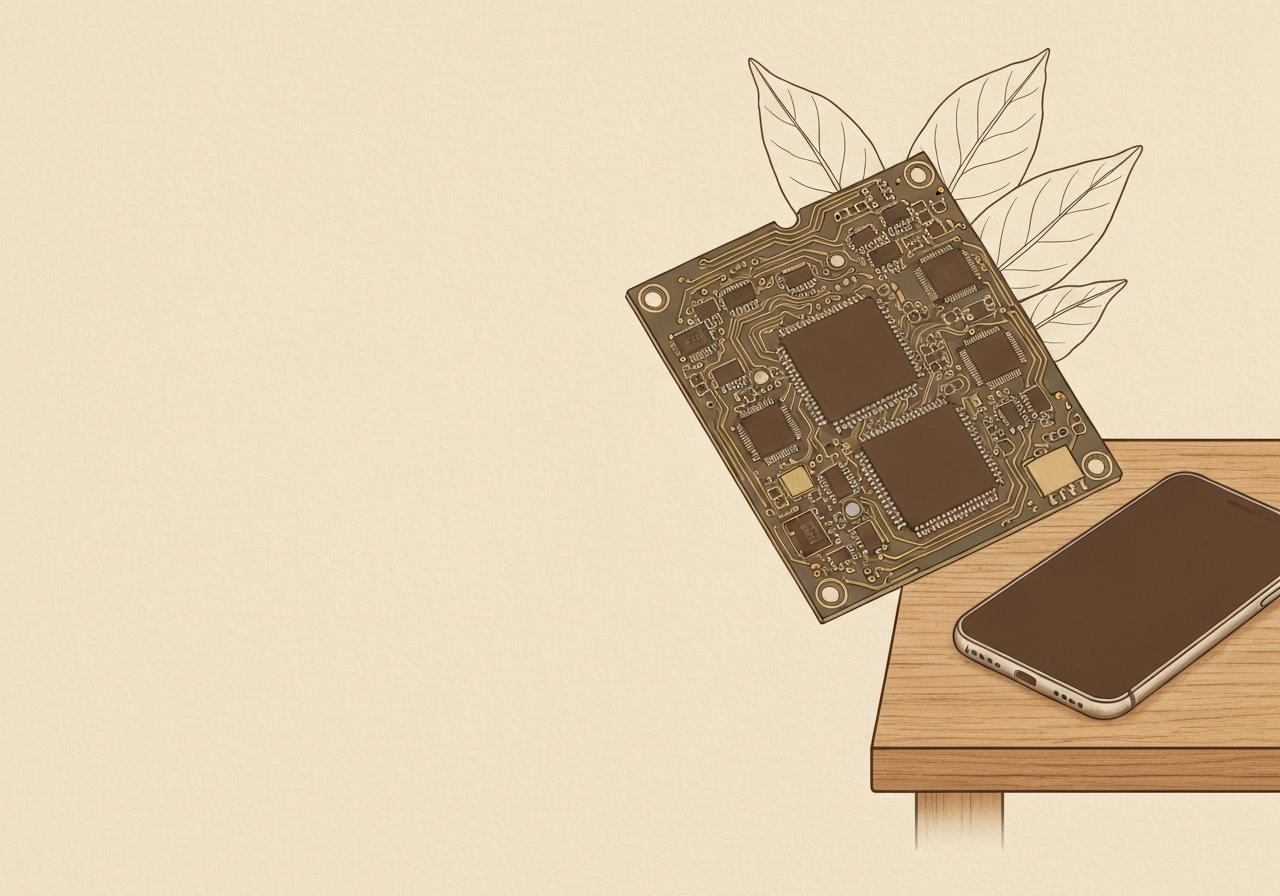
The court examined how a mobile phone actually works. Inside every phone is a circuit board. That board contains several computer chips. These chips are programmed to perform specific functions: they receive incoming digital audio signals, convert them to analog signals so you can hear the other person, and then convert your outgoing analog voice signals back into digital form to send out through wireless technology.
In Para 12 of its judgment, the court observed that “any electronic, magnetic or optical device used for storage of information received through satellite, microwave or other communication media and the devices which are programmable and capable of retrieving any information by manipulations of electronic, magnetic or optical impulses is a computer which can be used as computer system in a computer network.”
The court noted that a mobile phone does exactly this. It receives information through wireless communication media. It stores that information. It is programmable—you can install apps, update software, change settings. And it retrieves information by manipulating electronic impulses. By every functional measure, a mobile phone meets the definition of a computer under the IT Act.
The circuit board inside the phone is small, barely the size of a fingernail. But it is packed with tiny chips, each one a miniature computer. The judges examined the technical explanation with care. The phone on the table in the courtroom was no longer just a phone. It was evidence. It was a computer. The room felt the shift.
Why the defence's argument failed
The defence argued that a mobile phone is primarily a communication device, not a computing device. The court rejected this distinction. It pointed out that the essential functions of a cell phone—receiving, analysing, and distributing radio and electrical signals—are made possible only by the computer on its circuit board. Without that computer, the phone cannot make calls, send messages, or do anything at all.
The court concluded that it is not possible to accept the submission that a cell phone is not a computer. Even based on the very definition of "computer" and "computer network" in the IT Act, a cell phone is a computer because it is programmed to perform functions like receiving digital audio signals, converting them to analog, and sending analog audio signals in digital form externally by wireless technology.
The judgement was delivered in a measured tone. The bench was clear. The definition was broad by design. The legislature had intended to cover all such devices. The defence's narrow reading was rejected. The phone was a computer. The precedent was set.
What this means for evidence
This interpretation has a practical consequence. Under the IT Act, electronic records from a computer are admissible as evidence only if they are accompanied by a certificate under Section 65B of the Indian Evidence Act (a document signed by a responsible person stating that the computer was working properly when the record was created). By classifying a mobile phone as a computer, the court confirmed that data extracted from a phone—call logs, messages, photos, location data, app data—must meet the same evidentiary standards as data from a desktop or laptop. Prosecutors cannot bypass these requirements simply because the device is small enough to fit in a pocket.
For defence lawyers, this ruling is a double-edged sword. On one hand, it means the prosecution must follow strict procedural rules when presenting phone data as evidence. If they fail to produce the required certificate, the evidence can be challenged. On the other hand, it also means that data from a phone—if properly authenticated—carries the same legal weight as data from any other computer.
The implications extend beyond the single criminal dispute that triggered this case. Every mobile phone seized in a criminal investigation now falls under the same legal framework as a computer. The rules for handling digital evidence are now uniform. A phone's call records, its text messages, its location history—all of it must be authenticated with the same care as a hard drive or a server log. The court's interpretation solidified a broad legal scope for digital evidence, confirming that common mobile communication devices fall under the legal framework designed for computers and computer systems, thereby dictating how evidence from these devices must be handled and authenticated in court.
THE PLAY: If you are challenging digital evidence from a mobile phone, check whether the prosecution has filed a Section 65B certificate. If not, the evidence may be inadmissible—even though the phone is now legally a computer.
The device you use to scroll Instagram, check email, and order dinner is, in the eyes of the law, a computer. And that changes how every piece of evidence on it must be treated. The courtroom is empty now, the files returned to their shelves. But the ruling remains. The question is: will the prosecution in the next case have the certificate ready?