Judge used autopsy report to drop murder charge. SC says: not allowed.
A trial court discharged accused from murder because the post mortem said 'cardio respiratory failure.' The Supreme Court ruled that a post mortem report is not final evidence—only the doctor's word in court can decide the cause of death.
2
courts.
A trial court discharged accused from murder because the post mortem said 'cardio respiratory failure.' The Supreme Court ruled that a post mortem report is not final evidence—only the doctor's word in court can decide the cause of death.
A woman died after being beaten. The autopsy report said 'cardio respiratory failure.' The judge dropped the murder charge. The Supreme Court just reversed that—and here's why.
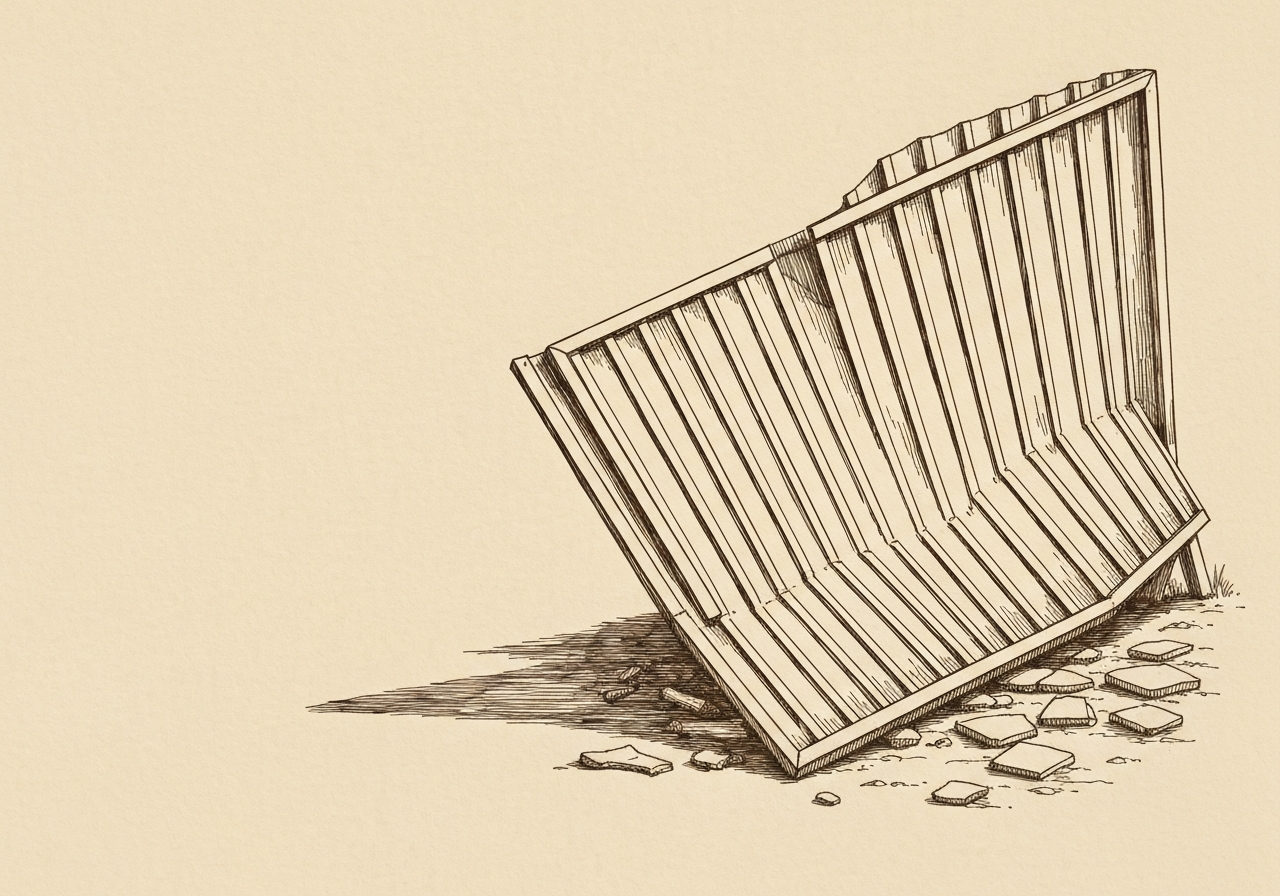
The tin fence clattered as seven men tore it down. They had trespassed onto the complainant's property and began damaging it. When the owner objected, they assaulted him with fists and a wooden log—the log thudded against his ribs. His wife and daughter-in-law rushed to help. They were beaten and dragged, their modesty outraged. The wife was taken to hospital with injuries. The hospital sheet was pulled over her face. She was declared dead.
The police filed a murder case. FIR No. 26/20 was registered at Police Station Dangiwacha under Sections 147, 354, 323, 451 IPC; Section 302 IPC was added after the death. The post mortem report came back. It listed the cause of death as 'cardio respiratory failure'—a term that describes the moment the heart and lungs stop, not what caused them to stop. The trial judge read that report, saw no mention of a fatal wound, and decided: this was not murder. On 23 October 2020, the Additional Sessions Judge, Sopore discharged the accused from Section 302 IPC (the offence of murder) and framed charges only under Section 304 IPC (culpable homicide not amounting to murder—a lesser offence).
The High Court of Jammu & Kashmir at Srinagar agreed. On 26 November 2020, it dismissed the revision petition and affirmed the trial court's order. The complainant appealed to the Supreme Court. And on 26 July 2022, a three-judge bench led by Justice A.M. Khanwilkar, also comprising Justice Abhay S. Oka and Justice J.B. Pardiwala, delivered a judgment that every trial judge in India needs to read. The case, Ghulam Hassan Beigh v. Mohammad Maqbool Magrey & Ors., is cited as 2022 LiveLaw (SC) 631.
When a judge becomes a jury
The problem, the Supreme Court said, was not what the trial judge decided—it was how he decided it. At the stage of framing charges, a judge is not supposed to weigh evidence like a jury. The law under Section 227 of the CrPC (the provision that allows a judge to discharge an accused before trial) permits discharge only when the material on record does not even raise a strong suspicion that the accused committed the offence.
That is a low bar. The judge does not ask: "Is the prosecution's case proven?" He asks only: "Is there enough material here to put the accused on trial?"
The trial judge in this case did something different. He took the post mortem report, examined it closely, noted that it listed no serious external injuries, and concluded that the assault could not have caused the death. He then used that conclusion to drop the murder charge.
The Supreme Court called this a "mini trial"—a full evaluation of evidence at a stage where the law forbids it.
Why a post mortem report is not final proof
Here is the legal trap that caught the trial judge. A post mortem report is a document prepared by a doctor. Under the Indian Evidence Act, it is classified as a "previous statement" of that doctor—not as "substantive evidence" (evidence that can directly prove a fact in court). The doctor's opinion on the cause of death becomes evidence only when the doctor steps into the witness box, takes an oath, and is cross-examined by both sides.
Until that happens, the post mortem report is just a piece of paper. It can be used to support the doctor's testimony later, but it cannot replace that testimony. The trial judge treated the report as if it were the final word on the cause of death. The Supreme Court said that was a fundamental error. As the bench put it, "the post mortem report is not substantive evidence but only the previous statement of the doctor." The cause of death listed as 'cardio respiratory failure' is itself a clue. Almost every death ends with the heart and lungs stopping. The question is what started that chain. Was it the beating? Was it a pre-existing condition? Was it something else entirely? Those questions cannot be answered by reading a report. They require a doctor to explain—under oath—what the autopsy actually revealed, and whether the injuries found were consistent with the assault described by eyewitnesses.
The Supreme Court further held that the nexus between the assault and the death could only be determined after recording oral evidence of eyewitnesses and the medical expert. The trial court had exceeded the permissible scope of inquiry at the charge-framing stage by conducting what amounted to a mini trial—meticulously evaluating and marshalling evidence when it should only have asked whether a strong suspicion existed.
The irreversible harm of a premature discharge
When a trial judge discharges an accused from a higher charge—say, murder under Section 302 IPC—and frames a charge only for a lesser offence like culpable homicide under Section 304 IPC, something irreversible happens. The prosecution is now forced to prove only the lesser offence. It cannot lead evidence on murder. The accused, in turn, only needs to defend against the charge that was framed.
If the trial later reveals that the evidence actually supported a murder conviction, it is too late. The prosecution's case has been permanently narrowed. The Supreme Court flagged this as a serious prejudice to the complainant—especially in a case where a woman died after being assaulted while defending her family's property. The court observed that discharging from Section 302 IPC at charge stage effectively prevents prosecution from leading evidence on murder, prejudicing its case irreversibly.
The precedents that bound the trial court
The bench relied on a line of precedents to restate the settled law. In Union of India v. Prafulla Kumar Samal (1979) 3 SCC 4, the court had held that at the charge-framing stage, the judge must only see whether a prima facie case (a case that, if unrebutted, could lead to conviction) exists. In Amit Kapoor v. Ramesh Chander (2012) 9 SCC 460, the court warned against conducting a mini trial at the charge stage. In Sajjan Kumar v. CBI (2010) 9 SCC 368, the court reiterated that even a strong suspicion is enough to frame a charge. In Asim Shariff v. National Investigation Agency (2019) 7 SCC 148, the court held that the judge must not sift through evidence as if conducting a trial. Other precedents cited included Dipakbhai Jagdishchndra Patel v. State of Gujarat (2019) 16 SCC 547, State of Karnataka v. M.R. Hiremath (2019) 7 SCC 515, and V.C. Shukla v. State through C.B.I. 1980 Supp SCC 92. The message from all these cases was consistent: at the charge-framing stage, the court must not meticulously evaluate and marshal evidence.
What the trial court should have done
The correct approach, the Supreme Court explained, is straightforward. The trial judge should have looked at the FIR, the statements of eyewitnesses recorded under Section 161 CrPC (witness statements taken by police during investigation), and the post mortem report. He should have asked: "If the eyewitnesses are believed, could this be a case of murder?" The answer, on the facts here, was clearly yes. The deceased was beaten and dragged. She died soon after. The nexus between the assault and the death is a question for trial—not for a pre-trial discharge.
The Supreme Court set aside both the trial court's order of 23 October 2020 and the High Court's affirmation of 26 November 2020. It directed the trial court to pass a fresh order framing charges, keeping in mind that a post mortem report is not substantive evidence and that the connection between the assault and the death must be decided after recording oral testimony.
THE PLAY: Never discharge an accused from murder based solely on a post mortem report—the doctor must testify in court before the cause of death can be treated as evidence.
What this means for every criminal trial
This judgment is a reminder of a basic but often-forgotten rule: documents do not speak. People speak. A post mortem report, a forensic report, a chemical analysis—none of these are evidence until the person who prepared them steps into the witness box and says, under oath, what they found and what it means.
For defence lawyers, the judgment is also a warning. A premature discharge that shuts down a higher charge may feel like a victory. But if the Supreme Court reverses it—as it did here—the accused ends up back at square one, facing a fresh charge-framing hearing, with the added cost of delay and uncertainty.
For trial judges, the message is clear: resist the temptation to evaluate evidence at the charge stage. Your job at that point is not to decide who is guilty. It is to decide whether the case is strong enough to be heard.
The woman who died that day never got to tell her story. But the Supreme Court ensured that her death will not be reduced to a phrase on a hospital form—at least not until a doctor has looked the court in the eye and explained what that phrase really means.