Mother changed son's surname after remarriage. High Court ordered her to change it back. Supreme Court says:
The top court found the High Court's directions 'cruel' and beyond what anyone had asked for. It held that a widowed mother, as sole natural guardian, has full right to decide her child's surname.
2.5
months.
The top court found the High Court's directions 'cruel' and beyond what anyone had asked for. It held that a widowed mother, as sole natural guardian, has full right to decide her child's surname.
A mother lost her husband 2.5 months after her son was born. She remarried, gave the child her new husband's surname. The grandparents sued for guardianship—but the High Court went further.
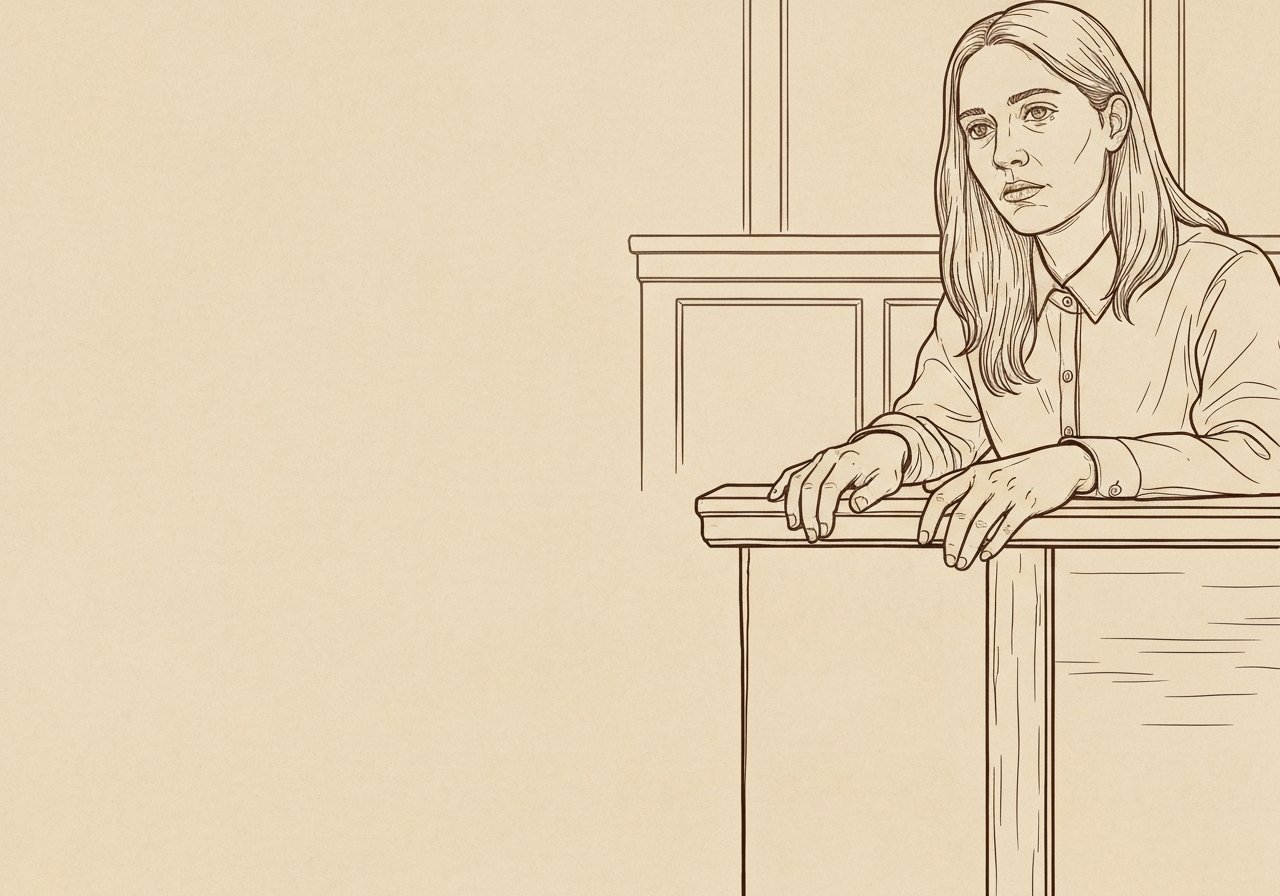
In a courtroom in Andhra Pradesh in 2014, a judge looked at a simple guardianship petition and decided it was not enough. The grandparents had only asked to be appointed guardians of their dead son's child. But the judge ordered something no one had requested: the mother must change her son's surname back to her dead husband's family name. In every official record, the boy's natural father's name must appear. If that was impossible, the second husband must be listed as "step-father." The courtroom fell silent as the order was read out, the mother's face pale, her hands gripping the edge of the bench.
The mother had lost her husband. She had rebuilt her life. Now a court was telling her how to name her own child.
The Supreme Court would have to answer a question no one in the case had even asked: could a widowed mother, as the sole natural guardian of her minor son, decide his surname after her remarriage?
When the boy lost his father before he knew him
March 2006. A woman married in 2003 gave birth to a son. Two and a half months later, her husband died. The child never knew his father. The mother was left alone with an infant, the silence of the house pressing in, the weight of a future she had not planned for.
August 2007. The mother remarried. Her second husband was a Wing Commander in the Indian Air Force. She had another child from this marriage. Life found a new rhythm—the sound of a baby's cry again, the shuffle of feet in a new home.
But the boy from her first marriage carried a surname—'Konda'—that belonged to a family he had never lived in. His mother changed it to 'Akella,' the surname of the man who was now raising him. The mother changed the child's surname from Konda to Akella in official records.
The paternal grandparents did not accept this. They filed a petition under Section 10 of the Guardians and Wards Act, 1890 (the law that allows any person to ask a court to be appointed as a child's guardian). They wanted to be appointed as guardians. They did not ask the court to change the child's surname. They did not ask for any direction about how his name should appear in records. Their handwritten petition, filed in the trial court, was simple and direct: they wanted the boy.
The trial court—the Guardian and Wards Court in Andhra Pradesh—dismissed their petition on September 20, 2011. The grandparents appealed to the High Court of Andhra Pradesh.
What the High Court did that no one asked for
January 24, 2014. The High Court modified the trial court's order. But it did not stop at the guardianship question.
During the proceedings, it came to light that the mother had changed the child's surname from 'Konda' to 'Akella.' The High Court, on its own motion (suo motu — acting without any party requesting it), directed the mother to restore the child's original surname. It further ordered that wherever records permit, the deceased natural father's name should be shown. If the records did not allow that, the second husband's name should be mentioned as 'step-father.' The judge's voice was firm, the gavel striking the bench.
The mother had not been asked to argue against this. The grandparents had not asked for it. The court simply decided that a child should carry the name of his dead father, not the man who was raising him.
The mother appealed to the Supreme Court. Her face, as she left the courtroom, was set in grim determination.
The law that gave the mother the right to decide
The Supreme Court began with a simple question: who is the natural guardian of a Hindu minor after the father's death?
Section 6 of the Hindu Minority and Guardianship Act, 1956 (the law that defines who is the natural guardian of a Hindu child) gave a clear answer. After the father, the mother is the natural guardian. And after the father's death, the mother becomes the sole natural guardian. There is no joint guardianship with grandparents. There is no requirement to consult anyone. The file before the bench was thin, the facts stark.
The Court also looked at Section 9(3) of the Hindu Adoption and Maintenance Act, 1956 (the provision that gives a mother the right to give her child in adoption after the father's death). If the mother could give the child in adoption to her second husband—legally transferring the child into his family—then surely she could do something far less drastic: change the child's surname.
Section 12 of the same Act (which explains the effects of adoption) says that an adopted child becomes the child of the adoptive father for all purposes. The child's ties with the natural family are severed. If adoption itself is legally permissible, the Court reasoned, then changing a surname is a minor, natural consequence of a mother rebuilding her family.
The grandparents had argued that the child should keep his biological father's name. But the Court found nothing unusual in a mother, upon remarriage, giving her child the surname of her second husband. "There is nothing unusual in a mother, upon remarriage, giving the child the surname of her second husband or giving the child in adoption to him," the bench observed. The words hung in the air of the Supreme Court chamber.
Why the High Court's order was 'cruel'
The Supreme Court used a word that rarely appears in judgments: cruel.
The High Court's directions, the bench said, were "cruel" and went beyond what anyone had asked for. The grandparents had filed a guardianship petition. They had not sought any relief regarding the child's surname. The mother had not been given an opportunity to oppose the surname direction. The court had, on its own, decided to intervene in a matter where no party had sought its intervention. The silence in the courtroom was thick, broken only by the rustle of paper.
The Court cited a settled principle from Messrs. Trojan & Co. Ltd. v. Rm.N.N. Nagappa Chettiar (AIR 1953 SC 235): a court cannot grant relief that is not founded on the pleadings. If a court grants a relief for which no prayer or pleading was made, and the other side had no chance to oppose it, that leads to a miscarriage of justice.
The Court also referred to Githa Hariharan and Ors. v. Reserve Bank of India and Ors. (MANU/SC/0117/1999), which had already established that the mother is the natural guardian after the father, with full parental authority.
The bench—Justice Krishna Murari and Justice Dinesh Maheshwari—held that a court may intervene in matters of a child's surname only when a specific prayer is made. And even then, the prayer must be judged on one principle alone: the child's best interest must be the primary consideration, outweighing all other considerations.
What the Supreme Court actually decided
July 28, 2022. The Supreme Court allowed the mother's appeal in part. The directions of the High Court regarding the child's surname were set aside. The mother could keep her son's surname as she had chosen. The judgment was read out, the bench's voice steady.
The Court did not entirely dismiss the grandparents' concerns. It allowed the appeal only in part—meaning the guardianship question remained alive for the lower court to decide on its merits. But on the surname issue, the mother had won completely.
The Court ordered the parties to bear their own costs. The file was closed, the matter finally settled.
THE PLAY: A widowed mother, as the sole natural guardian of her minor child under Section 6 of the Hindu Minority and Guardianship Act, 1956, has the full legal right to decide her child's surname after remarriage—and no court can override that decision unless a specific party asks it to, and only if the child's best interest clearly demands it.
The boy grew up with a name his mother chose for him. The Supreme Court decided that was her right—and no one else's.