No degree, no problem: goldsmith's word is expert opinion
The Mysore High Court ruled that a goldsmith with no formal qualifications could testify on gold purity—experience, not a certificate, makes an expert.
Heard.
The goldsmith's word.
No degree needed.
The Mysore High Court ruled that a goldsmith with no formal qualifications could testify on gold purity—experience, not a certificate, makes an expert.
He never went to college. But the court said his word on gold purity was good enough.
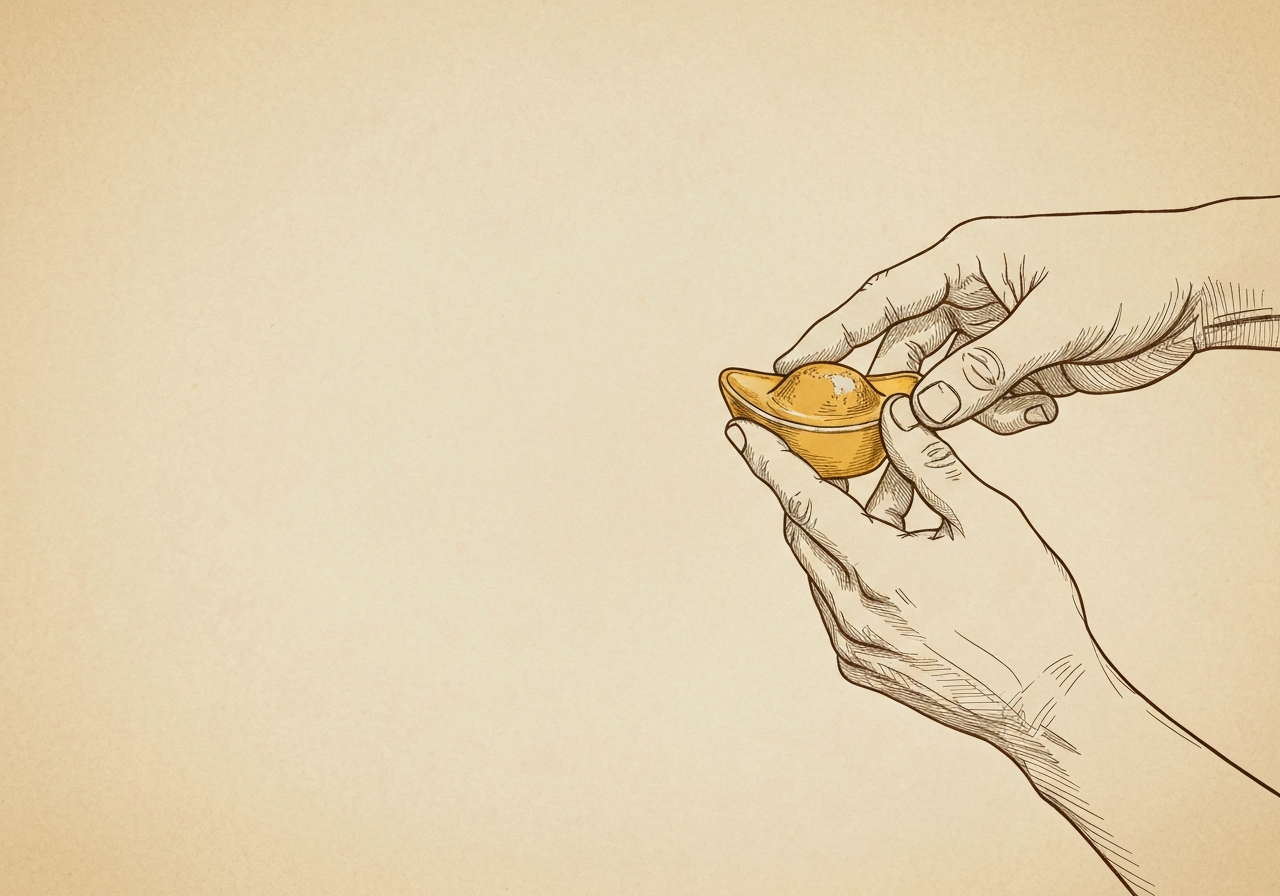
A man who had spent years melting, hammering, and testing gold walked into a Mysore courtroom. His hands were calloused, the skin darkened by decades of soot and metal. He had no degree. He had no certificate. But his testimony was about to decide a case. The question before the High Court was not about the gold itself—it was about whether this man, with no formal qualification, could be called an expert at all.
When the goldsmith took the stand
The facts of Abdul Rahman v. State of Mysore began with a dispute over gold purity. The exact offence—whether theft, cheating, or a customs violation—was not specified in the record. What the prosecution needed was clear: establish exactly how pure the gold was. They called a professional goldsmith.
The goldsmith had never studied metallurgy. He had never passed an examination in chemistry or assaying. What he had was years of practice: testing purity by touch, by colour, by the way gold behaved under heat. His fingers knew the weight of a coin, the ring of a hammer on a perfect ingot. He could tell, by experience alone, whether a piece was 22 carat or 18 carat, whether it had been mixed with copper or silver.
The defence objected. How could this man be treated as an expert? He had no qualifications. His opinion was worthless. The trial court admitted his testimony anyway. The case reached the Mysore High Court on appeal.
What the law actually says about experts
The High Court turned to Section 45 of the Indian Evidence Act—the provision that governs when a court can treat someone as an expert. The section does not say "expert" means someone with a degree. It says a person must be "specially skilled" in the matter at hand. That skill can come from any source: formal education, apprenticeship, or sheer years of doing the work.
The court noted that the law broadly construes the word "art" in this context. "Art" does not mean only painting or sculpture. It means "handicraft, trade, profession and skill in work". A goldsmith's trade is an art. A carpenter's trade is an art. A mechanic's trade is an art. If a person has developed special skill through experience, the law recognises them as an expert.
Formal qualifications, the court held, are unnecessary. What matters is whether the person possesses adequate knowledge. The goldsmith's knowledge came from his work. That was enough.
Why the court admitted the goldsmith's opinion
The High Court ruled that the goldsmith's opinion on gold purity was relevant and admissible as expert opinion under Section 45. The goldsmith could testify about what he saw, what he tested, and what he concluded. His lack of a certificate did not make his evidence worthless. The courtroom fell silent as he described how he had weighed the gold, how it had felt in his palm, how the colour had told him its story.
But the court added a crucial warning. Admitting the opinion is one thing. Giving it weight is another. The value of expert evidence depends entirely on the expert's actual skill, the methods they used, and the consistency of their testimony. A goldsmith with thirty years of experience might carry more weight than a freshly minted graduate. A careless goldsmith might carry none.
The trap of trusting experts too much
This is where the second case—Magan Bhiarilal v. State of Punjab—becomes essential. The Supreme Court in that case dealt with a handwriting expert. The prosecution had built its entire case on that expert's testimony. No other evidence connected the accused to the crime. The expert said the handwriting matched. The trial court convicted. The High Court confirmed.
The Supreme Court struck the conviction down. It observed that expert opinion, particularly that of a handwriting expert—which the court described as often being of a "frail character"—"must always be received with great caution". The court laid down a fundamental rule: it is unsafe to base a conviction solely on expert opinion without substantial corroboration (other independent evidence supporting the same conclusion).
Why? Because experts are human. They are likely to be unconsciously prejudiced in favour of the side that calls them. They may see what they expect to see. They may overstate their certainty. The court said that while expert evidence assists the court where technical assistance is necessary, it remains merely advisory. The judge—not the expert—makes the final decision. In that courtroom, the handwritten note itself seemed to carry the weight of a life—the ink strokes examined, magnified, compared—and yet the court found that alone was not enough.
THE PLAY: When relying on expert evidence, always lead independent corroborating evidence—the expert's opinion alone will rarely sustain a conviction.
What this means for every lawyer and litigant
For practitioners, the lesson is practical. If you are calling an expert, do not panic if they lack formal qualifications. Focus on demonstrating their skill: how many years they have worked, how many cases they have handled, what methods they use. The court will assess their credibility based on substance, not paperwork.
But also prepare for cross-examination. The opposing counsel will attack the expert's lack of formal training. You need to show that experience is a valid teacher. And you need corroboration—documents, photographs, physical samples, other witnesses—to support the expert's opinion.
For litigants, the message is equally important. If the only evidence against you is an expert's opinion, you have a strong argument. The law does not allow a conviction to rest on that alone. The prosecution must bring something more.
The goldsmith's word was good enough to be heard. But it was never good enough to be the last word.