Railways' 'son gets father's job' scheme struck down as unconstitutional
Supreme Court says LARSGESS scheme violated equal opportunity in public employment, closes all pending claims.
16
years.
Supreme Court says LARSGESS scheme violated equal opportunity in public employment, closes all pending claims.
The Railways promised jobs to children of retiring staff. The Supreme Court just called it a 'backdoor entry'. In a judgment that shut the door on two sons who had already won court orders for government jobs, the Supreme Court struck down the Indian Railways' LARSGESS scheme — a policy that let safety staff take early retirement so their children could step into their posts.
When the Madras High Court said yes, but the Supreme Court said no
Two families had pinned everything on the scheme. A trackman's son applied for a job under LARSGESS in September 2011 at Southern Railways. The Railways found him medically unfit for the specific post his father held — Trackman. He argued he should get a different post instead. The Railways refused.
He went to the Central Administrative Tribunal (CAT—a court that hears service disputes of government employees) in Madras. On 1 April 2016, the CAT directed the Railways to consider him for CEE ONE and below posts. They still did not appoint him. He went back to the CAT, which on 24 March 2017 directed the Railways to consider him per his medical fitness. Still no appointment. He then went to the Madurai Bench of the Madras High Court. On 21 March 2018, the High Court allowed his writ petition and directed his appointment in CEE ONE and below posts.
In the second case, the father's application under LARSGESS was submitted to Southern Railways on 2 December 2010. It contained a wrong date of birth. By the time the error was corrected, the father had already reached normal retirement age — superannuation. The Railways rejected the son's claim. The CAT dismissed his case on 11 December 2017. But the Madras High Court again ruled in his favour on 3 September 2019, directing the Railways to appoint him under the scheme's exception clause.
Both sons thought they had won. The Railways appealed to the Supreme Court, arguing that the scheme itself was unconstitutional and had been terminated.
What LARSGESS actually did — a family handover of a government post
The Railway Board introduced LARSGESS through a letter dated 2 January 2004 and liberalised it in 2010. The scheme allowed safety category staff — trackmen, drivers, and others in physically demanding roles — to take voluntary retirement before their normal retirement age. In exchange, their children would get government jobs in the same category. No competitive exam. No open advertisement.
For a country where a government job is still seen as a lifetime security blanket, the scheme was enormously popular. But the Punjab & Haryana High Court in Kala Singh v. Union of India had already called it "prima facie violative" of Articles 14 and 16 of the Constitution — the right to equality and the right to equal opportunity in public employment.
The Railway Board itself recognised the problem. On 27 October 2017, it terminated the scheme — with one exception, clarified through a notification dated 28 September 2018: employees who had already voluntarily retired (not superannuated normally) before 27 October 2017 could still have their children appointed, if the delay was because the scheme had been put on hold.
Article 16: the wall the scheme could not climb
Article 16 of the Constitution guarantees equality of opportunity for all citizens in matters of public employment. The state cannot reserve government jobs for a particular family or group unless there is a specific constitutional exception — like reservations for Scheduled Castes and Scheduled Tribes.
The LARSGESS scheme did exactly what Article 16 forbids. It gave government jobs not to the most qualified person who applied through an open process, but to the child of whoever happened to be retiring. The Supreme Court had already flagged this in an earlier case called Manjit v. Union of India (2021 SCC OnLine SC 49), where a three-judge bench held the scheme was "contrary to Article 16" and directed all pending claims to be closed. The court also cited State of Karnataka v. Uma Devi (2006) 4 SCC 1, which held that no vested right arises from irregular appointments, and Union of India v. Kala Singh (2019 SCC OnLine SC 1965) and Narinder Siraswal v. Union of India (2019 SCC OnLine SC 1966), which affirmed the scheme's constitutional infirmity.
The courtroom fell silent as the bench prepared to deliver its reasoning. The file on the dais felt thin — two appeals that would decide whether a family handover of a government job could ever be legal.
The Supreme Court's reasoning: no vested right to a backdoor entry
Justice Dr. Dhananjaya Y. Chandrachud and Justice A.S. Bopanna heard both appeals together on 25 January 2022 as Civil Appeal No. 294 & 295 of 2022. The court had two questions to answer: first, whether the LARSGESS scheme itself was constitutional; second, whether either son fell within the narrow exception clause.
On the first question, the court was clear. The ratio decidendi of the judgment states: "A government scheme that guarantees employment to wards of retiring employees constitutes a backdoor entry into public service and is fundamentally contrary to the mandate of Article 16 of the Constitution, which guarantees equality of opportunity in matters of public employment." No person can claim a vested right — a legally enforceable entitlement — or even a legitimate expectation under a scheme that has been terminated for violating constitutional principles. All pending claims under such a scheme must be closed.
On the second question, both sons failed the exception test. The first son's father had not voluntarily retired at all — he had continued working until normal superannuation. The exception clause only applied to employees who had taken voluntary retirement before 27 October 2017. The second son's father had applied with a wrong date of birth, and by the time it was corrected, he had already reached normal retirement age. He too had not voluntarily retired under the scheme. The court noted that the exception clause applied only to employees who had voluntarily retired before the cut-off date and whose wards could not be appointed due to the scheme being put on hold — neither respondent met this condition.
The court also clarified a technical point: under LARSGESS, a ward could only be considered for appointment in the lowest recruitment grade of the specific category from which the employee sought retirement — not in any other category, even if the ward met the eligibility for other posts. The first son's claim for a different post was therefore invalid on this ground as well.
Why the High Court orders could not stand
The Madras High Court had directed the Railways to appoint both sons. But the Supreme Court held that those orders could not stand because they were based on a scheme that was itself unconstitutional. The High Court could not compel the Railways to follow a policy that violated the Constitution's guarantee of equal opportunity.
The operative order read: "We accordingly allow the appeals and set aside the judgments of the Madurai Bench of the Madras High Court dated (i) 21 March 2018 in WP (MD) No. 5046 of 2018; and (ii) 3 September 2019 in WP (MD) No. 6452 of 2018 and companion cases. The writ petitions filed by the respondents before the High Court shall stand dismissed. There shall be no orders as to costs."
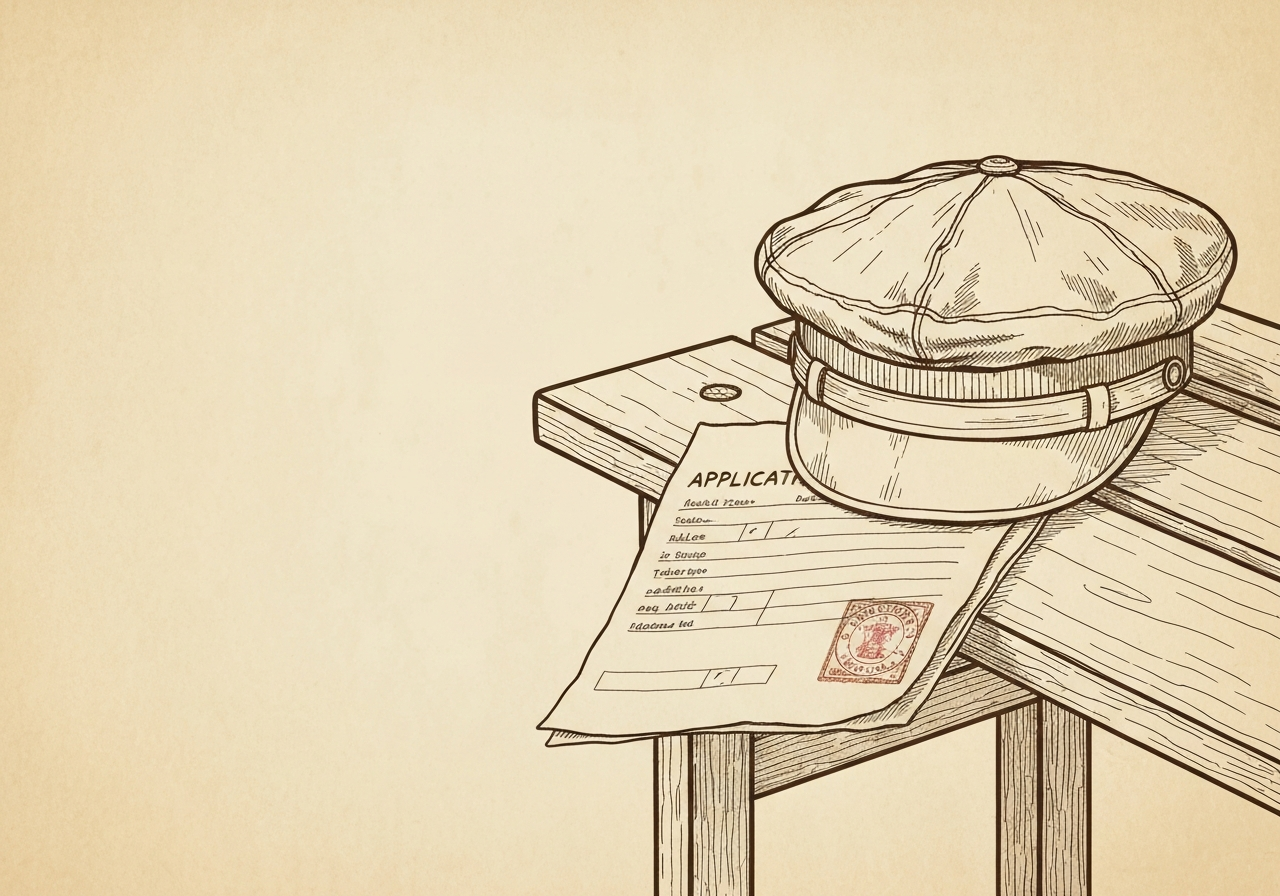
The smell of old paper and ink filled the courtroom as the judgment was handed down. The two sons, who had travelled from their towns to hear the verdict, sat in silence. The date-of-birth correction form that the second family had painstakingly filed — the one that had arrived too late — now felt like a relic of a lost cause.
What this judgment means — government employment is not a family inheritance
The judgment is a clear signal to all government departments: schemes that bypass open competition and give jobs to family members will not survive constitutional scrutiny. Article 16 does not permit the state to treat government employment as a family inheritance.
Once a scheme is declared unconstitutional by a superior court, no individual can claim a vested right under it — even if they had already applied before the scheme was terminated. The exception clause in the termination notification is the only lifeline, and it must be strictly interpreted. Neither the first son's claim for a different post nor the second son's late correction of the date of birth could save their cases.
THE PLAY: When challenging a government scheme that grants public employment without open competition, argue that it violates Article 16's guarantee of equal opportunity — and cite Manjit v. Union of India and Uma Devi to show that no vested right can arise from an unconstitutional policy.
The two sons walked out of court with nothing but the knowledge that their fathers' jobs would not become theirs. The trackman's worn-out uniform, folded and kept in a cupboard for years in the hope that a son would wear it, would remain just that — a memory of a job that could not be passed down.