She married him in a self-respect ceremony. The court said — no public declaration needed.
The Supreme Court struck down a requirement that self-respect marriages must be publicly declared, calling it a violation of the couple's right to choose how to marry.
7A
the section that changed everything.
The Supreme Court struck down a requirement that self-respect marriages must be publicly declared, calling it a violation of the couple's right to choose how to marry.
They exchanged garlands in private, with an advocate as witness. The High Court said that's not a valid marriage. The Supreme Court disagreed.
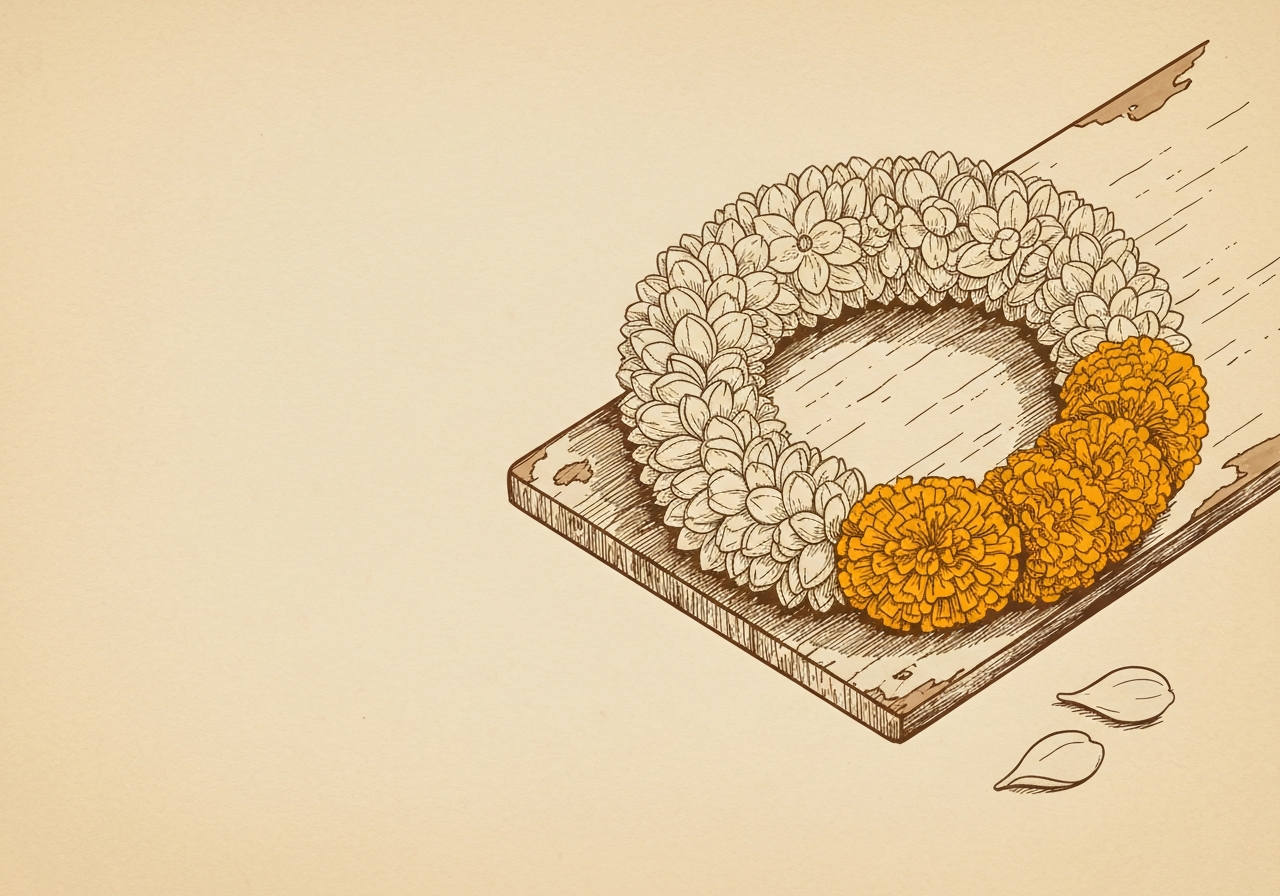
He placed a garland around her neck. She placed one around his. The advocate, a friend of the family, watched in silence. The only sound was the rustle of the flowers and the soft weight of the moment. It was a self-respect marriage — suyamariyathai — a form of wedding rooted in Tamil Nadu's social reform movements that rejects priests, fire rituals, and Brahminical ceremonies. For Ilavarasan and Mathithra, it was enough. For Mathithra's family, it was not.
Days later, Mathithra's family forcibly took her away and coerced her into marrying her maternal uncle. Ilavarasan went to the Madras High Court with a habeas corpus petition (a court order asking: where is this person, and is their detention legal). The courtroom was still as the judge read the petition. The High Court dismissed it. The reason: a self-respect marriage, the court said, requires a public declaration. An advocate cannot certify such a marriage. The wedding, in the court's eyes, was invalid. Ilavarasan had no right to demand his wife back.
When the High Court said the marriage didn't count
The High Court relied on a 2014 judgment — S. Balakrishnan Pandiyan v. Inspector of Police — which had held that self-respect marriages under Section 7A of the Hindu Marriage Act (a special provision for suyamariyathai and seerthiruththa marriages, added by a Tamil Nadu amendment in 1967) must be publicly solemnized. A private ceremony, the court said, was no ceremony at all. An advocate, as a professional, could not act as a witness to such a marriage because that would turn legal offices into matrimonial establishments. The judgment paper felt thin in Ilavarasan's hands as he read the dismissal.
Ilavarasan appealed to the Supreme Court. The case landed before a bench of Justice S. Ravindra Bhat and Justice Aravind Kumar.
What the Supreme Court did first
Before the Supreme Court could decide the legal question, it needed to know one thing: was Mathithra with Ilavarasan of her own free will? The Court directed the District Legal Services Authority to record her statement under Section 164 of the CrPC (a procedure where a magistrate records a person's statement under oath, often used to capture the voluntary nature of a testimony). The courtroom fell silent as the magistrate read her words aloud.
Mathithra's statement was clear. She confirmed she had married Ilavarasan willingly and wanted to live with him. The coercion came from her family, not from her husband.
That settled the factual question. But the legal question remained: was the marriage itself valid under the law?
The problem with requiring a public declaration
The Supreme Court turned to the text of Section 7A. The provision, inserted by the Tamil Nadu Amendment in 1967, says that a marriage between two Hindus may be solemnized in the form known as suyamariyathai or seerthiruththa — where the parties declare themselves to be husband and wife in the presence of relatives, friends, or other persons. The section does not mention "public declaration." It does not say the ceremony must be held in an open space or announced to the community.
The High Court had read that requirement in. The Supreme Court said that was wrong. The smell of old paper and ink filled the chamber as the bench turned the pages of the statute.
"The superimposition of a public declaration requirement, absent in the statutory text, impermissibly narrows the statute," the Court held. It also violated Article 21 of the Constitution (the right to life and personal liberty, which includes the right to choose whom to marry and how to marry). The bench's voice was firm as it delivered the judgment.
The Court overruled S. Balakrishnan Pandiyan on this point. It relied instead on its own earlier judgment in S. Nagalingam v. Shivagami (2001), which had interpreted Section 7A more broadly — holding that the form of marriage is for the parties to decide, as long as the essential elements of a declaration and witnesses are present.
What about the advocate as witness?
The High Court had also held that advocates cannot certify self-respect marriages. The Supreme Court agreed partially — but only partially.
"Advocates, as officers of the court, should not undertake or volunteer to solemnize marriages in their professional capacity," the bench said. "This could turn their offices into matrimonial establishments."
But that did not mean an advocate could never be a witness. If an advocate attends a wedding as a friend or relative — in their personal capacity — their role as a witness is perfectly valid. The problem, the Court clarified, is when the advocate acts as an advocate — certifying the marriage as part of their legal practice. The weight of the judgment file felt heavy in the registrar's hands as he stamped the order.
In Ilavarasan's case, the advocate had acted as a witness in a personal capacity. The marriage was valid.
Why this matters for every couple choosing a self-respect marriage
The judgment removes a sword that had been hanging over thousands of self-respect marriages in Tamil Nadu. For decades, couples who chose this form of marriage — often inter-caste couples or those rejecting religious orthodoxy — faced the risk that a court would later declare their wedding invalid for lack of "public" solemnization.
The Supreme Court has now made it clear: the law does not require a public declaration. It requires a declaration — made in the presence of witnesses. Where that happens, and how publicly, is for the couple to decide. The courtroom's silence after the judgment was one of finality.
THE PLAY: If you marry under Section 7A of the Hindu Marriage Act (Tamil Nadu Amendment), you do not need a public ceremony or a public declaration — a private exchange of garlands before witnesses is legally valid, and no court can later invalidate it for lack of publicity.
The Court also directed the respondents to ensure that Mathithra in fact joins Ilavarasan. The habeas corpus petition was allowed. The woman who had been taken from her husband was to be returned to him — by the force of law, and by her own choice. The garlands, once exchanged in a quiet room, now carried the full weight of the Constitution.