She said the deeds were fake. The court said: prove it.
In a property dispute, the Supreme Court ruled that a plaintiff cannot win just because the defendant's case is weak. The burden of proof stays on the one who claims ownership.
Dismissed.
Own case must
stand on its own.
In a property dispute, the Supreme Court ruled that a plaintiff cannot win just because the defendant's case is weak. The burden of proof stays on the one who claims ownership.
She claimed the transfer deeds were forged. But when the court asked for proof, her documents described a different property entirely.
The plaintiff walked into the Supreme Court saying she owned a piece of land with a hotel on it. The transfer deeds that gave the property to someone else, she argued, were obtained through misrepresentation. She wanted the court to declare her the owner, put her back in possession, and partition the land. It sounded simple. But when she produced her evidence, something was wrong. The documents she had brought did not even describe the same property.
The one question that hung over the entire case: Can a plaintiff win a property dispute just because the other side's case is weak? Or must the person making the claim prove it first — no matter how bad the defendant's story looks?
When the deeds described a different land
The dispute began with a piece of property. The plaintiff claimed she was the rightful owner. She said certain transfer deeds — documents that supposedly moved ownership to someone else — were obtained through misrepresentation. She wanted the court to cancel those deeds and give her back the land, including a building called Hotel Khosh Mahal. The stack of deeds on the judge's desk looked thin, almost incomplete, as the hearing began.
Then she produced her evidence. The problems started immediately.
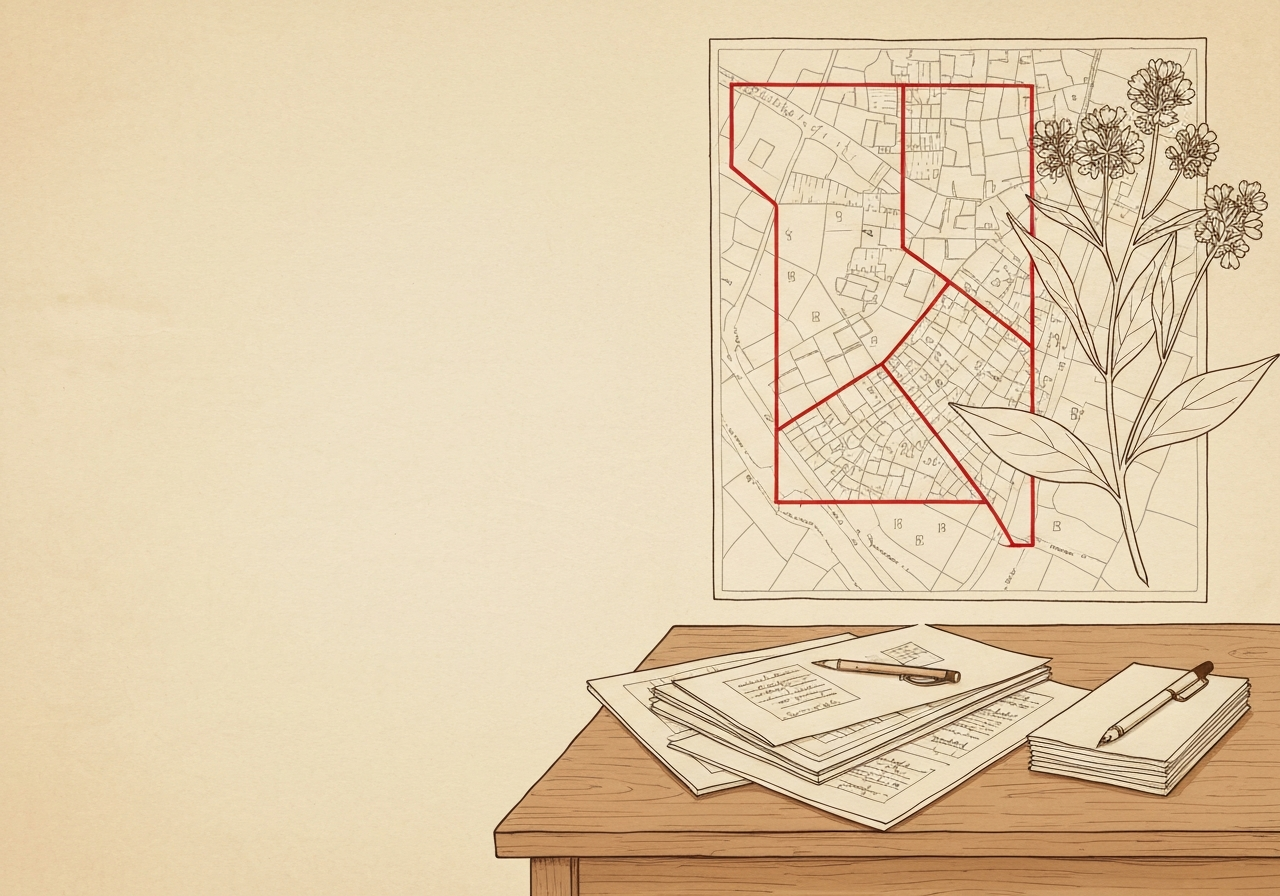
The Deed of Patta (a document recording land rights) and the Ekrarnama (a written agreement) she submitted did not mention the hotel at all. The Supreme Court later noted that if these documents truly related to the property in question, mentioning a constructed building on it would be "normal and natural." The silence was deafening. The survey map with its red boundary lines told a different story entirely.
Then came the survey report. The description and location of the property in the plaintiff's documents were "vastly different" from what the survey showed. It was as if she had brought papers for one piece of land and was claiming another.
The possession claim that had no proof
The plaintiff also said she had taken possession of the property through workmen she had sent there. But when the court looked for evidence — receipts, witness statements, any paperwork at all — there was nothing. The Supreme Court called this claim "unsubstantiated, or rather implausible." The courtroom fell silent as the judges reviewed the file, finding it bare of any supporting document.
This is where the case turned sharp. The defendants — the people currently living on the property — had their own weaknesses. They hadn't fully proven their own title either. But the court refused to let that matter.
Why the burden never shifted
The Supreme Court went back to a basic rule of evidence law: Section 101 of the Evidence Act (the rule that says whoever wants a court to decide something in their favour must prove that thing exists). The burden of proof — the responsibility to produce enough evidence to convince the court — sits on the person who makes the claim. In this case, that was the plaintiff.
The court made it clear: "The plaintiff must establish that she has a legal title... and consequently, is entitled to a decree of possession." She had to show a better title than the defendant who was already living on the property. The weakness of the other side's case was irrelevant.
As the judgment put it, a decree of possession cannot be passed "merely because the defendants have not been able to fully establish their right, title and interest." The plaintiff's own case must stand on its own feet. If it doesn't, the suit fails — no matter how shaky the defendant's story looks.
The trap of the weak defense
This is a trap that many litigants — and even some lawyers — fall into. They spend the entire case attacking the other side's evidence, pointing out every hole, every inconsistency. They assume that if the defendant cannot prove ownership, the court will automatically give the property to the plaintiff.
The Supreme Court shut that down completely. The weakness of the defense "cannot be a justification to decree the suit." The plaintiff must first discharge her own burden — prove her own title with her own evidence. Only then does the burden shift to the defendant to rebut it.
In this case, the initial burden was never discharged. The plaintiff's documents didn't match the property. Her possession claim had no support. The court found that the question of shifting the burden of proof to the defendants "did not arise at all." The suit was dismissed.
What this means for every property case
For practitioners, the lesson is brutal and simple. Before you file a suit for declaration of title and possession, ask one question: Can my client prove ownership with documents that actually describe the right property? If the deeds are vague, contradictory, or silent on key features of the land, the case may be dead before it starts.
For litigants, the message is even starker. You cannot win by making the other side look bad. You win by making your own case look good. The burden of proof is not a technicality — it is the entire foundation of civil litigation.
THE PLAY: Before you file a title suit, ensure your client's documents describe the exact property in dispute — down to the building, boundary, and survey number — because the burden of proof never shifts until the plaintiff's own evidence stands.
The court ended where it began: with documents that described a different property entirely.