She wanted to show a copy. The court said: not without the original.
In a property dispute, one side tried to introduce a photocopy as evidence. But the judge demanded a proper explanation for the missing original—and stuck to the rule.
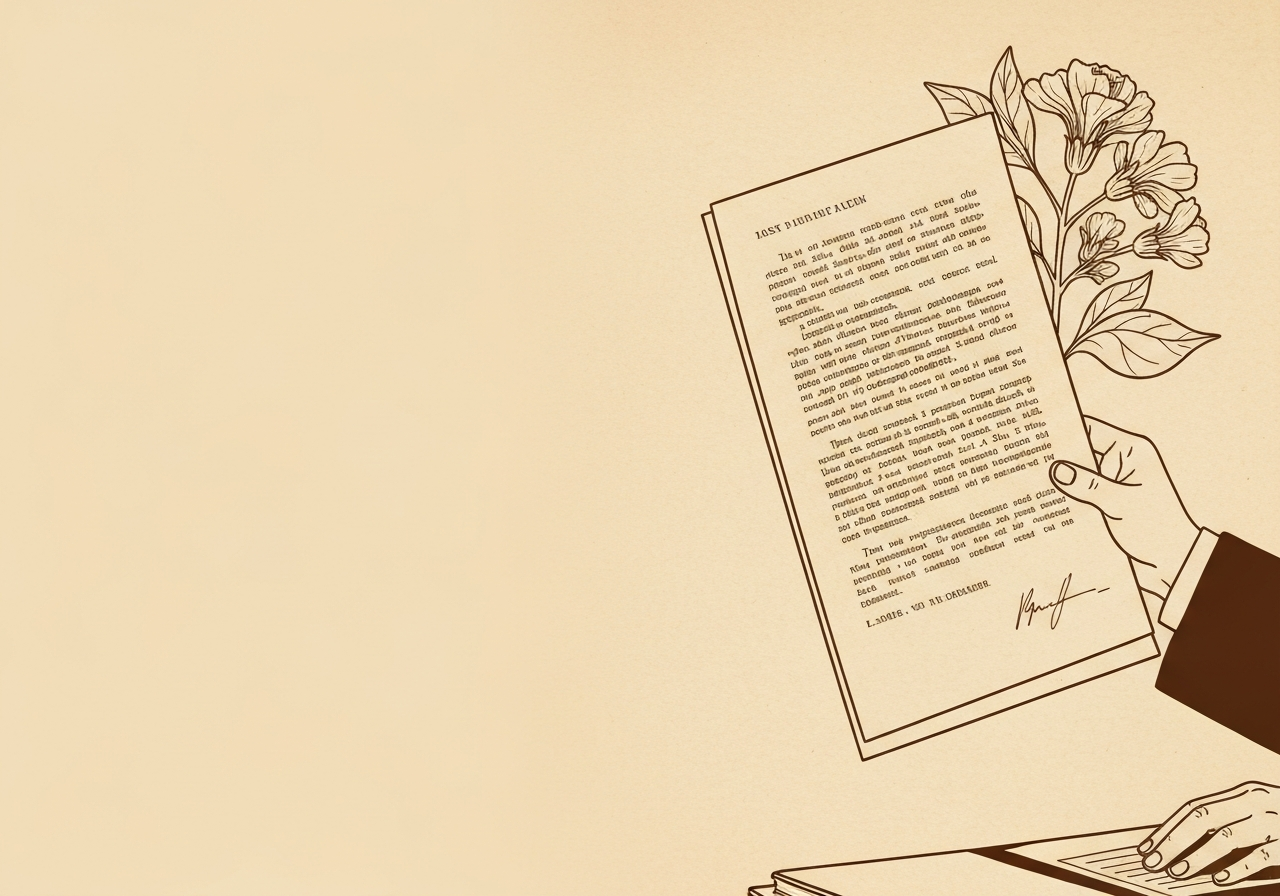
Shut out.
Only a photocopy.
No explanation.
In a property dispute, one side tried to introduce a photocopy as evidence. But the judge demanded a proper explanation for the missing original—and stuck to the rule.
She walked into court with a photocopy of the deed. The judge stopped her and said—not so fast.
J. Yashoda wanted to prove a property claim. She had a document on her side—but only a photocopy. The opposing party, K. Shobha Rani, objected at once. The court had to answer a question that sounds simple but decides the fate of every civil trial: can you prove a document exists by showing a copy, without first explaining why the original is missing?
The courtroom fell silent as the photocopy was held up. The paper was thin, slightly curled at the edges, the black ink a little faded—a copy that had clearly been made on a machine that had seen better days. The judge leaned forward, peering at it for a moment before speaking. The tone was firm, almost weary: a copy was not enough. Not without the original, or at least a proper reason for its absence.
When the photocopy arrived at the witness stand
The case, J. Yashoda v. K. Shobha Rani, began as a property dispute. J. Yashoda wanted to rely on a deed to prove her claim. She did not bring the original. She brought a photocopy. K. Shobha Rani argued that a copy could not be accepted unless the person offering it first gave a proper reason why the original was not available.
The court agreed. It stopped the proceeding and demanded an explanation. Why was the original missing? Had it been lost? Destroyed? Was it in someone else's possession? The court wanted a factual foundation—not a casual statement, but a proper justification backed by evidence. The silence that followed the objection stretched for a moment, broken only by the rustle of papers as the lawyers shuffled their files.
J. Yashoda's counsel began to speak, but the judge raised a hand. The court needed to hear the reason for the original's absence—not a mere assertion, but a proper explanation. The file on the judge's desk was open, the pages of the Evidence Act clearly marked. The weight of procedure was palpable in the air.
The rule the court would not bend
At the heart of this dispute is a principle called the "Best Evidence Rule." It is a simple idea: when you want to prove the contents of a document, you must produce the document itself—the original. A photocopy, a typed transcript, or a witness's memory of what the document said are all considered "secondary evidence" (inferior forms of proof). The law prefers the original because it is the most reliable. A copy can be altered, misread, or taken out of context. The original is the gold standard.
The court in this case made the rule crystal clear. It said: as long as the original document is within your reach—or could be reached by you—"till then no inferior proof will be accepted in the court of law." That means if you have the original or can get it, you cannot skip it and offer a copy instead. The hierarchy of evidence is not optional. It is a mandatory sequence. The judge's voice was measured, deliberate, as if reciting a principle that had been tested a thousand times before.
Consider a parallel scenario: a man walks into court with a photocopy of a will, hoping to prove he is the rightful heir. The original will is in a bank locker, but he did not bring it. Under the Best Evidence Rule, the court will not even look at the photocopy until he explains why the original is not in his hand. The rule is not a formality—it is the gatekeeper of truth in every document-based dispute.
Another example: a woman claims her husband signed a loan agreement, but she only has a photocopy. The original, she says, is with the bank. The court will ask: did you ask the bank for it? Did you issue a notice? Did you get a certified copy? If she cannot show she tried, the photocopy stays outside the record. The rule forces parties to exhaust every avenue before settling for less.
What the law says about secondary evidence
The Indian Evidence Act, 1872, defines secondary evidence under Section 63 (the list of all types of inferior proof the court can accept). The court in J. Yashoda v. K. Shobha Rani noted that this definition is "exhaustive"—meaning it lists every type of secondary evidence that can ever be accepted, and nothing else qualifies. The list includes certified copies, copies made from the original by mechanical or chemical processes (like photocopies), copies made from or compared with the original, and oral accounts of the document's contents given by someone who has seen it.
But even if your evidence falls within this list, you cannot simply hand it over. The court insisted on a precondition: "If a particular party wants to present secondary evidence, they must establish a proper explanation of the absence of the primary evidence of the same."
This is the key takeaway. The law does not say: "Bring a copy if the original is lost." It says: "Bring a copy only after you have proven to the court's satisfaction that the original is genuinely unavailable—and explain why."
The court's logic was tight. It examined the facts before it: the party had a photocopy, but no affidavit, no police complaint, no witness statement about the original's fate. The file was thin on explanation, thick on assumption. The judge noted that the definition of secondary evidence under Section 63 of the Indian Evidence Act is deemed exhaustive—meaning the court cannot invent new categories of acceptable proof. If the party's evidence does not fit the list, or if the precondition of explaining the original's absence is not met, the evidence is simply shut out.
Why the judge demanded a proper explanation
The court's reasoning was practical. If a party could simply walk in with a photocopy and say "the original is somewhere, I don't know where," every trial would become a guessing game. The opposing side would have no way to verify the document. The court would have to decide a property dispute based on a piece of paper that could have been altered, fabricated, or taken from a different context.
The rule protects both sides. It forces the party relying on the document to do the work: keep the original safe, or if it is lost, gather evidence of the loss—an affidavit (a sworn written statement), a police complaint, a witness who saw it destroyed. Without that foundation, the court cannot trust the copy. The judge's gaze was steady, unyielding, as the point was driven home.
The court also made clear that this is not a technicality. It is a foundational requirement that limits the judge's discretion. A judge cannot later say, "Well, I'll just allow the copy anyway because it seems genuine." The rule binds the court as much as it binds the parties. If the party has not provided a proper explanation for the missing original, the judge has no power to accept the secondary evidence. The smell of old paper and ink filled the room as the judgment was read out, a reminder of the physical, tangible nature of the law's demands.
What this means for every civil litigant
For lawyers, chartered accountants, and anyone involved in a property or contract dispute, the message is blunt: do not walk into court with a photocopy and hope for the best. You must first establish a factual basis for the original's absence. That means producing evidence—not just saying "it is lost." You might need an affidavit from the last person who saw the original, a police report if it was stolen, or a notice to the other side asking them to produce it if they have it.
If you fail to do this, the court will stop you at the door. The photocopy will not be admitted. And your case may collapse because the document you needed to prove your claim never made it into evidence.
The impact of this decision reinforces due diligence. If a party fails to maintain or account for the original, they must establish a proper factual foundation for its absence—a foundational requirement that limits judicial discretion to retroactively cure non-production. The lesson is etched into the procedure: the original is the king, and the copy is only a subject that must prove its worth before it can speak.
THE PLAY: Before you offer any secondary evidence—photocopy, typed copy, or oral account—prepare a separate, sworn explanation of why the original is unavailable, supported by independent proof.
The court ended where it began: with a photocopy that could not speak for itself, and a rule that would not let it try. The file was closed, the copy set aside, and the lesson carried forward into every future trial where a document's absence would demand an answer.