What exactly is a 'suit'? A court finally settled it.
The definition seems obvious until you try to pin it down. Here's what the court said about when a legal fight officially begins.
4:55
PM.
The definition seems obvious until you try to pin it down. Here's what the court said about when a legal fight officially begins.
A suit isn't a suit until this one thing happens — and the court just drew the line.
A municipality in Punjab walked into a civil court. They handed over a document — a plaint — its pages crisp, the court fee stamp affixed at the bottom. And then the other side said: this isn't a suit at all. The dispute had nothing to do with money or property. It was about whether the legal fight had even properly begun.
The question sounds like something lawyers argue about in air-conditioned rooms. But it carried real consequences. If the proceeding wasn't a "suit," the entire case might have been filed under the wrong rules, at the wrong court, at the wrong time. The Tam Taru Municipality had to prove that what they had done — walking in and handing over that plaint — was enough to start a legal war.
When the municipality handed over the plaint
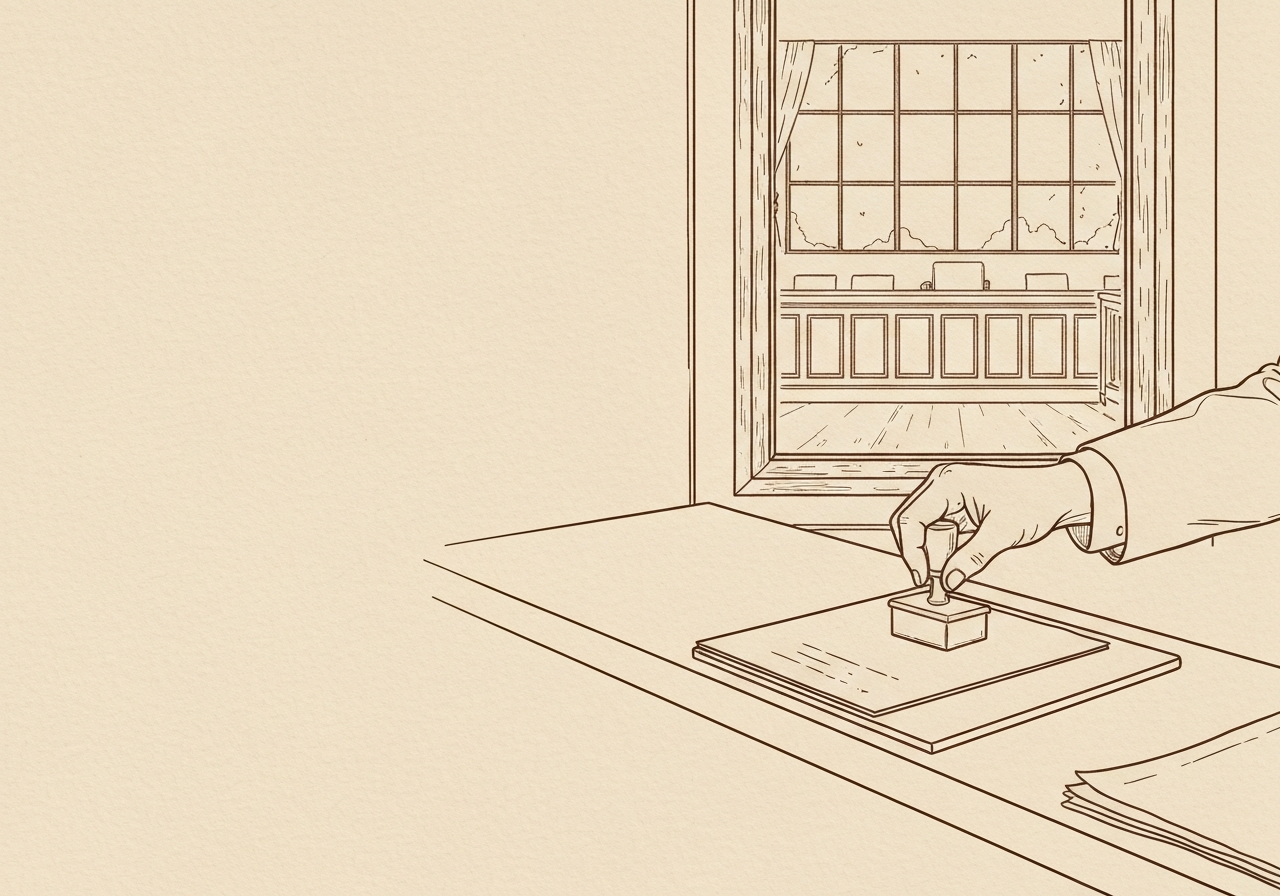
The Tam Taru Municipality, a local government body in Punjab, approached a civil court seeking relief against the State of Punjab. The exact nature of their grievance remains unclear from the record. But what matters is how they started the proceeding. They presented a document to the court — a plaint (a written statement of their claim). The paper slid across the counter, the clerk took it, stamped it, and the file was born. The smell of fresh ink and the weight of the court fee receipt — these were the only witnesses to the birth of a legal battle.
The other side, presumably the State, raised a preliminary objection. They said this wasn't a proper "suit" at all. If they were right, the court might have lacked jurisdiction (legal authority) to hear the matter. The entire proceeding could have been dismissed on a technicality before anyone even argued the merits. The courtroom fell silent as the objection was read out — the State's counsel standing, the judge's pen pausing over the file. The only sound was the rustle of paper as the municipality's lawyer shifted in his seat.
This is the kind of procedural fight that makes non-lawyers' eyes glaze over — until you realise that entire cases collapse because someone filed the wrong paper at the wrong counter. The municipality needed the court to tell everyone, once and for all, what a suit actually is.
The State said: something more was needed
The court looked at the definition not from a dictionary, but from the structure of the Civil Procedure Code (the rulebook for civil courts). The word "suit" appears hundreds of times in the Code. The Code never bothers to define it. Courts have had to figure it out case by case. Each time, the answer depends on the facts — the nature of the claim, the court where it was filed, the document that started it all.
The municipality's lawyers argued that they had done everything required. They had walked into a civil court, paid the fee — the cashier's window, the receipt handed back — and presented a plaint: a document that laid out who they were suing, why they were suing, and what they wanted. That, they said, was the moment a suit begins. The plaint sat on the clerk's desk, its pages numbered, the court's seal already stamped on the first page. That, they insisted, was enough.
The State's lawyers likely countered that something more was needed. Perhaps a summons (a court order telling the other side to appear). Or a case number. Or a judge's acceptance. Without that extra step, they argued, the proceeding was just a piece of paper sitting on a clerk's desk — gathering dust, not legal force. The courtroom grew tense as the two sides debated the meaning of a single word. The judge listened, his fingers drumming softly on the wooden bench.
Consider the stakes. If the State was right, the municipality's entire case might have been filed too early — or too late. Limitation periods (the time limit to file a case) could have expired while the court decided whether the proceeding was even a suit. The plaintiff would be left with nothing but a stamped piece of paper and a closed door.
The court drew the line at the plaint
The court rejected the State's argument. It held that a suit is defined by the act of presenting a plaint in a civil court — nothing more, nothing less. The moment the plaintiff hands over the plaint and the court accepts it, the suit is born. Everything else — the summons, the hearing dates, the evidence — comes after. The judge's voice was steady as the ruling was delivered: the paper that had crossed the counter was now the anchor of a legal proceeding.
The reasoning was practical. If a suit didn't begin until a judge looked at it, every case would be in limbo during the gap between filing and the first hearing. During that gap, crucial legal rights might expire. Limitation periods could run out. The court wanted certainty: the suit starts when the plaintiff does their part. The clerk's counter, not the judge's chamber, is where the legal clock begins ticking.
The judgment observed that to define the word "suit" precisely, one must look at the nature of the proceeding instituted in a Civil Court. The logic applied was that a suit is a proceeding where the plaintiff pursues a remedy to recover a right or claim. The verdict ultimately clarified that "suit means a proceeding instituted in a Civil Court by the presentation of a plaint." The words hung in the air — simple, clear, final.
Think about what this means for the everyday litigant. A farmer in a small town files a plaint against a neighbour over a land dispute. He pays the court fee at the counter — the cashier counts the notes, hands back the change — and the clerk stamps the document. Under this ruling, that farmer's suit has begun. He doesn't need to wait for a judge to nod or a summons to be issued. His legal rights are protected from that very moment.
Or consider a business that files a suit for breach of contract on the last day before the limitation period expires. The plaint is presented at 4:55 PM, just before the court closes. The clerk takes it, stamps it, and files it. Under this ruling, the suit is valid — even if the court doesn't assign a case number until the next week. The clock stopped ticking the moment the plaint crossed the counter.
The impact: certainty at the counter
The impact of this conclusion is that the formal filing of the plaint is the moment the suit is officially launched. No ambiguity. No waiting for a judge's nod. The plaintiff's act — presenting the plaint at the civil court — is what counts. The file sits on the clerk's desk, its pages bound, the court's seal visible. That file is now a suit.
This matters most for limitation periods. If you file your plaint on the last day before the time limit expires, your suit is valid — even if the court takes weeks to assign a number or issue a summons. The act of presenting the plaint is what saves you. The clock stops ticking the moment that paper crosses the counter. The court's ruling ensures that no plaintiff loses their case because of administrative delays beyond their control.
For anyone filing a civil case — whether a municipality, a company, or an individual — the takeaway is simple. Your suit begins the moment your plaint reaches the court. Not when the judge signs it. Not when the other side gets notice. Not when the first hearing happens. The clock starts ticking from the presentation of the plaint. The path is now clear: walk to the counter, hand over the plaint, and your legal battle has begun.
THE PLAY: Never wait for a court to "accept" your case — your suit begins the moment your plaint is presented, so file it before the limitation period ends even if the court hasn't acted on it yet.
The court ended where it began: with a piece of paper and the moment it crossed the counter. The Tam Taru Municipality had proven that a suit is born not in a judge's chamber, but at the clerk's window, the moment the plaint is handed over. The line was drawn. The uncertainty was gone. And for every plaintiff who follows, the path is now clear.