Woman dies after assault. Court drops murder charge based on autopsy report. Supreme Court says: not so fast.
The trial court said the post-mortem report showing cardiac arrest meant no murder. The Supreme Court ruled that a post-mortem report is not evidence—only the doctor's live testimony is.
1
document.
The trial court said the post-mortem report showing cardiac arrest meant no murder. The Supreme Court ruled that a post-mortem report is not evidence—only the doctor's live testimony is.
A woman was beaten, dragged, and died hours later. The autopsy said cardiac arrest. The judge dropped the murder charge based on that paper. The Supreme Court just tore up that order.
A three-judge bench of the Supreme Court ruled on 26 July 2022 that a trial judge cannot decide a murder case by reading a single document. The court said no judge can drop a murder charge before a single witness has testified. The ruling changes how every criminal lawyer, prosecutor, and judge must treat post-mortem reports.
The fence that became a death warrant
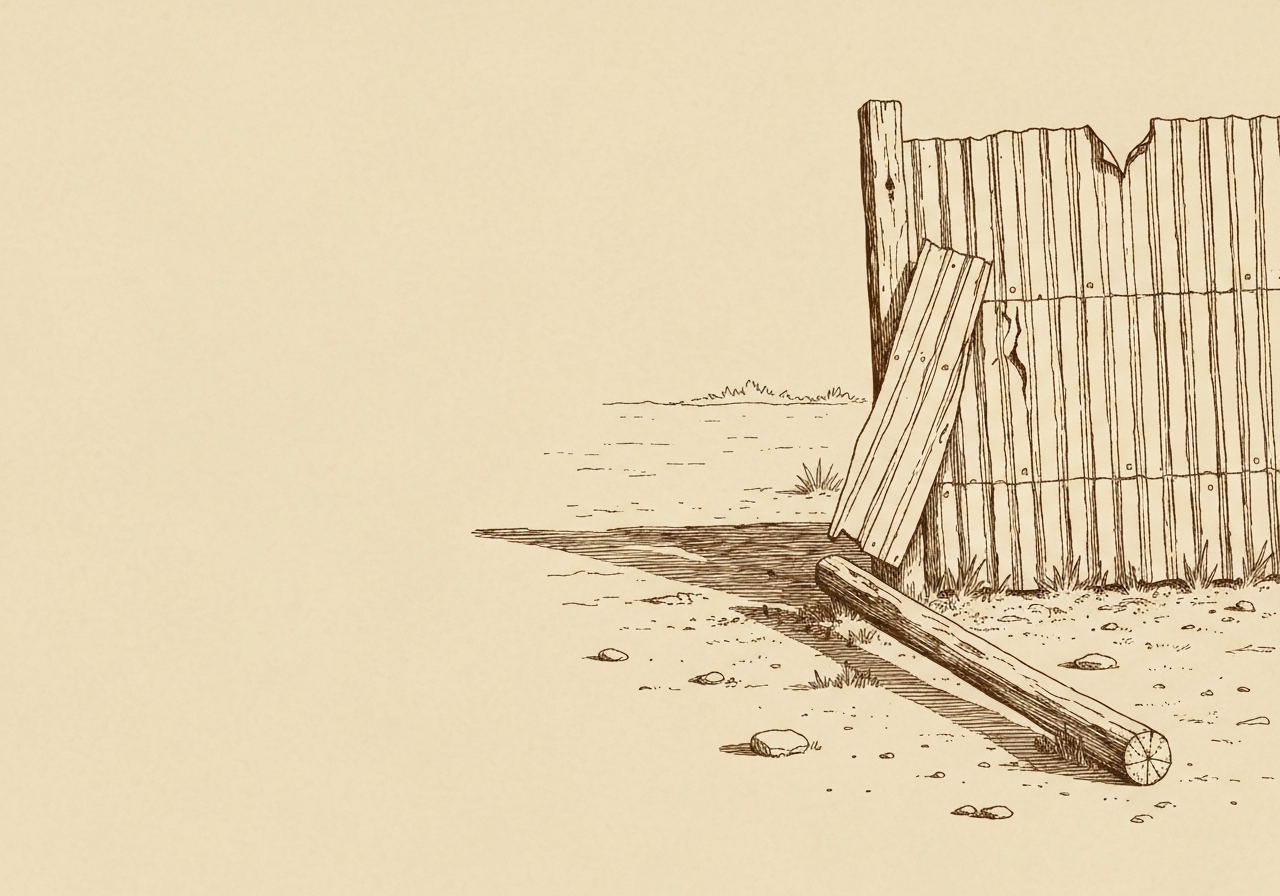
A group of men trespassed onto a property in Dangiwacha, Jammu and Kashmir. The sound of a tin fence being torn apart filled the air as they damaged it. The owner objected. They attacked him with fists and a wooden log — the log heavy and rough in their hands. His wife and daughter-in-law rushed to help. They were beaten. They were dragged across the ground. Their modesty was outraged.
The wife reached the hospital. She died within hours. The post-mortem report said cardio-respiratory failure — a cardiac arrest.
The police registered an FIR (a written complaint that starts a police investigation) for assault and trespass under Sections 147, 354, 323, and 451 of the Indian Penal Code (the provisions punishing unlawful assembly, outraging modesty, assault, and trespass). After the death, they added a murder charge under Section 302 of the Indian Penal Code (the provision that punishes murder with life imprisonment or death). The charge sheet — the final police report listing the evidence and the offences — named the accused for murder.
The judge who decided before the trial began
The trial court — the Additional Sessions Judge in Sopore — had to decide whether there was enough material to put the accused on trial for murder. Under Section 227 of the CrPC (the provision that allows a judge to discharge an accused if there is no sufficient ground for proceeding), the judge can drop charges if the prosecution's own material does not make out a case.
The judge read the post-mortem report. It said cardiac arrest. He concluded the death was natural, not caused by the assault. He discharged the accused from murder. He framed a charge under Section 304 IPC (culpable homicide not amounting to murder — a lesser offence with a lighter sentence).
The High Court of Jammu and Kashmir at Srinagar agreed. The husband of the deceased woman appealed to the Supreme Court.
Why a post-mortem report is just a piece of paper
The Supreme Court allowed the appeal. The courtroom fell silent as the order was read. The judge's hand rested on the thin file — a case decided on a single document. And the reasoning cuts to the heart of how criminal trials work.
The trial judge had conducted what the court called a "mini-trial" — a detailed evaluation of evidence at the charge-framing stage. The law forbids this. At the stage of framing charges, the judge is not supposed to weigh evidence, assess credibility, or decide which version is more likely. The only question is whether the prosecution's material, taken at face value, discloses a prima facie case (a case that, if believed, could lead to a conviction) or raises a strong suspicion of the offence charged.
More importantly, the court clarified the legal status of a post-mortem report. A post-mortem report is not substantive evidence — it is not proof of what it says. It is merely the doctor's previous statement, recorded in writing. The only substantive evidence in a trial is the doctor's oral testimony in court, given under oath and subject to cross-examination. The post-mortem report can only be used to corroborate the doctor's testimony, to refresh the doctor's memory, or to contradict the doctor if the doctor says something different in court. That is the rule under Sections 157, 159, and 145 of the Indian Evidence Act, 1872.
The trial judge had treated the post-mortem report as conclusive proof of the cause of death. That was a legal error.
The Supreme Court held that "the trial court conducted an impermissible mini-trial by relying solely on the post-mortem report, which is not substantive evidence, and that the nexus between assault and death could only be determined after full trial." That single sentence dismantled the trial judge's reasoning.
The nexus the judge never asked about
The court also noted a question the trial judge never asked: can a cardiac arrest be caused by trauma, stress, or injury? The answer is yes. Whether the assault caused the cardiac arrest — whether there was a nexus between the two — is a question of fact. That question can only be determined after the doctor testifies in court, after the prosecution presents its other witnesses, and after the defence has a chance to cross-examine.
The trial judge had decided that question without hearing a single witness. That was a mini-trial, and it was impermissible.
The court also pointed out a practical consequence. The charge forms the foundation of the trial. The accused is entitled to know exactly what he is defending against. If the judge frames a charge only for culpable homicide, the accused assumes he only needs to meet that lesser charge. He may not prepare to defend against a murder charge. If the evidence later shows murder, it is too late — the accused has already been prejudiced.
That is why the law requires the judge to frame the highest charge that the material supports, and to leave the final determination to the trial.
The precedents that guided the court
The Supreme Court relied on a series of its own decisions to reinforce this principle. In Union of India v. Prafulla Kumar Samal (1979) 3 SCC 4, the court had held that at the charge-framing stage, the judge must only see whether the material on record, if believed, could lead to a conviction — not whether it would lead to one. In Dipakbhai Jagdishchandra Patel v. State of Gujarat (2019) 16 SCC 547, the court reiterated that a mini-trial at the stage of framing charges is impermissible. In Sajjan Kumar v. CBI (2010) 9 SCC 368, the court laid down the test for discharge: if the prosecution's material raises a strong suspicion of guilt, the charge must be framed. In Asim Shariff v. National Investigation Agency (2019) 7 SCC 148, the court warned against weighing evidence at the charge-framing stage. In State of Karnataka v. M.R. Hiremath (2019) 7 SCC 515, the court held that documents like post-mortem reports are not substantive evidence until the author testifies. In Amit Kapoor v. Ramesh Chander (2012) 9 SCC 460, the court clarified that the power of discharge under Section 227 CrPC is limited to cases where the material does not disclose a prima facie case. In V.C. Shukla v. State through CBI 1980 Supp SCC 92, the court held that a mini-trial at the charge-framing stage defeats the purpose of a full trial.
Each of these precedents pointed to the same conclusion: the trial judge in Sopore had overstepped his authority.
The order that changed the trial
The Supreme Court set aside the trial court's order. It directed the trial court to frame a charge under Section 302 IPC (murder) and proceed with the trial. The accused will now face a murder trial, where the prosecution must prove beyond reasonable doubt that the assault caused the death, and that the assault amounted to murder.
For practitioners, the message is clear. A post-mortem report is a piece of paper. It is not evidence. The doctor who wrote it must come to court and say it under oath. Until then, the report proves nothing. And a trial judge cannot decide the cause of death by reading a document — that decision belongs to the trial, after witnesses are heard.
THE PLAY: Never let a trial court discharge an accused from murder based solely on a post-mortem report — the report is not substantive evidence, and the nexus between assault and death can only be decided after the doctor testifies in court.
The woman was beaten, dragged, and died hours later. The Supreme Court just gave her family a trial.