Woman's plea rejected for wrong label; Supreme Court says substance matters
A woman engineer filed an application for further investigation after police dropped serious charges against a cop who allegedly faked marriage. Courts rejected it on technical grounds. The Supreme Court stepped in.
Reversed.
Wrong label.
Right substance.
A woman engineer filed an application for further investigation after police dropped serious charges against a cop who allegedly faked marriage. Courts rejected it on technical grounds. The Supreme Court stepped in.
She called it a 'request for further investigation.' The court called it something else — and said the label doesn't matter. A woman engineer sat in a courtroom in 2020, having filed a paper that asked for a deeper probe into a police officer who she said had faked a marriage, forced her into two abortions, and then walked away. The magistrate's bench was empty of files — the only paper on it was hers, and the heading was all that mattered. The magistrate looked at the heading of her application — "Section 173(8) CrPC" — and said no. The High Court agreed. Two years later, the Supreme Court looked past the label and saw something the lower courts had missed entirely.
The promise that became a trap
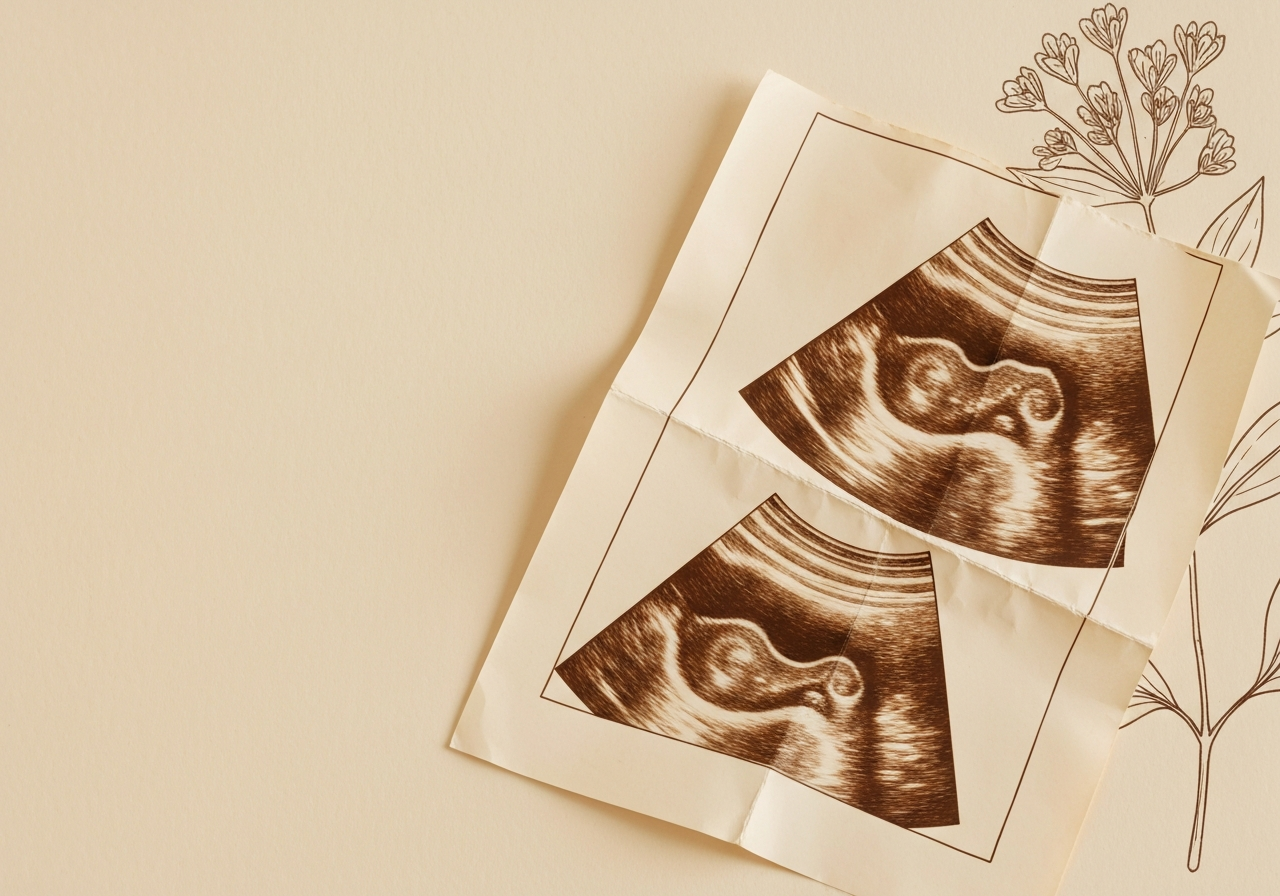
In 2012, a woman engineer met a man who told her he was single. They began living together. She became pregnant — twice. Both times, she was forced to abort the child. The ultrasound report from the second pregnancy was folded in her bag, creased from being handled and re-handled, a document that proved a life that had been ended by coercion. In 2014, she discovered the truth: the man she had been living with was a police officer, and he was already married to another woman. The promise of marriage, the cohabitation, the pregnancies, the abortions — none of it had been real.
She went to the police. On August 4, 2014, an FIR (a written complaint that starts a police investigation) was registered at the CB CID station in Puducherry. The charges were serious: rape under Section 376 IPC, cheating under Sections 417 and 420 IPC, sexual harassment under Section 354A IPC, criminal intimidation under Section 506 IPC, and an offence under the Information Technology Act. The case was numbered FIR No. 09/2014.
When the chargesheet dropped the truth
The investigating officer completed the probe and filed a chargesheet (a formal document listing the offences the accused is to be tried for). But the chargesheet told a different story from the FIR. The officer had dropped the most serious charges — rape, cheating, and fraud — and kept only the lesser ones: sexual harassment and criminal intimidation. The woman who had been deceived, impregnated, and abandoned was left with two minor offences against a police officer who had allegedly built his deception over years.
She had a choice. She could file a Protest Petition — a formal objection to the police's decision to drop charges — asking the magistrate to either order further investigation or take cognizance of the dropped offences herself. Instead, she filed an application under Section 173(8) of the CrPC (a provision that allows a court to order further investigation after a chargesheet has been filed). The label on the paper said "application under Section 173(8)." The substance inside it said: the police have dropped serious charges, and here is the evidence they ignored.
That evidence was specific. The application pointed to the accused's pre-existing marriage — a fact the investigating officer had apparently not pursued. It mentioned medical records of the two abortions, documents that could prove coercion and establish a pattern of deception. It referred to evidence of cohabitation — neighbours who had seen the couple living together, who could testify to the public nature of the relationship. It cited statements from neighbourhood witnesses, some written on torn notebook pages, that the police had collected but then ignored when deciding which charges to file. The application was not a vague request for more investigation; it was a detailed catalogue of what the police had left out.
Two courts, two doors slammed shut
The Judicial Magistrate-II in Puducherry looked at the heading and declined the application on December 14, 2020. The courtroom was quiet, the magistrate's bench still bare of any other files — only this one paper, with its wrong label, sat before the judge. The court did not examine what the application actually said — whether it contained evidence of uninvestigated material, whether it pointed to specific witnesses or documents the police had missed. The label was wrong, and that was enough.
The woman approached the High Court of Judicature at Madras with a Criminal Revision (a request for the High Court to review the magistrate's order). On October 20, 2021, the High Court dismissed it summarily — meaning without even a detailed hearing. Two courts had now refused to look at her grievance because of a technical error in how she had named her application.
What the Supreme Court actually read
By the time the case reached the Supreme Court in early 2024, the woman had been fighting for nearly a decade. The bench — Justice Surya Kant and Justice K.V. Viswanathan — did something the lower courts had not. They read the application itself.
The application, the Court noted, did not merely ask for "further investigation" in the abstract. It specifically complained that the investigating officer had dropped charges under Sections 376, 417, and 420 IPC without proper inquiry. It pointed to uninvestigated material: the accused's pre-existing marriage, medical records of the two abortions, evidence of cohabitation, and statements from neighbourhood witnesses that the police had ignored. The application was, in substance, a protest against the chargesheet — a demand that the court look at what the police had chosen to leave out.
"A court should not reject an application merely because it is incorrectly captioned," the bench held. "The substance and averments of the application must be considered." If the averments disclose a protest against the dropping of charges and an endeavour to bring material on record establishing a prima facie case, the application should be treated as a Protest Petition regardless of its label.
The Court elaborated on the consequences of such a technical rejection. Where the chargesheet drops serious charges and the complainant brings to notice specific uninvestigated material — such as a pre-existing marriage, abortion records, cohabitation evidence, and neighbourhood witness statements — it is the duty of the Magistrate to direct further investigation under Section 173(8) CrPC. Failure to do so, the Court held, results in "gross injustice."
The label game — and why the Court called it off
The legal distinction here is subtle but important. A Protest Petition is filed by a complainant who is aggrieved by the police's decision to drop charges. It asks the magistrate to either order further investigation or take cognizance of the dropped offences directly. An application under Section 173(8) CrPC, on the other hand, is a request for further investigation that can be filed by anyone — including the investigating officer or the court itself. The two procedures have different legal consequences, but they serve the same purpose when the complainant is the one seeking justice.
The Supreme Court said: when a complainant files an application that contains the essential ingredients of a Protest Petition — a specific grievance about dropped charges and a request for further probe — the court must treat it as one, even if the complainant used the wrong section number. To do otherwise is to elevate form over substance and cause "gross injustice."
This principle has practical implications for every complainant who has ever been told that their case was dismissed because they used the wrong form. The Court's message was clear: the substance of a grievance matters more than the label on the paper. A court that refuses to look at what a document actually says is not doing justice — it is hiding behind technicalities.
When the accused wears a uniform
The case had another layer. The accused was a police officer — someone who works within the same system that investigated him. The woman had alleged that the investigating officer had been influenced, that serious charges had been dropped not because the evidence was weak but because the accused wore a uniform. The Supreme Court took this seriously.
Where the accused is a police officer and allegations of undue influence on the investigating agency cannot be brushed aside lightly, the Court said, it may direct the constitution of a Special Investigation Team (SIT) with specific composition requirements. The Court ordered the State of Pondicherry to set up an SIT headed by a directly recruited woman IPS officer, along with two officers in the rank of Deputy Superintendent of Police and Inspector of Police. If no woman IPS officer was available in the state cadre, the Court directed, then at least one of the other two officers must be a woman.
The gender-sensitive composition was not an afterthought. The complainant was a woman who had been deceived and coerced into abortions by a man in power. An investigation team that understood that dynamic, the Court implied, was not a luxury — it was a necessity. The SIT was given three months to complete the further investigation, a fixed timeline designed to prevent the kind of delay that had already consumed a decade of the complainant's life.
The order that rewrote the script
On February 2, 2024, the Supreme Court allowed the appeal. The orders of the magistrate and the High Court were set aside. The woman's application was treated as a Protest Petition and allowed. The investigating agency was directed to conduct further investigation to determine whether offences under Sections 376, 417, and 420 IPC were made out against the accused police officer. The SIT was given three months to complete the probe.
The Court did not decide whether the police officer was guilty. It did not rule on the merits of the rape or cheating charges. What it did was simpler and more fundamental: it ordered that the investigation be done properly, by a team that could not be influenced, and within a fixed timeline. The woman would finally get the probe she had asked for in 2014.
THE PLAY: If you are a complainant and the police drop serious charges in a chargesheet, file a Protest Petition — not an application under Section 173(8) CrPC — but if you file the wrong one, the court must still read what you actually said.
The Supreme Court ended where it began: with a piece of paper that had the wrong name on top, and a woman who had been waiting a decade for someone to read what was underneath.