Wrong form, right claim: Supreme Court says RP must verify
Greater Noida Authority filed claim as financial creditor, RP rejected it for using wrong form. SC: form is directory, RP must check proof and classify correctly.
90
years.
Greater Noida Authority filed claim as financial creditor, RP rejected it for using wrong form. SC: form is directory, RP must check proof and classify correctly.
Greater Noida Authority submitted its claim as a financial creditor. The Resolution Professional said — wrong form, file again. The Authority refused. The Committee of Creditors approved a resolution plan without them. Two years later, the Supreme Court had to decide: can a Resolution Professional throw out a claim just because it arrived in the wrong envelope?
The premium that stopped
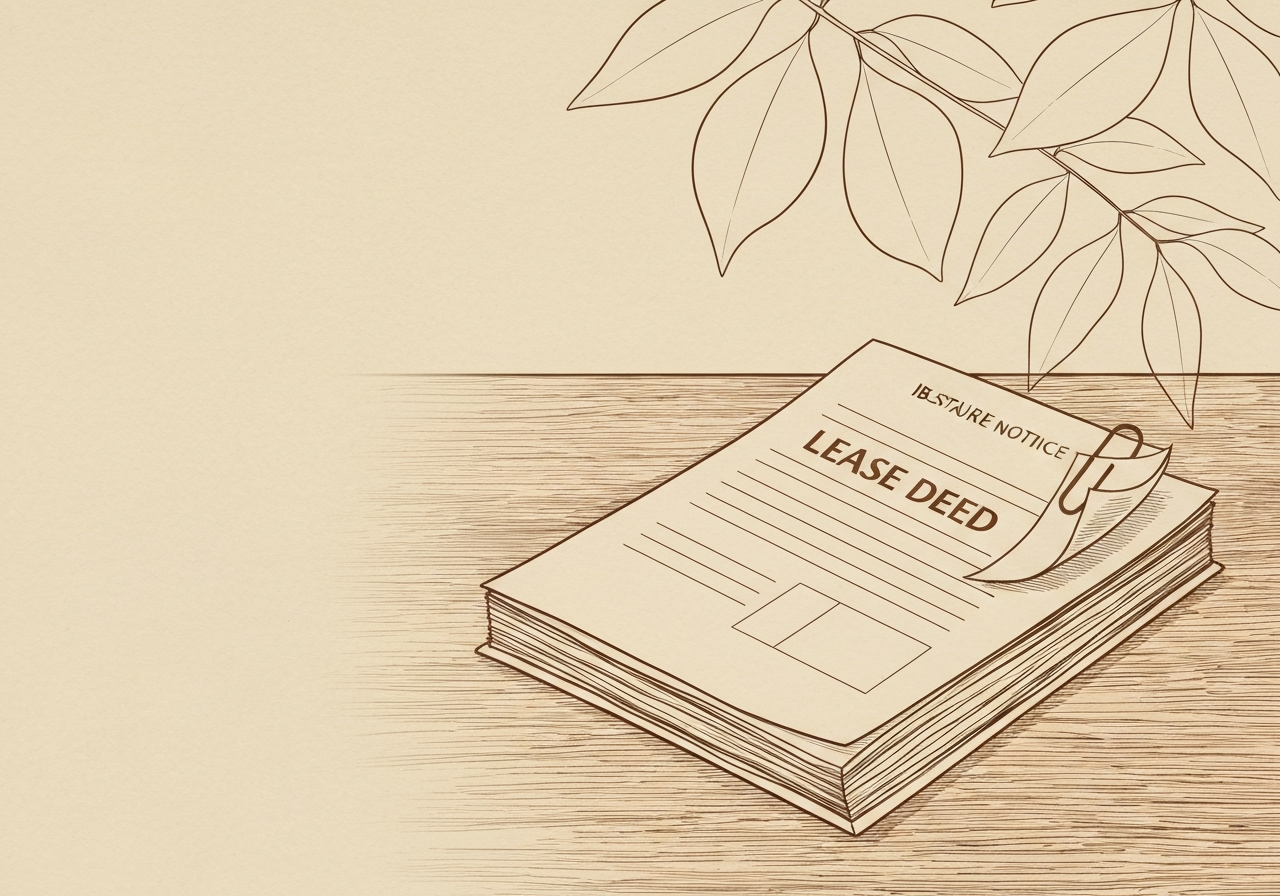
In 2019, a construction company stopped paying its lease premium instalments. It had taken a 90-year lease on a plot in Greater Noida. The Greater Noida Industrial Development Authority, the statutory body that allotted the land under the UP Industrial Area Development Act 1976, watched as the company slid into insolvency. The lease deed lay on the table — signed, stamped, and now broken.
The National Company Law Tribunal (NCLT — the special court that handles insolvency cases) admitted the company into the Corporate Insolvency Resolution Process (CIRP — the structured process where a company's debts are reorganised or repaid) on 30 May 2019. A Resolution Professional (RP — the person appointed to manage the company during insolvency) took charge.
The Authority filed its claim. It said: we are a financial creditor. We gave the company land on a long lease. The unpaid premium instalments are a financial debt. It submitted its claim in Form C, the form meant for financial creditors under the Insolvency and Bankruptcy Board of India (CIRP for Corporate Persons) Regulations, 2016.
The RP looked at the form and said: wrong form. You are an operational creditor, not a financial creditor. File again in Form B. The rejection letter was brief — a single paragraph citing the regulation number, no mention of the lease deed or the default notices that accompanied the claim.
When the Authority refused to re-file
The Authority did not re-file. It argued that the form was a procedural detail, not a substantive requirement. The RP, it said, should have looked at the proof — the lease deed, the default notices, the statutory charge created under Section 13A of the UP Industrial Area Development Act (a legal provision that automatically creates a charge — a right over property as security for payment — in favour of the Authority). Instead, the RP simply rejected the claim on the basis of the form.
Meanwhile, the Committee of Creditors (CoC — the group of creditors who vote on the resolution plan) approved a resolution plan. The NCLT approved it on 4 August 2020. The Authority was not part of the CoC. It had no vote. It had no say. The resolution plan moved forward without the Authority's claim being considered.
The Authority went to the NCLT under Section 60(5) of the Insolvency and Bankruptcy Code (IBC — the law that governs insolvency in India), which gives the NCLT the power to decide any question arising in the insolvency process. It asked the NCLT to recall the approval order and to direct the RP to classify its claim correctly. The NCLT dismissed the application on 5 April 2021. The courtroom was quiet as the order was read — the Authority had lost its first round.
The Authority appealed to the National Company Law Appellate Tribunal (NCLAT — the appellate court for insolvency cases). On 24 November 2022, the NCLAT dismissed the appeal too. The file had grown thicker with each dismissal, but the Authority's argument remained the same: the form should not matter more than the debt.
What the Supreme Court heard
The Authority appealed to the Supreme Court under Section 62 of the IBC. The case — Greater Noida Industrial Development Authority v. Prabhjit Singh Soni & Anr. — was heard by a bench of Justice Manoj Misra on 5 February 2024.
The Authority argued three things. First: the claim form is directory, not mandatory. The RP cannot reject a claim just because it came in Form C instead of Form B. What matters is the proof. Second: the Authority is a secured creditor. Section 13A of the UP Industrial Area Development Act creates a statutory charge over the company's property. Under Section 3(31) of the IBC, a "security interest" includes a charge created by operation of law. Under Section 3(30), a "secured creditor" is a creditor whose debt is secured by a security interest. So the Authority should have been on the CoC. Third: the resolution plan was approved without the Authority's participation, which violated its rights under Section 30(2) of the IBC, which requires the resolution plan to provide for payment of debts of operational creditors and secured creditors.
The RP and the successful resolution applicant argued back: the form is mandatory. The regulations say financial creditors file in Form C, operational creditors file in Form B. The Authority filed in the wrong form. It was given a chance to correct it. It refused. The RP did its job. The NCLT and NCLAT had both agreed with this position.
The court also heard arguments on the precedents. The Authority cited New Okhla Development Authority v. Anand Sonbhadra — (2023) 1 SCC 724 — where the Supreme Court had held that a statutory authority allotting land on lease is a financial creditor. The RP cited Ghanashyam Mishra & Sons (P) Ltd. v. Edelweiss Asset Reconstruction Co. Ltd. — (2021) 9 SCC 657 — for the proposition that a resolution plan once approved binds all stakeholders. The court had to reconcile these two lines of authority.
The court's answer
The Supreme Court disagreed with the RP. The court held: "The Form in which a claim is submitted under the CIRP Regulations is directory and not mandatory; what is important is that the claim must be supported by proof." The words hung in the courtroom — a clear signal that procedural technicalities would not defeat substantive rights.
The court pointed to Regulation 13 of the CIRP Regulations, which says the RP must verify every claim based on the proof submitted. The RP has no adjudicatory power — it cannot decide that a claim is invalid just because the wrong form was used. The RP must look at the proof, determine the correct category, and place the claim accordingly. The court said: "Under Regulation 13, the RP has no adjudicatory power to reject a claim merely because it was filed in an incorrect form; the RP must verify the claim based on proof and classify it correctly."
More importantly, the court said the RP is under a statutory obligation to collate data not just from claims filed, but also from the corporate debtor's own records. Even if a creditor never filed a claim, the RP must check the company's books and include known creditors. If the RP finds evidence of a debt in the company's records, it must verify it and classify it correctly — regardless of the form.
On the question of secured creditor status, the court examined Section 13A of the UP Industrial Area Development Act. That section creates a charge over the property of a defaulting allottee in favour of the Authority. The court held that this statutory charge constitutes a "security interest" under Section 3(31) of the IBC, making the Authority a "secured creditor" under Section 3(30). The court also considered Section 13 of the same Act, which provides for imposition of penalty and recovery of arrears, and Section 14, which allows forfeiture for breach of conditions — together, these provisions created a comprehensive security framework in favour of the Authority.
The court also addressed the procedural journey in detail. The CIRP was initiated on 30 May 2019 by the NCLT, New Delhi. The resolution plan was approved on 4 August 2020 by the same bench. The Authority's application under Section 60(5) IBC was dismissed on 5 April 2021. The appeal to the NCLAT was dismissed on 24 November 2022. The Supreme Court, hearing the appeal under Section 62 IBC on 5 February 2024, found that the Authority had been wrongly excluded from the process at every stage.
The court also clarified the interplay between the IBC and the UP Industrial Area Development Act. The statutory charge under Section 13A of the state Act does not conflict with the IBC — it creates a security interest that the IBC recognises. The Authority, as a secured creditor, was entitled to be part of the CoC under Section 21(2) of the IBC, which specifies which creditors can be members of the committee. The RP's failure to include the Authority meant the CoC was not properly constituted.
On the question of notice, the court noted that under Section 24(3) of the IBC, the RP must give notice of every CoC meeting to all creditors. The Authority, having been wrongly classified as an operational creditor and then excluded entirely, never received these notices. The resolution plan was approved without the Authority's input, and the NCLT approved it under Section 31 without realising that a secured creditor had been excluded.
What this means for every creditor
This judgment changes how Resolution Professionals must treat claims. The form is no longer a gatekeeper. The RP must verify every claim on its merits, using proof and the company's own records. A creditor who files in the wrong form cannot be excluded from the process.
For statutory authorities like development boards, municipal corporations, and tax departments, this is significant. If your statute creates a charge over property, you are a secured creditor under the IBC. You have a seat at the CoC table. You have a vote.
THE PLAY: If your claim is rejected for using the wrong form, file an application under Section 60(5) IBC before the NCLT — the RP cannot exclude you from the CoC based on a procedural error.
The court ended where it began: with a form that should never have mattered more than the debt itself. The silence in the courtroom when the judgment was read said everything — the law had corrected itself.