Your document is marked as evidence. Is it now proved?
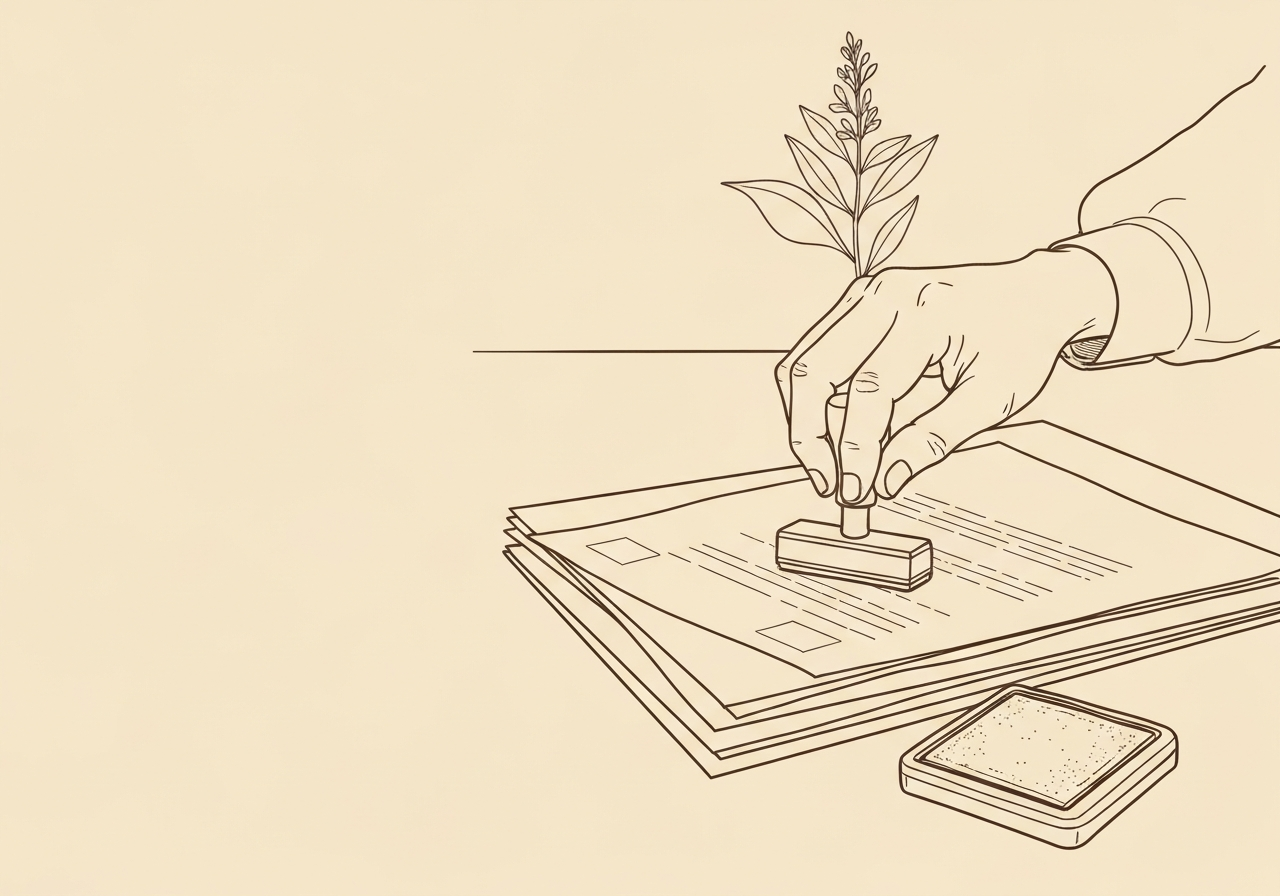
A court clarifies: marking an exhibit is just paperwork. Proving its contents is a whole different battle.
2
gates.
A court clarifies: marking an exhibit is just paperwork. Proving its contents is a whole different battle.
You stamped it, you marked it, you called it Exhibit A. But the judge says — that’s not proof.
A lawyer stands before the court, holding a document that has already been marked as an exhibit. The other side did not object when it was filed. The judge’s clerk stamped it, numbered it, and placed it in the case file. The lawyer believes the battle is half-won. But the court is about to draw a line that many litigators forget exists: marking a document as evidence is not the same as proving what it says.
The question that hangs over this case is deceptively simple. Can a party rely on a document simply because it has been marked as an exhibit during trial? Or does something more need to happen — some act of formal proof — before the court can treat that document as true?
When the stamp went on the paper
The dispute in Sait Taraj Khimechand v. Yelamarti Satvam began like many civil cases. One party produced documents. The other party did not object. The documents were marked as exhibits under Order 13 Rule 4 of the Civil Procedure Code (the rule that governs how courts receive and label documents during a trial). The party who produced them believed that this procedural step was enough. The document was in the record. It had an exhibit number. It was, in the ordinary sense of the word, “evidence.”
But the other side pushed back. They argued that marking a document as an exhibit does not automatically prove its contents. The document might be in the file, but the court cannot rely on it unless the party who produced it also proves that the document is genuine — that it was signed by the right person, that it was made on the date it claims, that its contents are true.
The court had to decide which side was right. The answer was not in favour of the party who had stopped at the exhibit stamp.
The procedural trap
The court drew a sharp distinction between two things that lawyers often treat as the same: the admission of a document into evidence (the procedural act of marking it as an exhibit) and the proof of a document (the substantive act of establishing that its contents are true and that it was executed by the person it claims to be).
Under Order 13 Rule 4 of the Civil Procedure Code, a court may admit a document into evidence and mark it as an exhibit. This is a housekeeping step — it tells everyone which documents are part of the record. But the court made it clear that this step does not dispense with the requirement of proof. "The procedural step of merely marking an exhibit does not dispense with the proof of the document," the court observed. A document that has been marked as an exhibit but has not been formally proved remains, in the eyes of the law, an unproved document. It cannot be treated as evidence of the facts it contains.
The court’s reasoning was straightforward: the procedural step of marking an exhibit is about organisation, not about truth. The court needs to know which documents are being relied upon, so it marks them. But the question of whether those documents are genuine — whether they were actually signed, whether they reflect real transactions — is a separate question that must be answered through formal proof.
Why the opponent’s silence mattered
There was an additional layer to the case. The party who produced the document had an opponent who did not object when the document was filed. In many legal contexts, failing to object to a document can waive certain objections — for example, an objection about insufficient stamp duty under Section 36 of the Stamp Act (the provision that says once a document is admitted into evidence, you cannot later object that it was not properly stamped).
But the court clarified that even if the opponent had waived the stamp objection by not raising it at the right time, that did not mean the document was automatically proved. The opponent’s silence on the stamp issue only meant that the document could not be thrown out for being unstamped or insufficiently stamped. It did not mean that the document’s contents were true. The party who produced the document still had to prove that the document was executed — that the person who appears to have signed it actually did sign it, and that the document reflects what it claims to reflect.
This distinction is critical. A document can survive a stamp objection and still fail on proof. The two are entirely separate gates, and both must be passed for the document to be used as evidence of its contents.
What proof actually looks like
The court’s ruling reinforces a principle that every litigator knows but sometimes forgets in the heat of trial: proof of a document requires the party producing it to satisfy the court that the document is genuine. This usually means calling a witness who can identify the document — the person who signed it, the person who witnessed it, or someone who can recognise the handwriting or the signature. In some cases, it may mean producing circumstantial evidence that links the document to the person who allegedly created it.
Without this step, the document sits in the file as a piece of paper with an exhibit number, but it carries no evidentiary weight. The court cannot rely on it to decide any fact. The party who produced it has done only half the work — the easy half.
The ruling also serves as a warning to parties who assume that the opponent’s failure to object at the time of marking is a sign that the document is safe. It is not. The opponent may still argue at the final hearing that the document has not been proved. And if the party who produced it has not taken the step of formally proving it, the court will have no choice but to ignore it.
What this means for your next case
For practitioners, the lesson is simple but expensive to learn the hard way. When you produce a document at trial, do not stop at getting it marked as an exhibit. That is the beginning, not the end. You must also lead evidence to prove that the document is what it claims to be — that it was executed, that the signatures are genuine, that the contents are true. If you fail to do this, the document will be in the record but the court will not use it.
Consider this hypothetical: A party produces a promissory note. The opponent, seeing no point in objecting to its form, remains silent as the court clerk stamps the note and marks it as Exhibit A. The party who produced the note believes the case is closed. But at the final hearing, when the party seeks to rely on the note to prove a debt, the court asks a simple question: "Who signed this note? Who can testify that this is the defendant's signature?" The party has no answer. No witness was called. The note sits in the file, a stamped piece of paper with no one to vouch for it. The court, following the principle in Sait Taraj Khimechand v. Yelamarti Satvam, ignores the note entirely.
The silence in the courtroom when that question is asked is a silence that could have been avoided. The smell of the old paper file, the weight of the unproved document in the lawyer’s hand — these are the sensory reminders of a lesson learned too late.
THE PLAY: After a document is marked as an exhibit, call a witness to formally prove its execution and contents — or the exhibit stamp is just decoration.
The court ended where it began: with a document in the file and a question about what it means. The answer? The stamp proves nothing. The truth must be proved separately.